Destinations · 42 curated guides
The best places to visit in Morocco.
Nine destinations cover ninety percent of what travellers come to Morocco for — from Marrakech to the Sahara dunes, Fes to Chefchaouen and the Atlantic coast. Each guide gives you the real number of days, the right time to visit, and a quote on request.
42 destinations
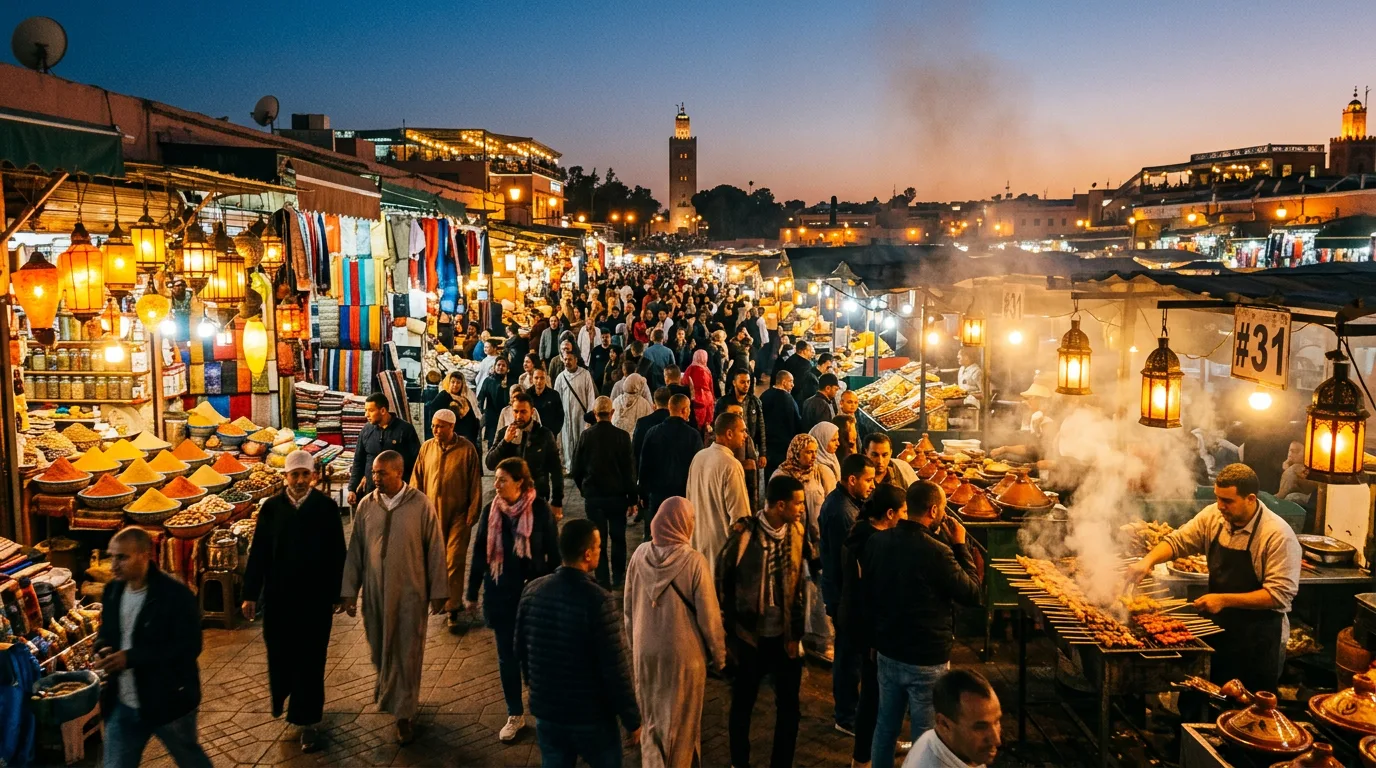
Marrakech
Where your Sahara journey begins: the red city departure point for the southern dune routes.
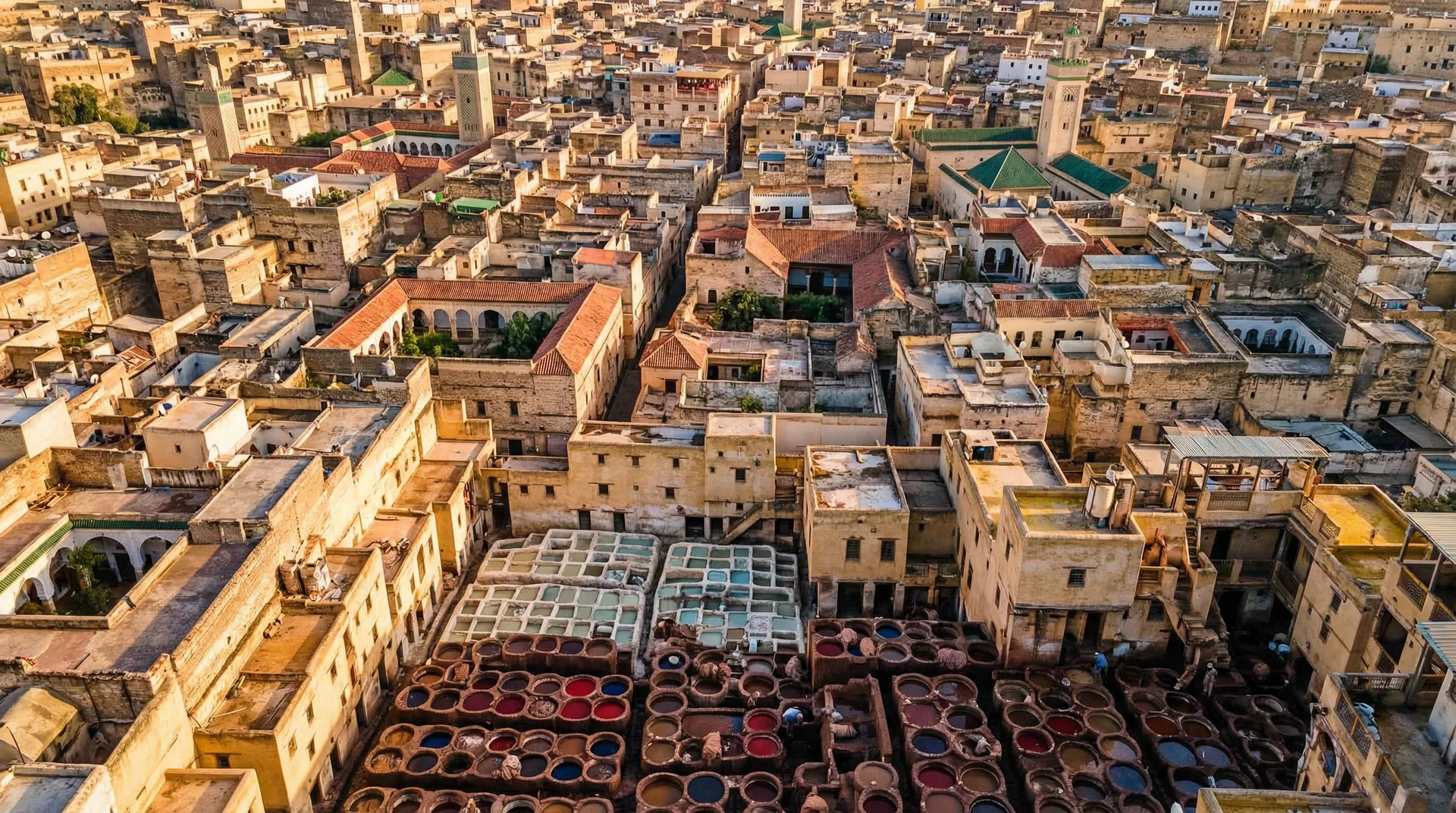
Fes
The northern gateway to the desert: where the Fes–Merzouga route to the dunes begins.
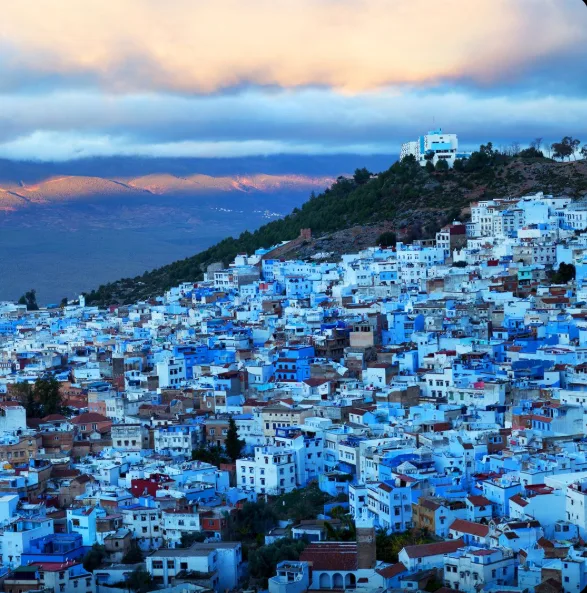
Chefchaouen
The blue mountain town that makes a cool, green contrast before or after the Sahara dunes.
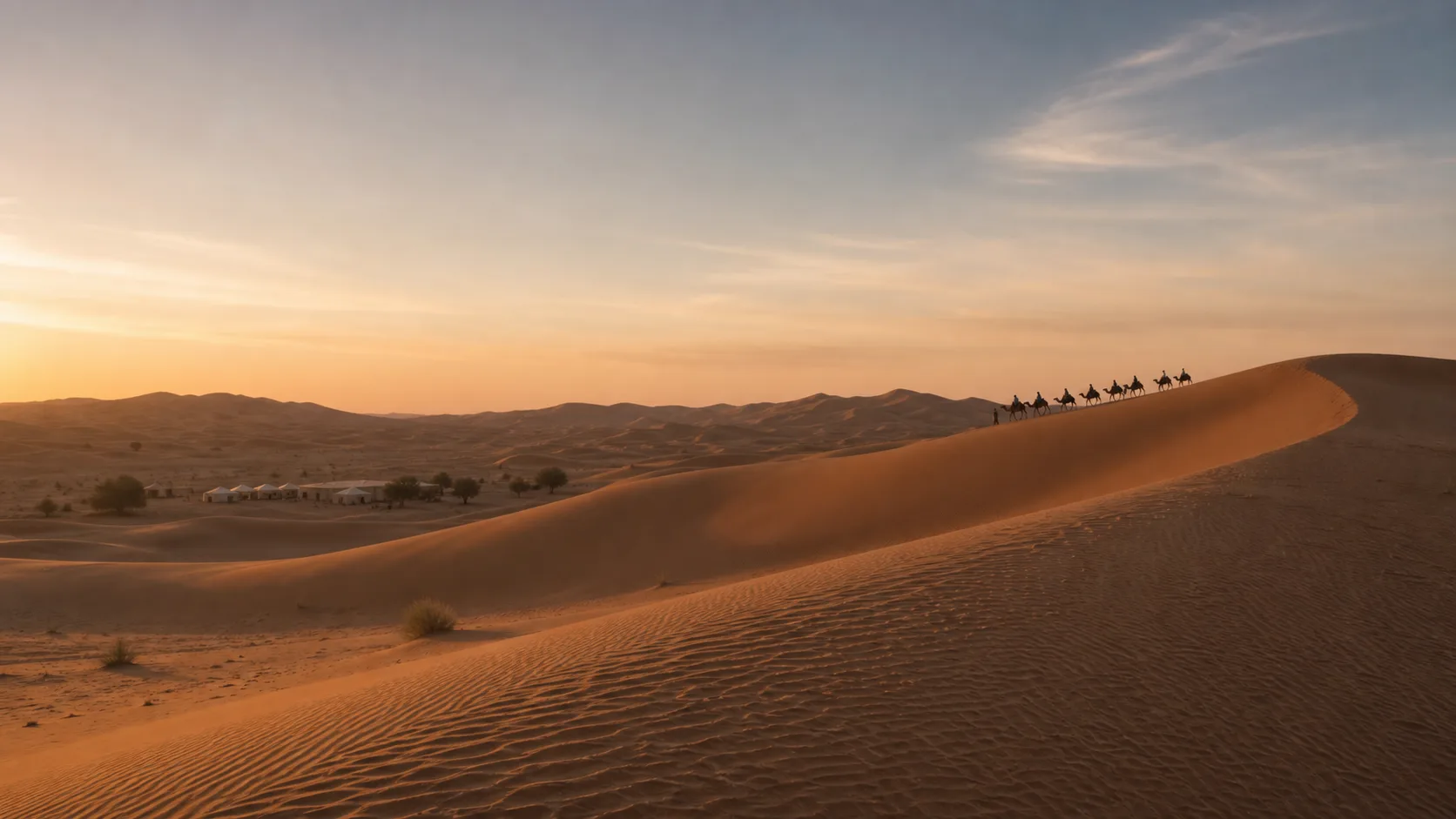
Sahara & Merzouga
The Sahara proper: Erg Chebbi's 150m dunes, camel caravans at dusk, and luxury camps under the whole desert sky.
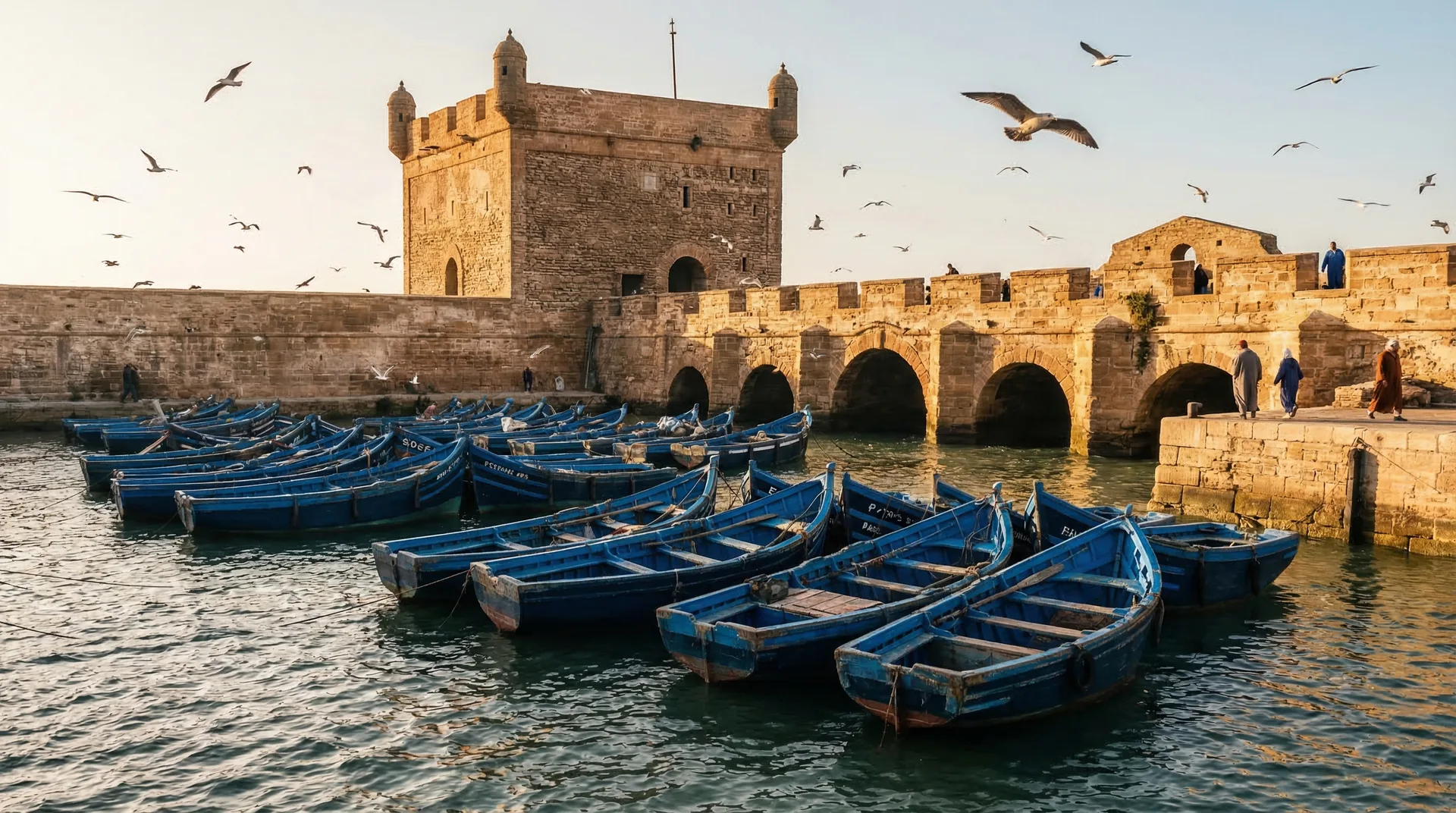
Essaouira
The windswept Atlantic counterpoint to the desert — ramparts, fresh seafood and ocean air after the dunes.
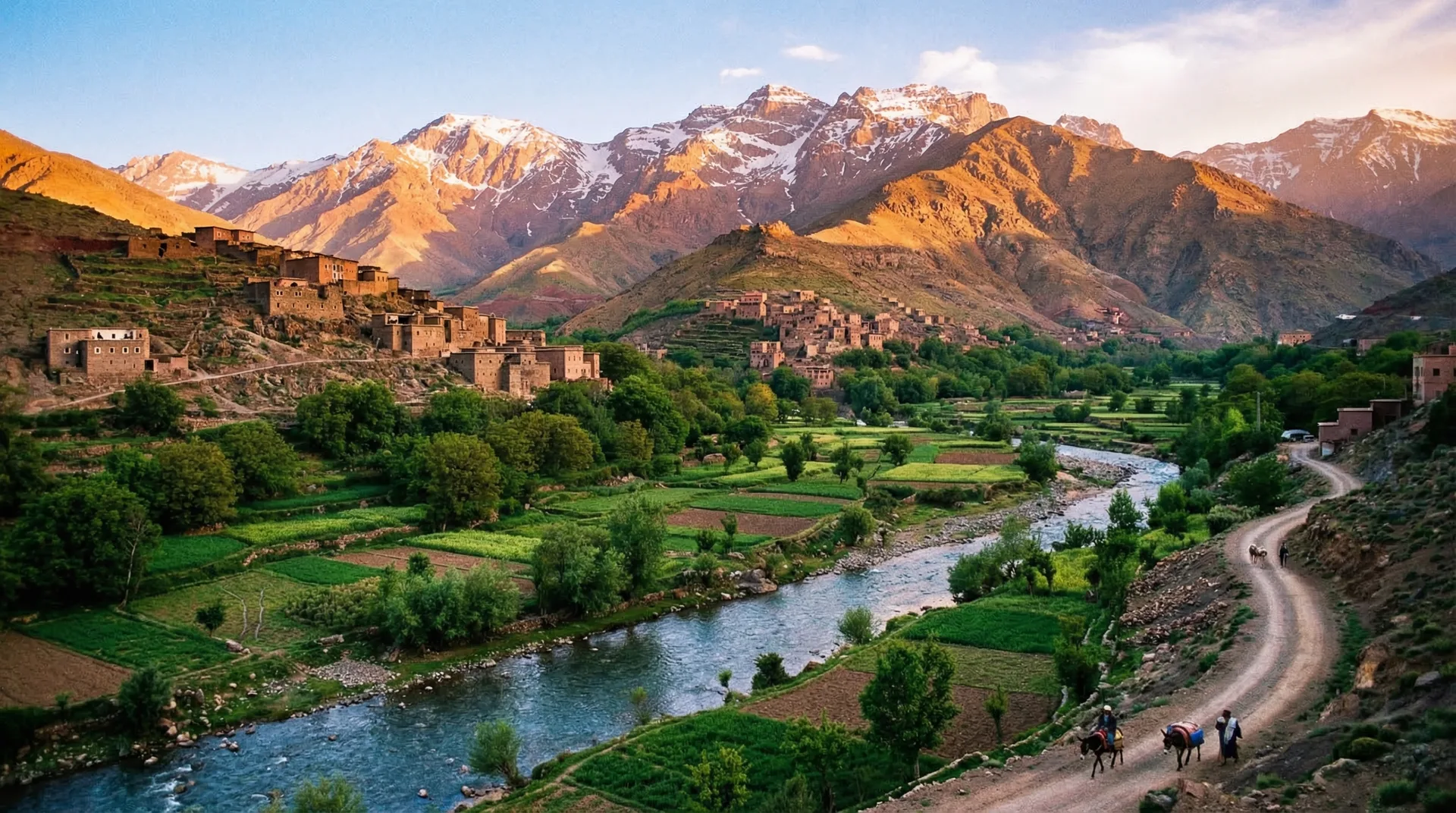
Atlas Mountains
The mountain wall every desert route crosses — Berber villages, walnut groves and North Africa's highest summit.
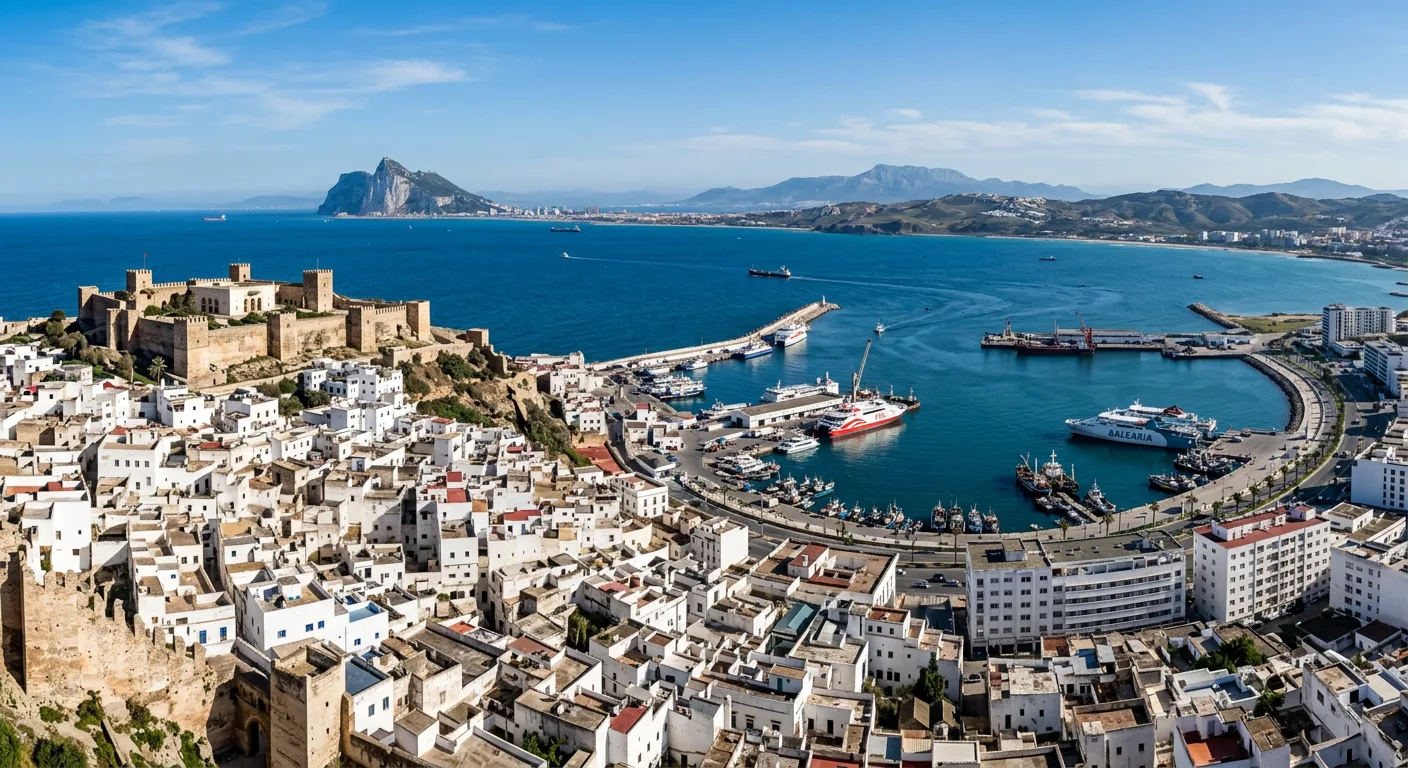
Tangier
Where Africa meets Europe — the northern entry point for travellers heading down to the desert via Fes.
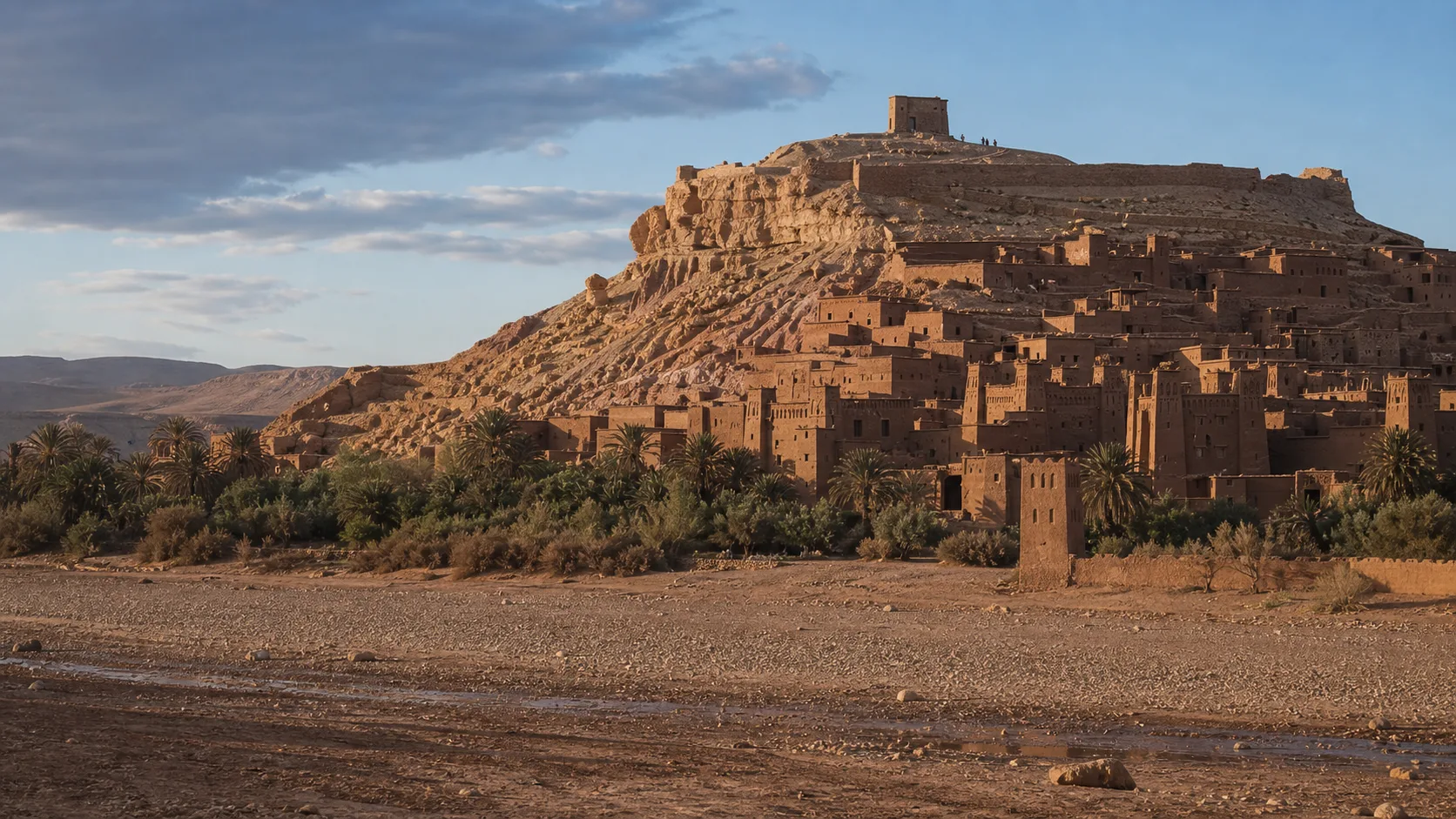
Ouarzazate & Aït Ben Haddou
The desert's threshold city — the kasbah-road staging post on every route to the Sahara dunes.
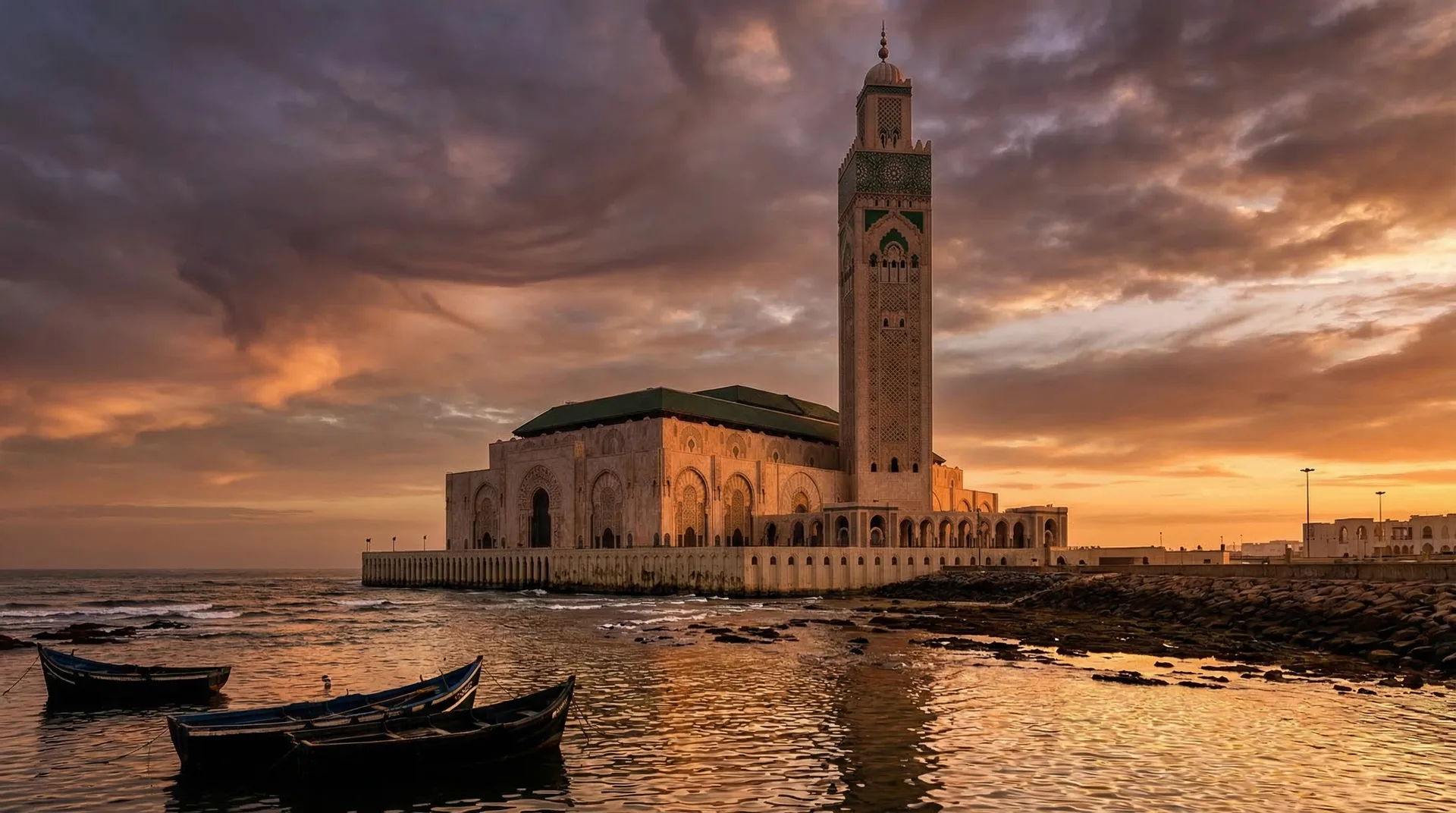
Casablanca
The main international arrival point — where many desert journeys touch down before the road south.
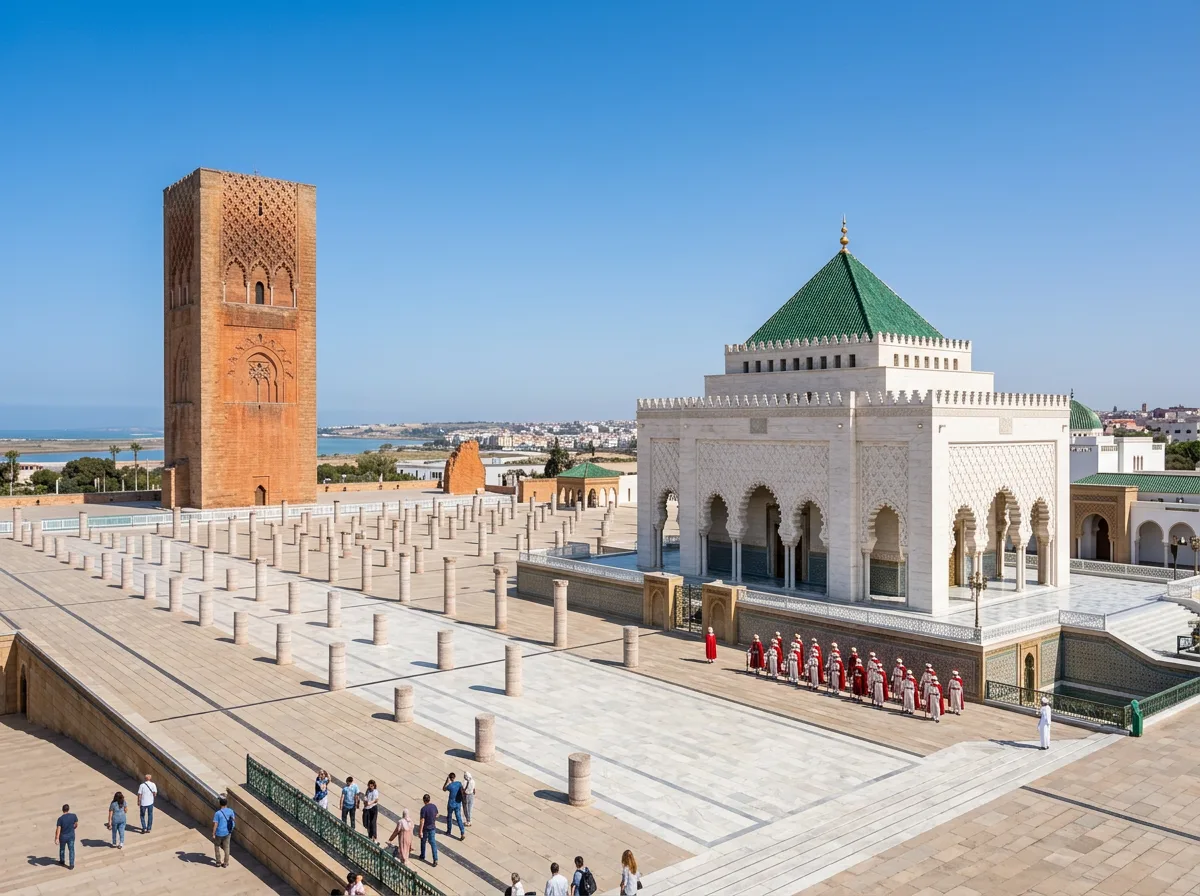
Rabat
A calm Atlantic capital to ease into Morocco before the long road south to the dunes.
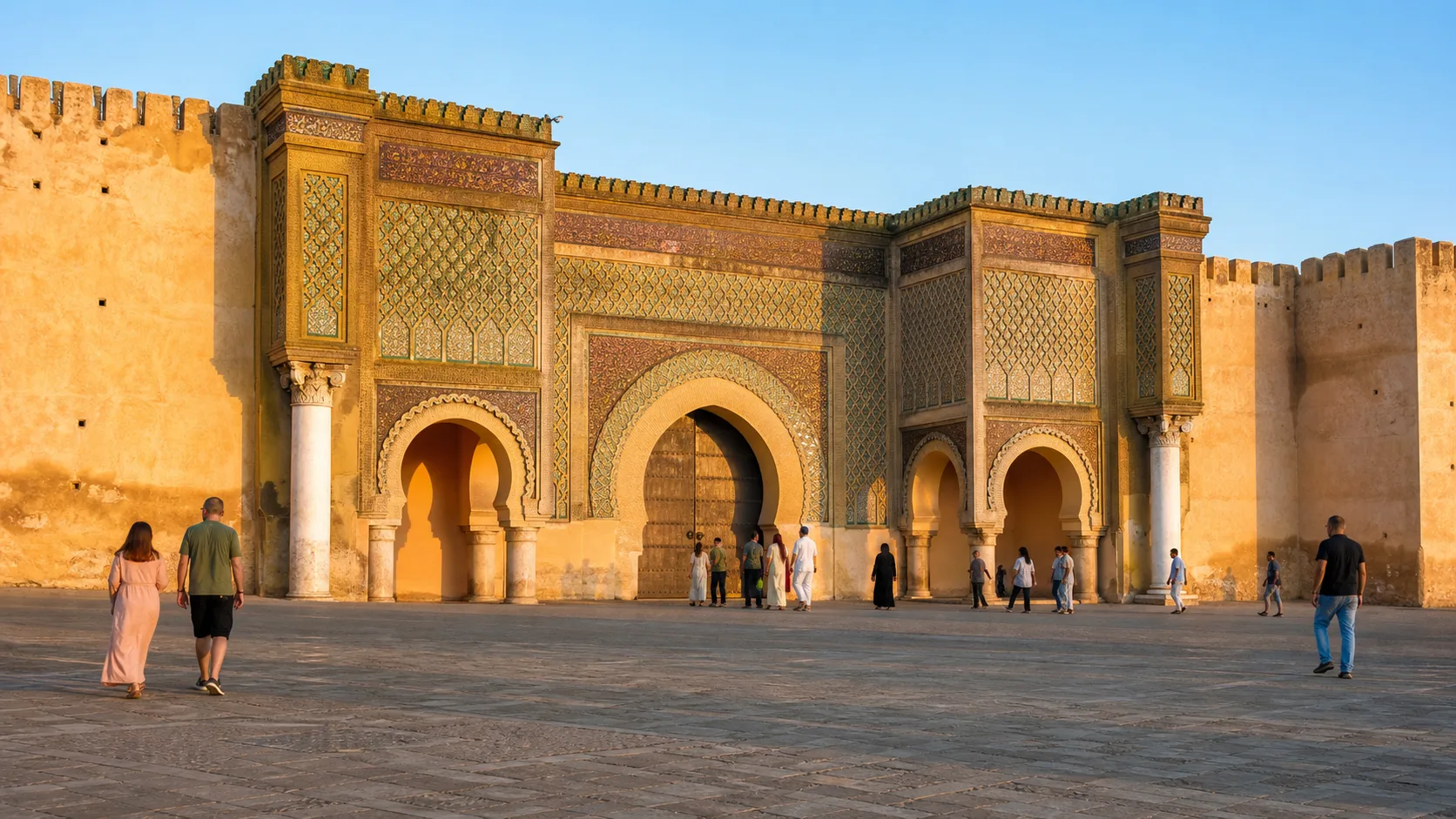
Meknes
The quiet imperial city near Fes — an easy add-on before the northern desert road south.
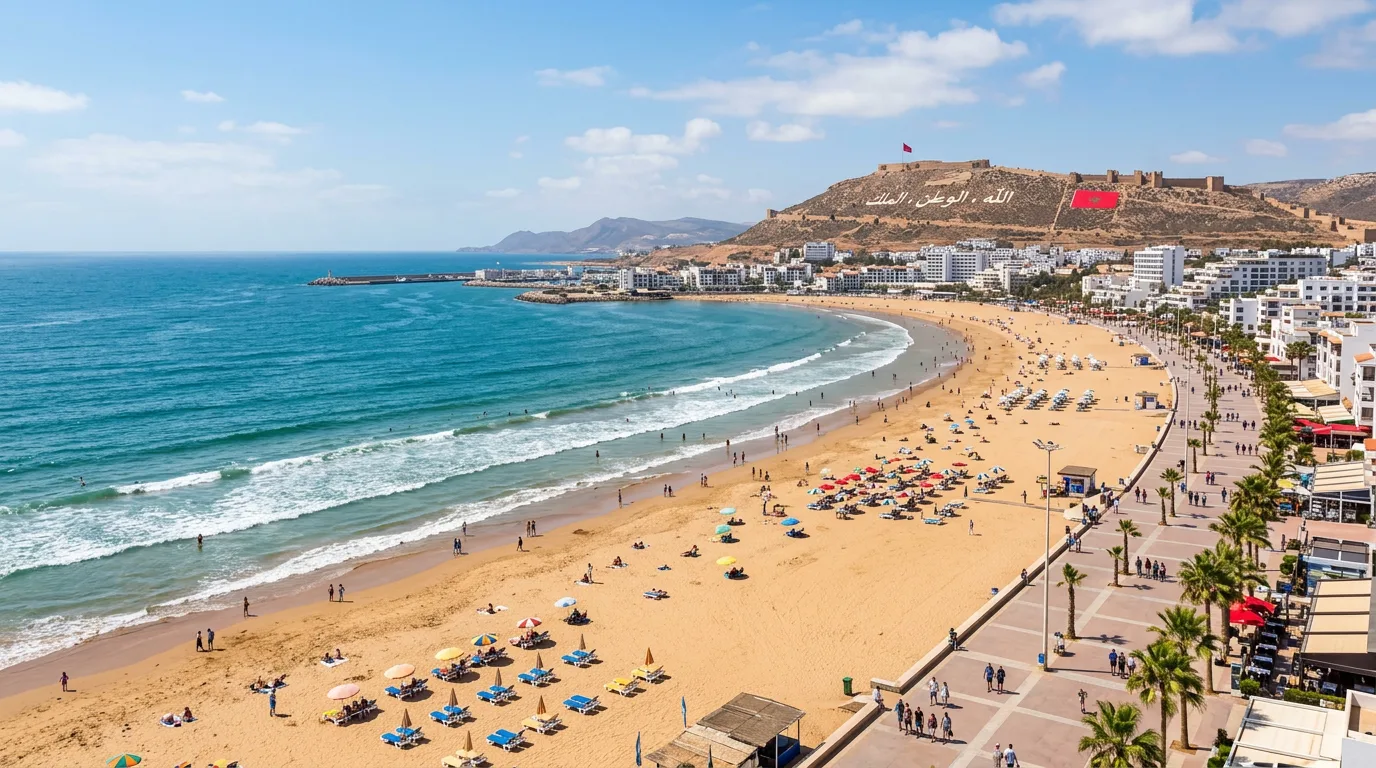
Agadir
The Atlantic beach resort to unwind by the sea after the dunes — sun, surf and easy downtime.
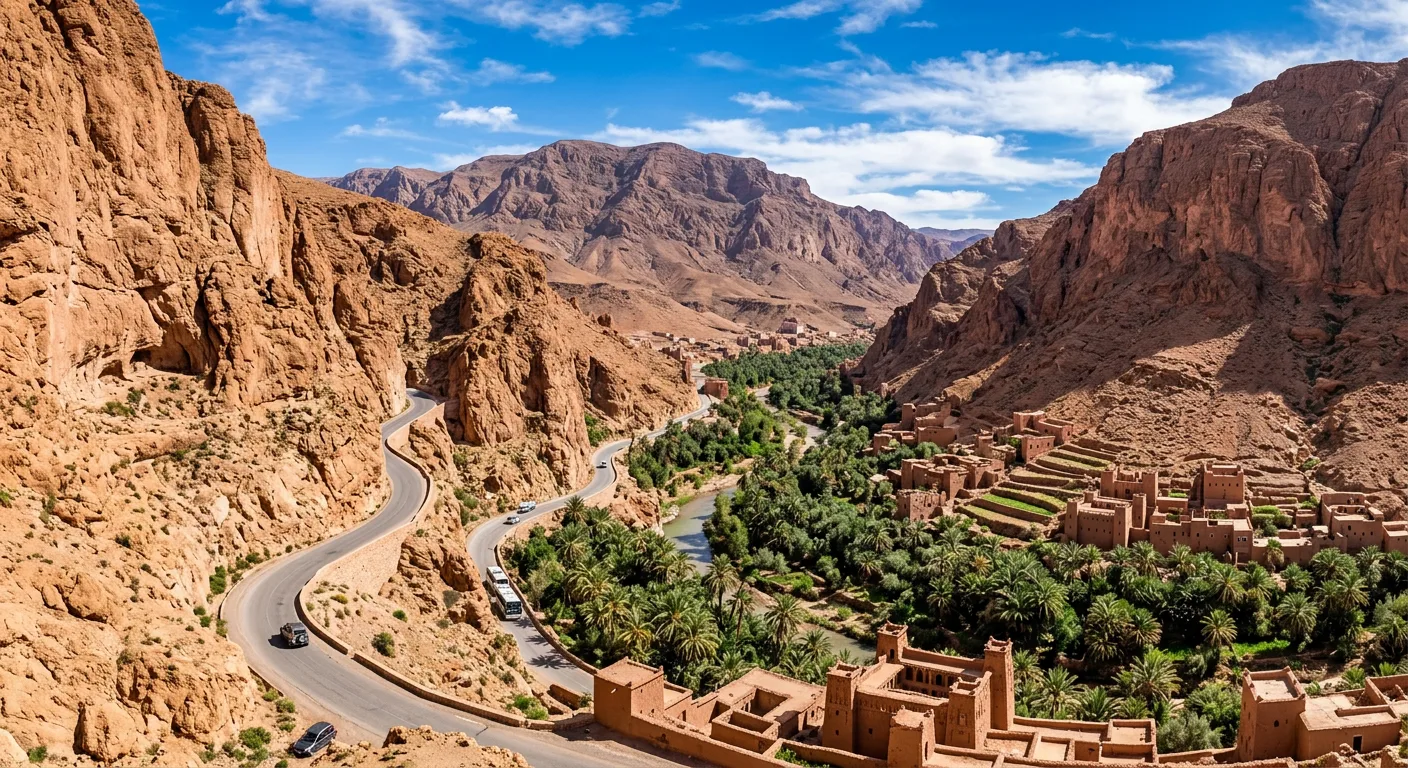
Dadès & Todra Gorges
Towering red canyons and the famous switchback road — the dramatic mid-point of the route to the dunes.
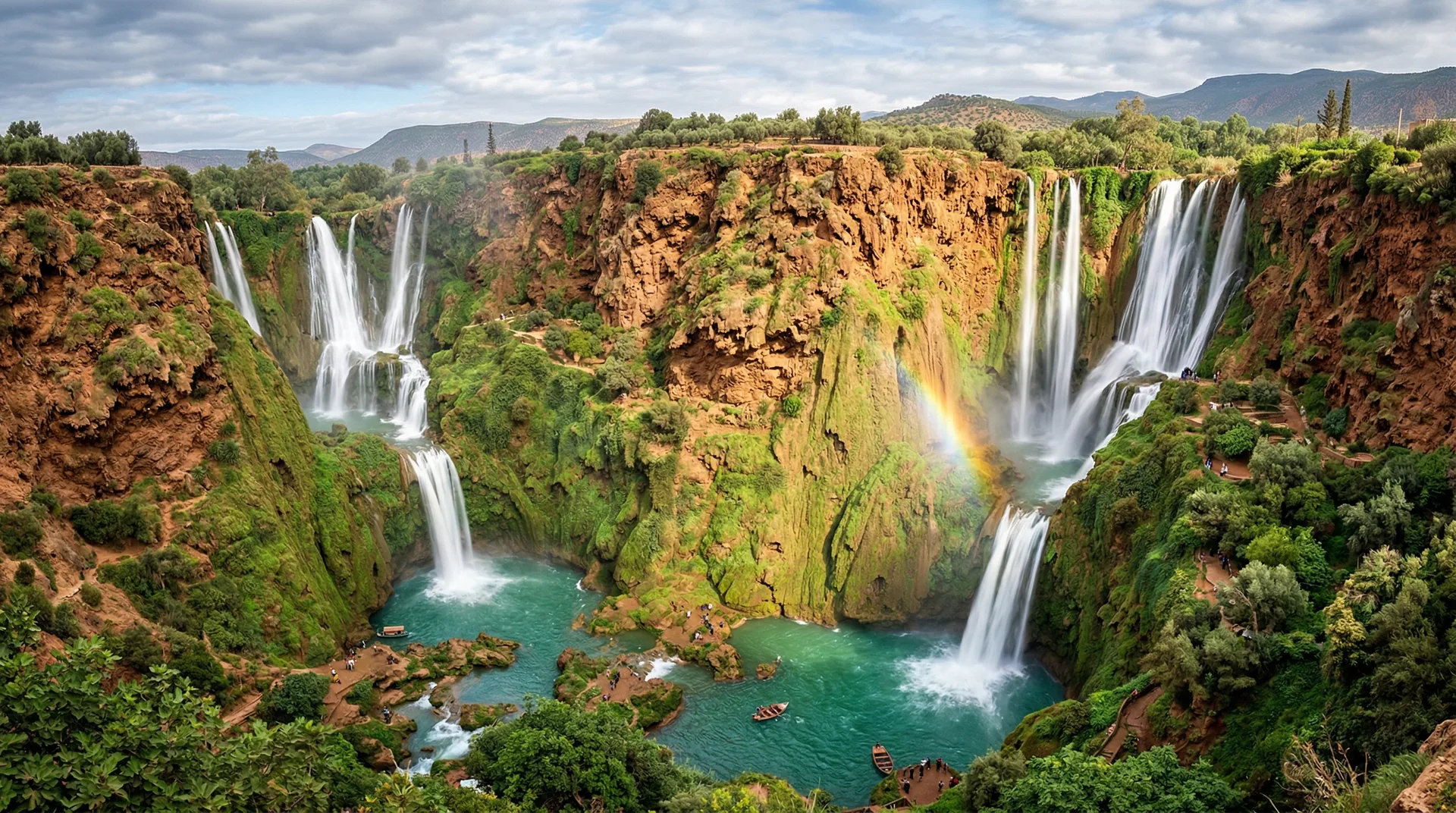
Ouzoud Falls
Morocco's highest waterfalls — a green, watered contrast to the desert in the Middle Atlas.
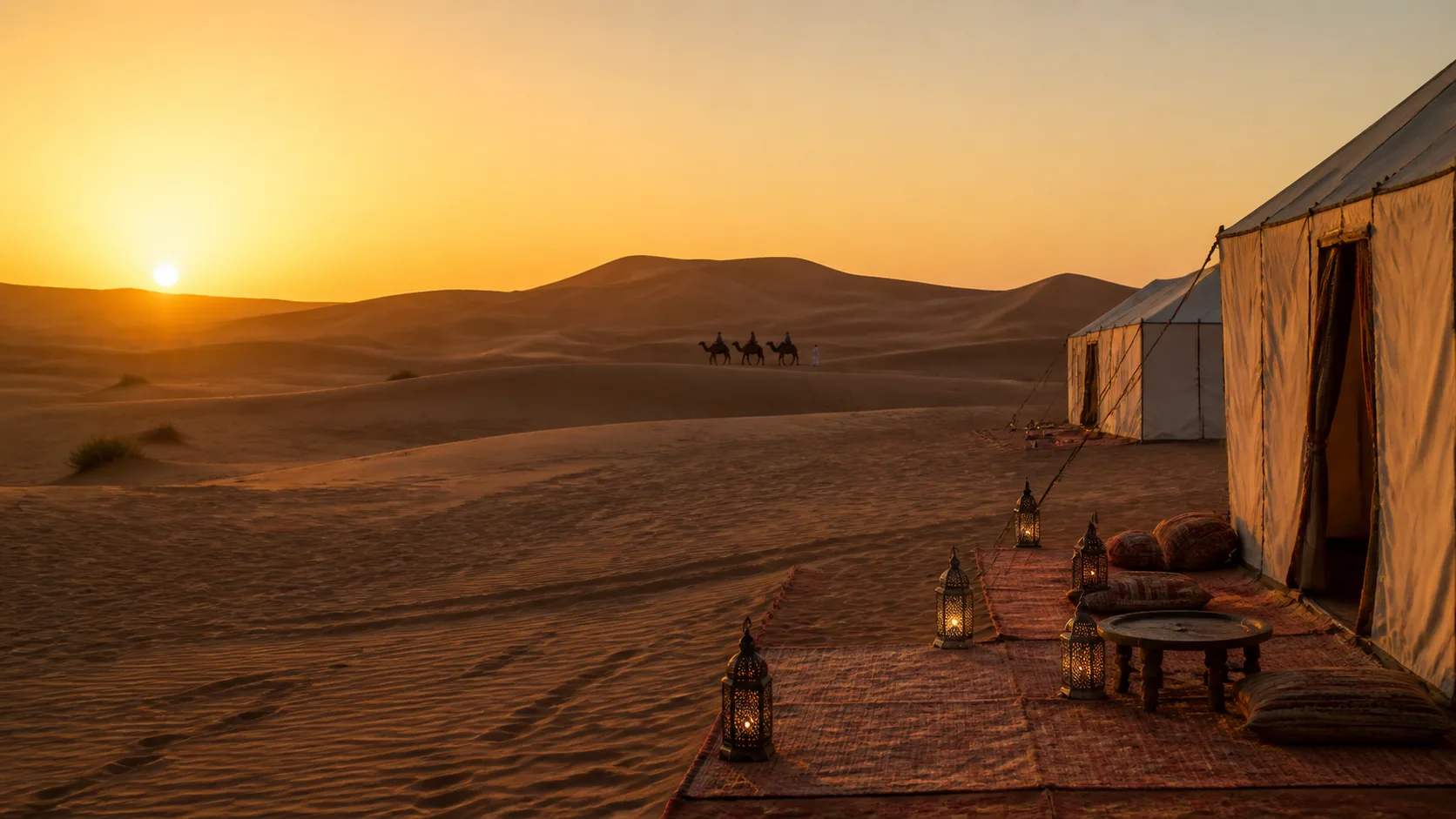
Agafay Desert
The desert taster 40 minutes from Marrakech — camps, camels and Atlas sunsets when there's no time for the Sahara.
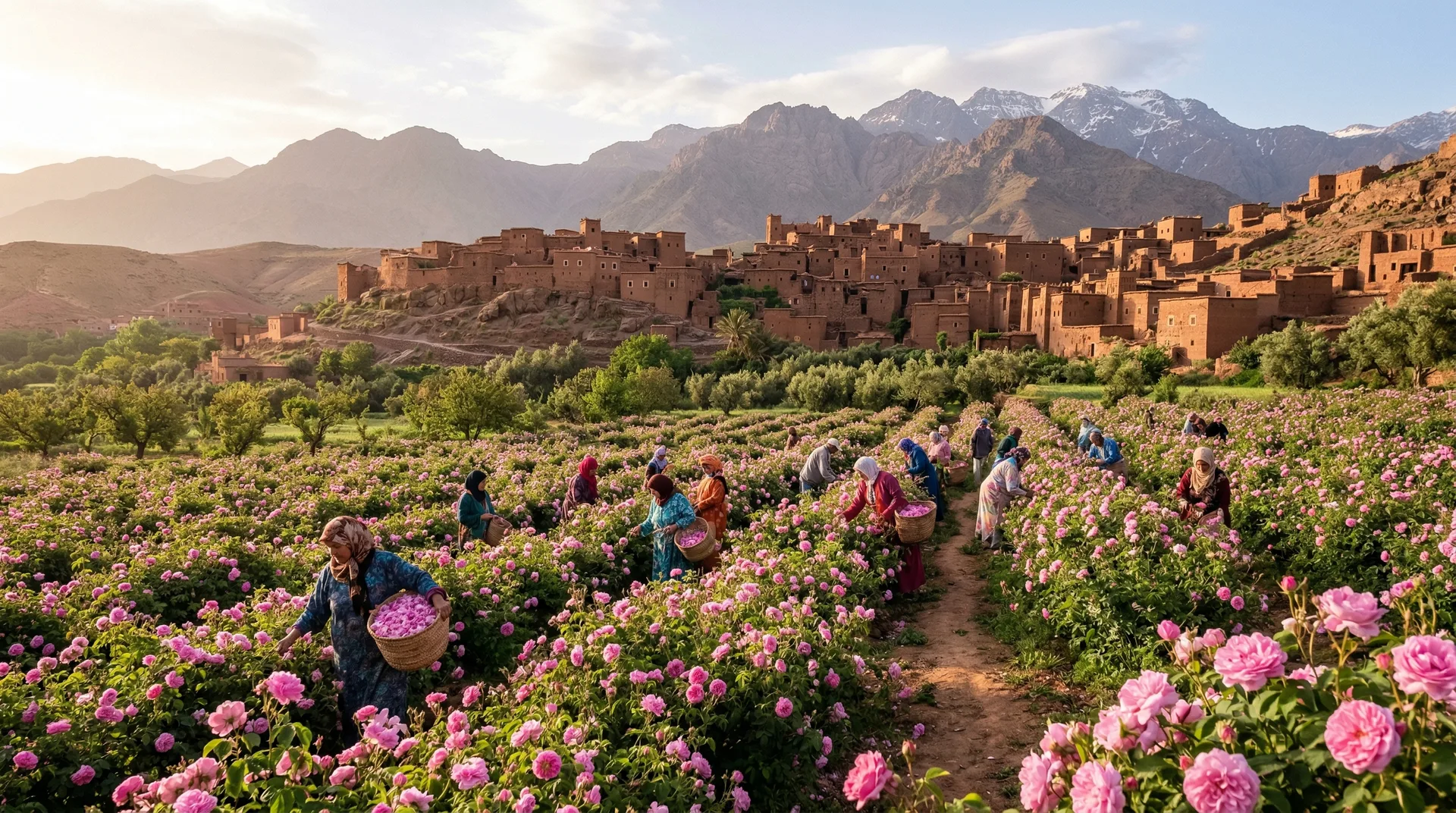
Ourika Valley
A green river valley an hour from Marrakech — cool Berber country before the desert heat.
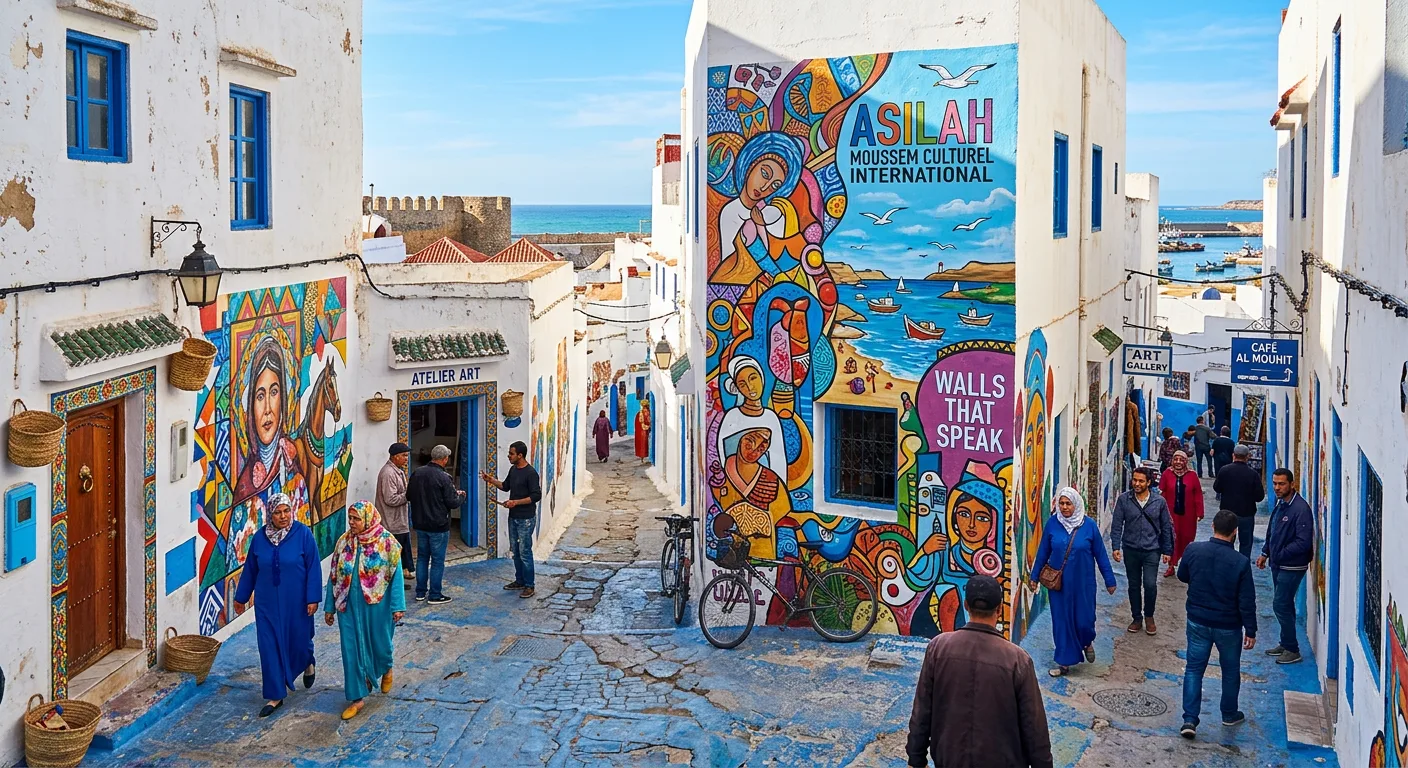
Asilah
A whitewashed Atlantic art town near Tangier — a calm coastal stop at the top of the desert road.
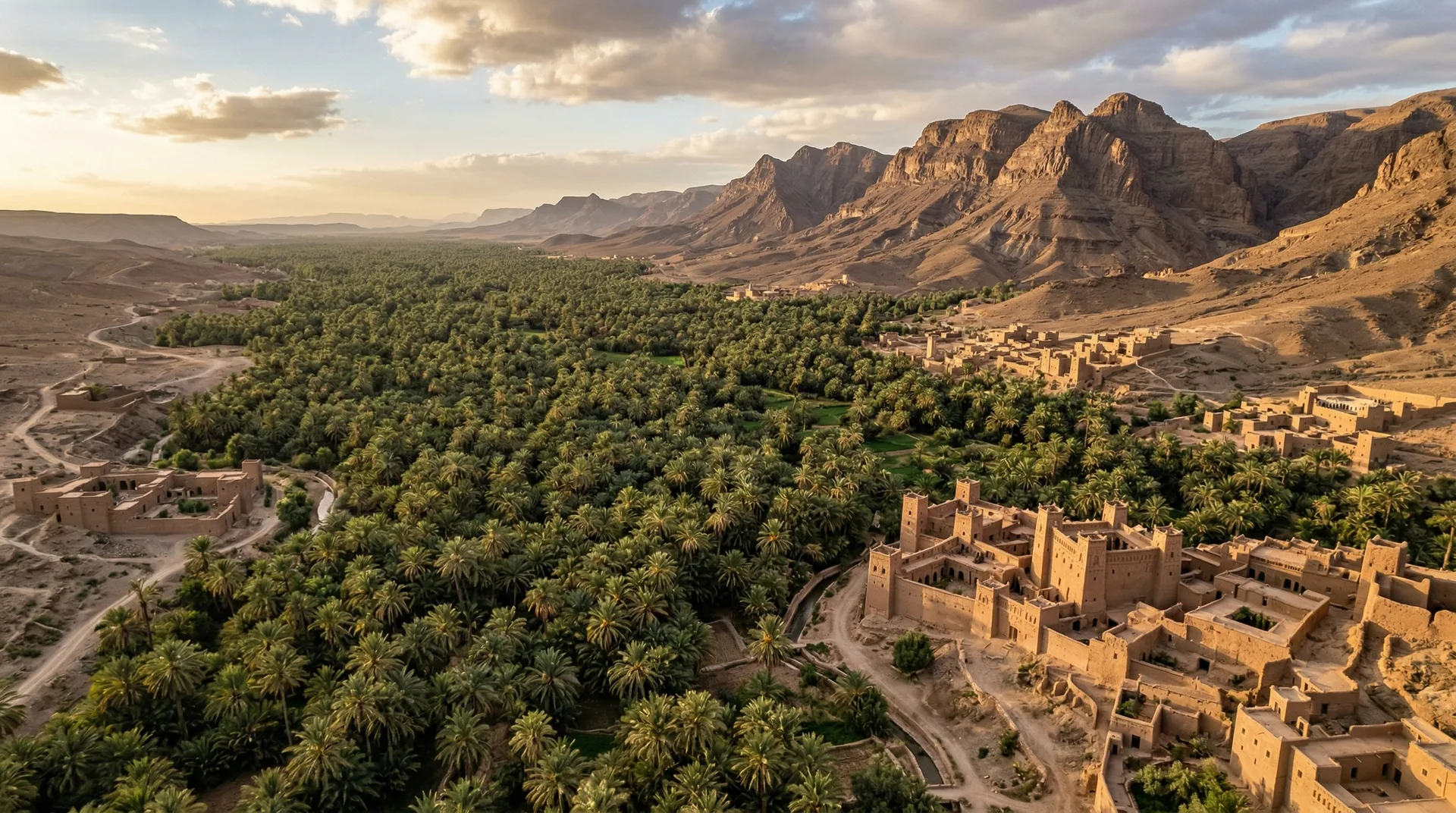
Zagora
Gateway to Erg Chigaga — a palm-lined oasis town at the threshold of the deep Sahara.
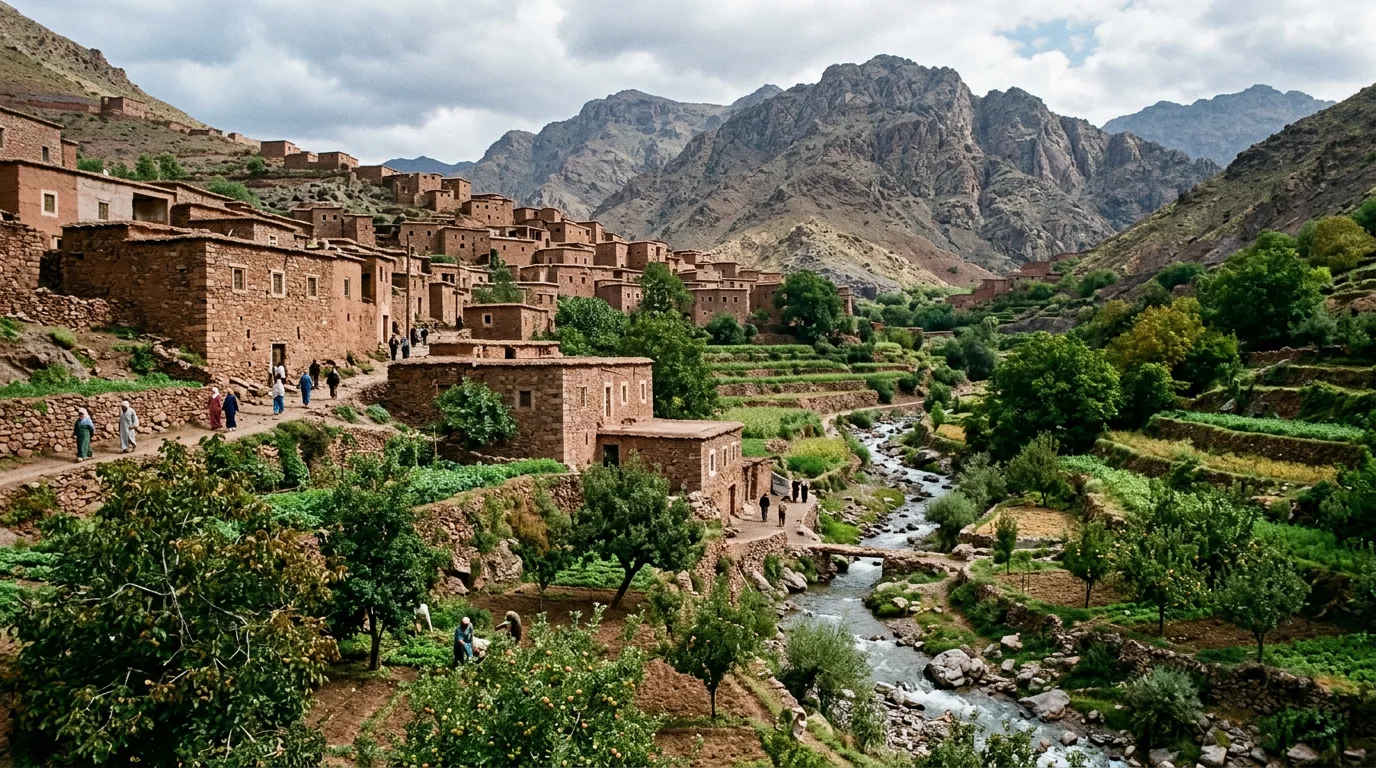
Imlil
The High Atlas trekking village an hour from Marrakech — a cool-mountain add-on before the desert heat.
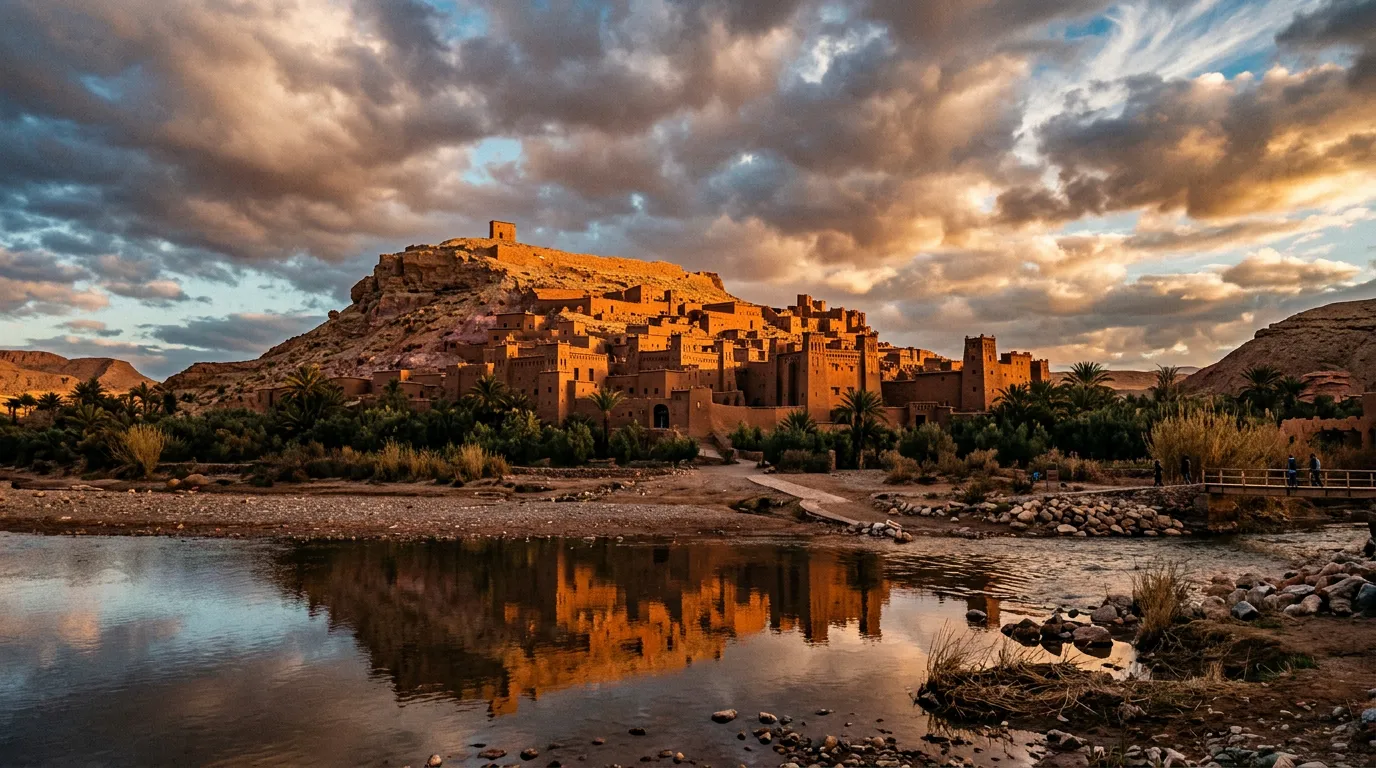
Taroudant
A walled Saadian city of ochre ramparts in the Souss plain — the southern back-route toward the desert.
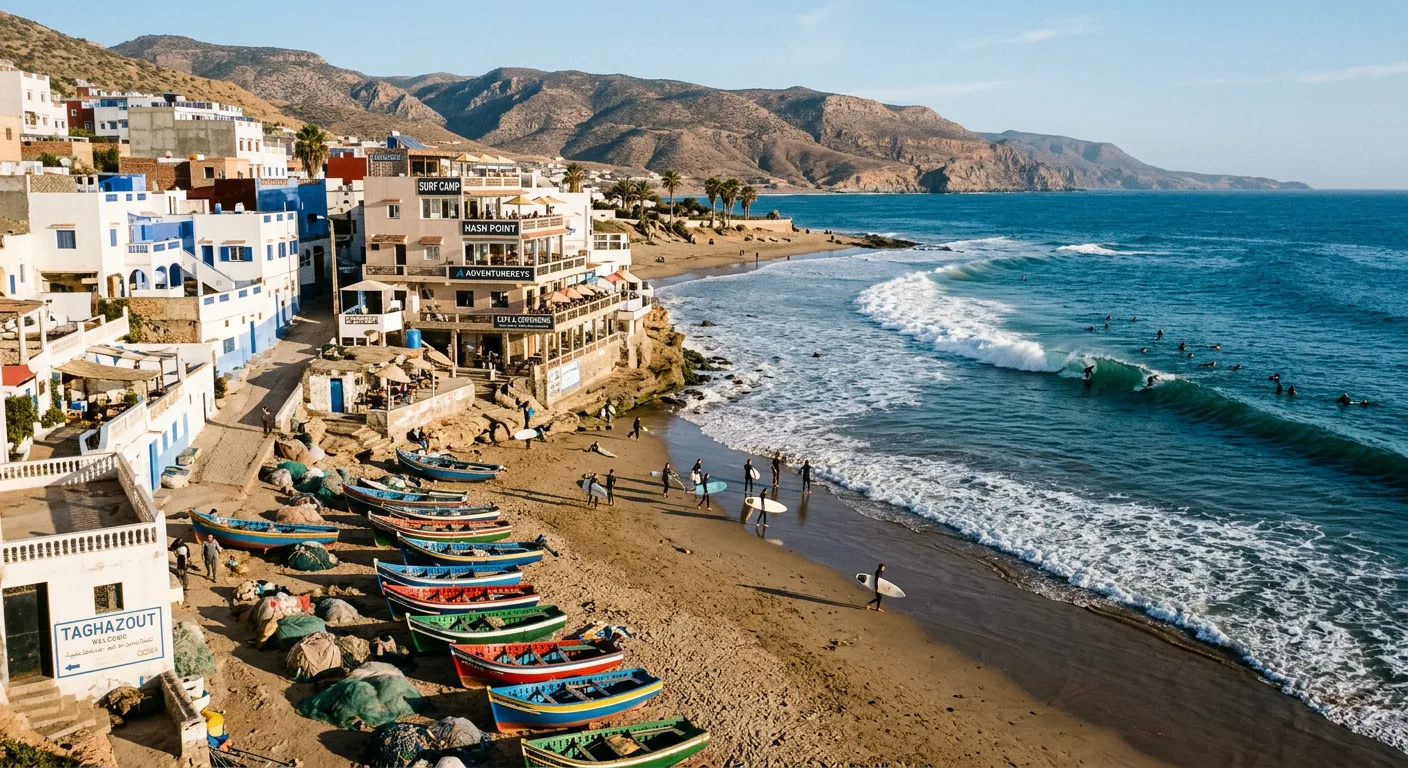
Taghazout
Morocco's bohemian surf village north of Agadir — Atlantic point breaks to wind down after the dunes.
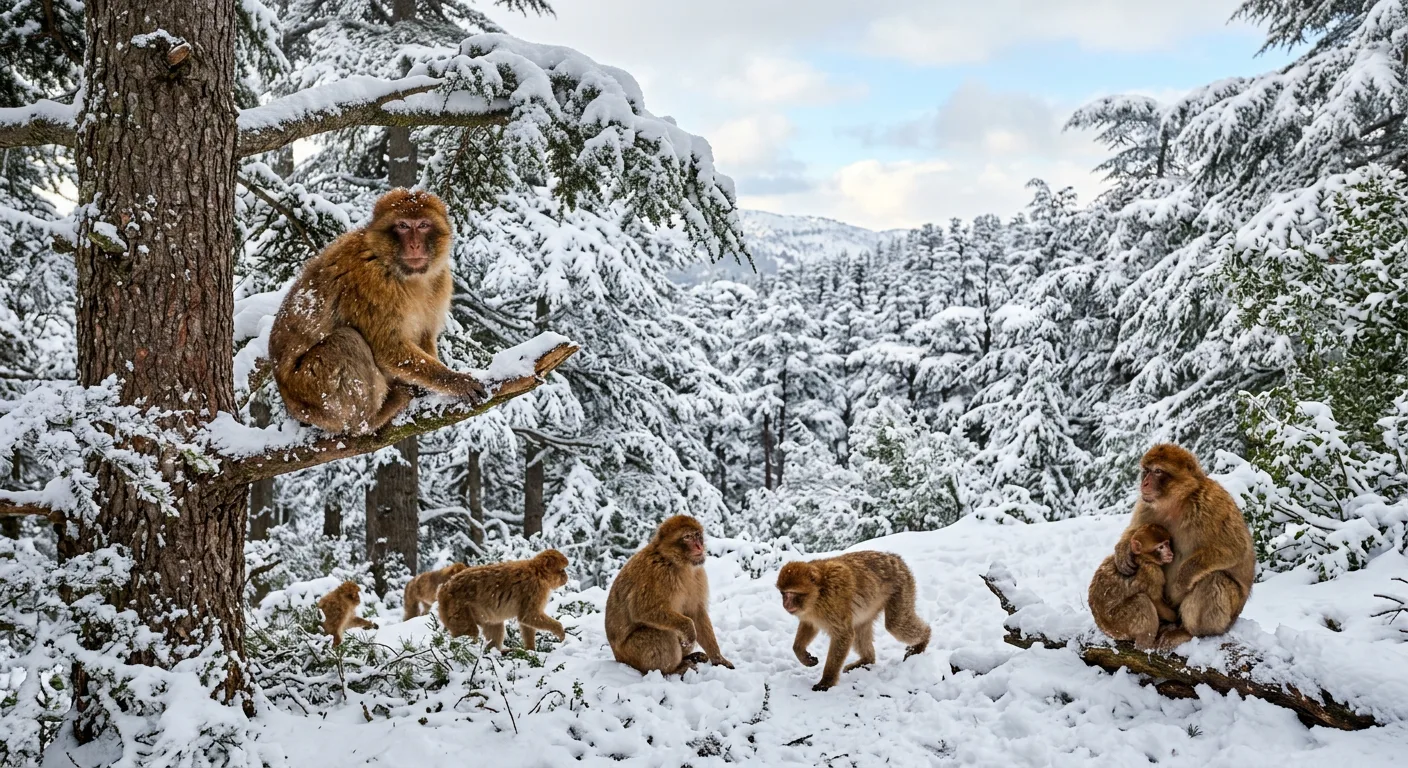
Ifrane
Morocco's cedar-forested 'Little Switzerland' — the first cool stop on the Fes road to the desert.
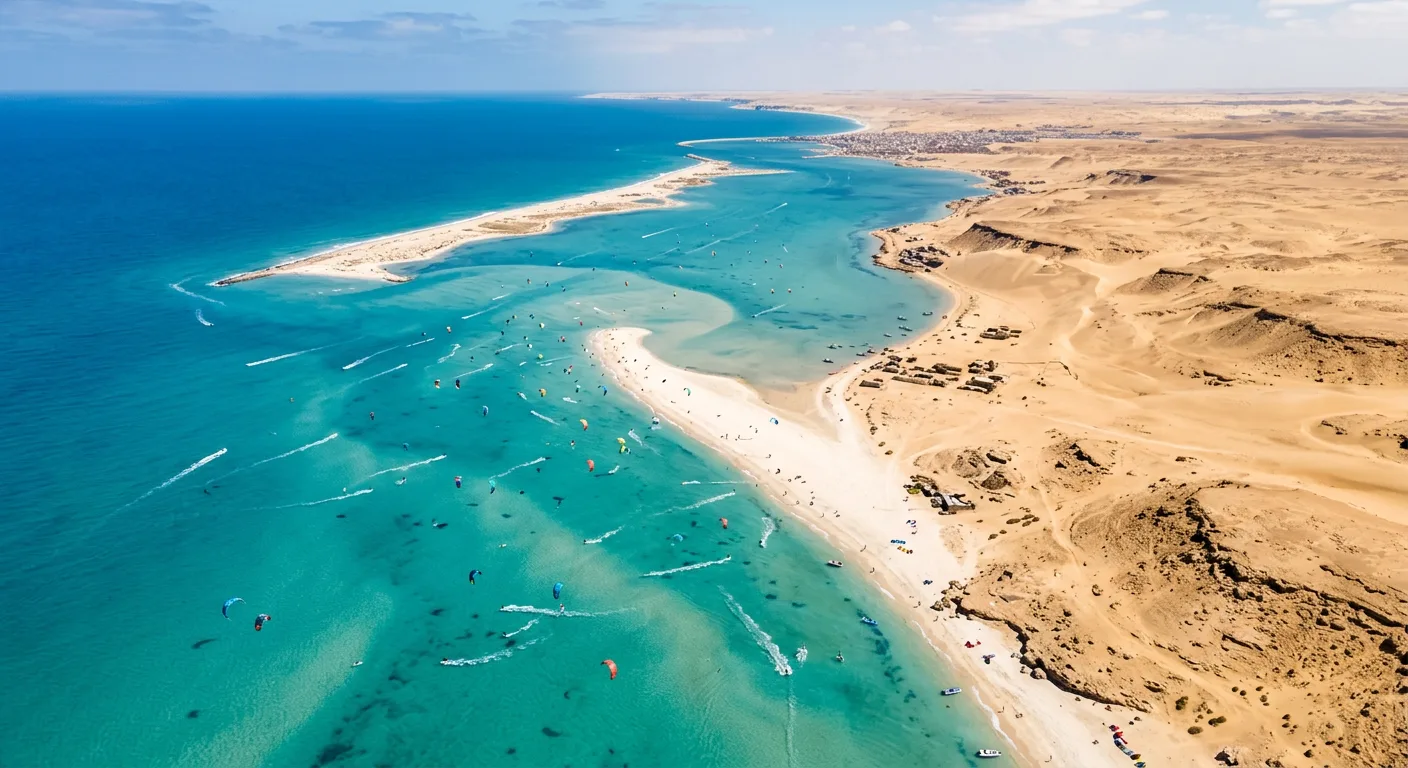
Dakhla
Where the Sahara meets the Atlantic — a turquoise desert lagoon and Africa's kitesurf capital in the deep south.
Skoura
On the kasbah road west of the dunes — Skoura's palm oasis and the storied Kasbah Amridil.
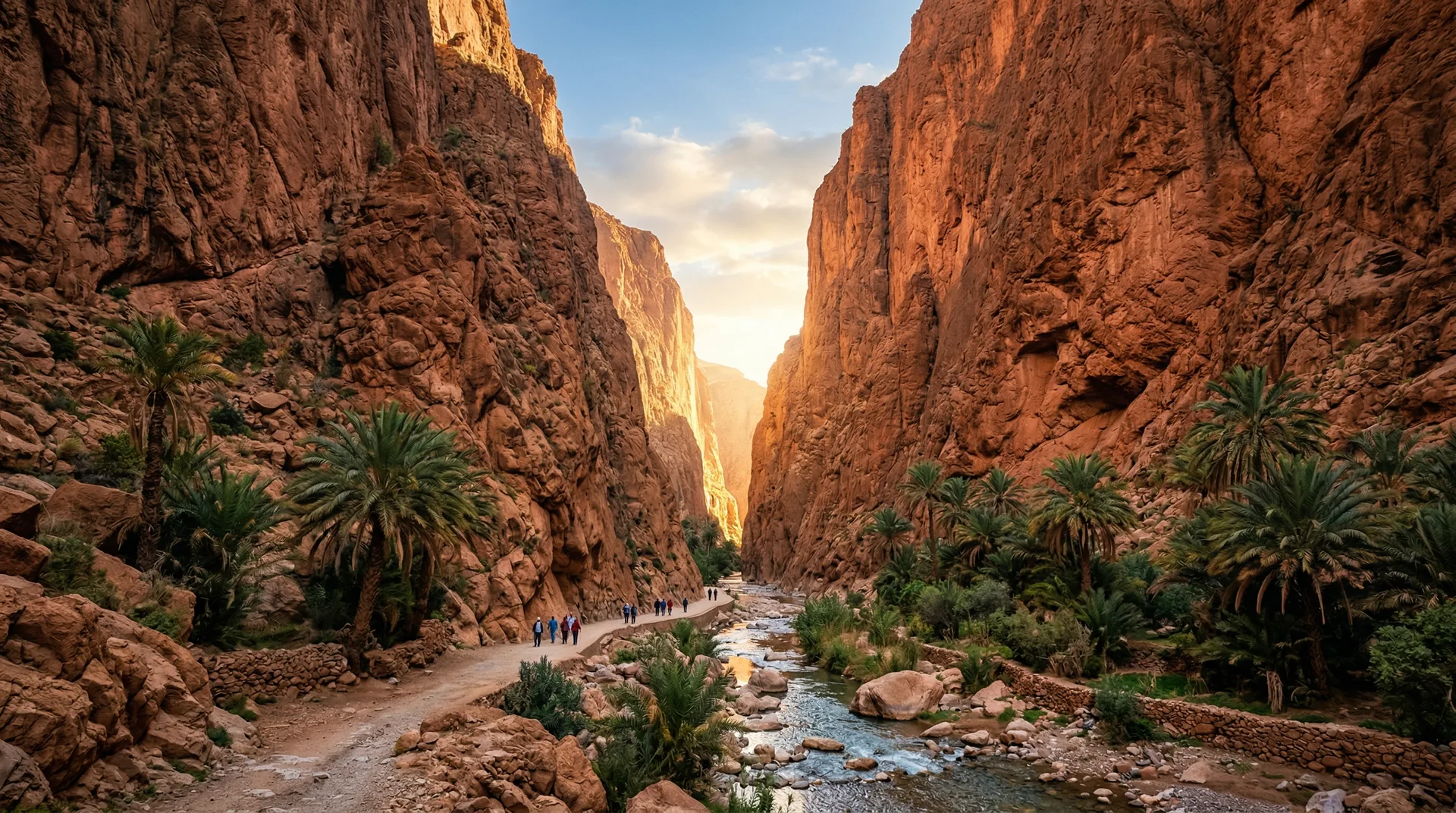
Tinghir
Where the desert pistes meet the gorges — Tinghir, lush oasis gateway to the Todra canyon.
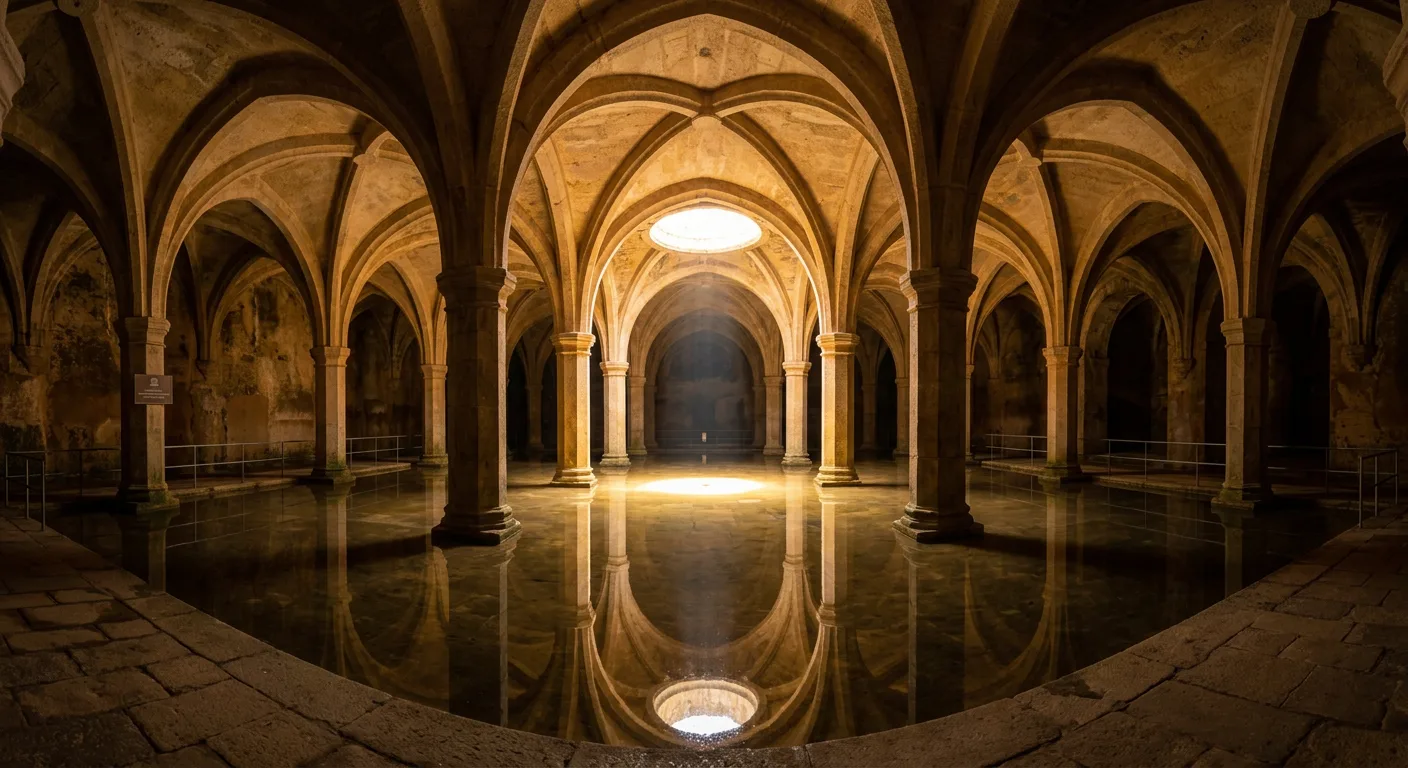
Oualidia
Morocco's oyster lagoon on the Atlantic — a fresh-seafood contrast to the dry desert south.
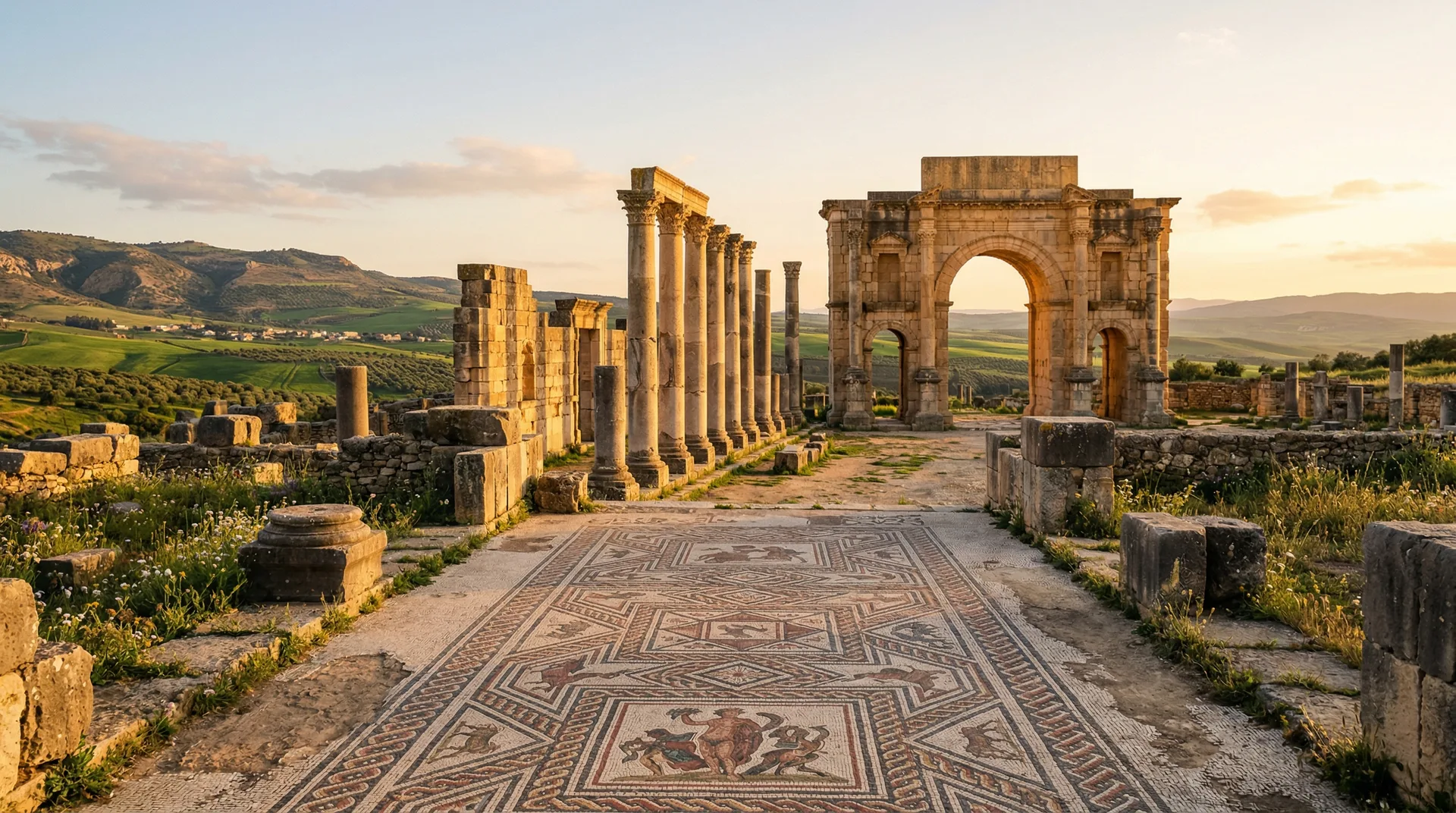
Volubilis & Moulay Idriss
Roman mosaics beneath a hilltop holy town near Fes — a historic day to add before the desert road south.
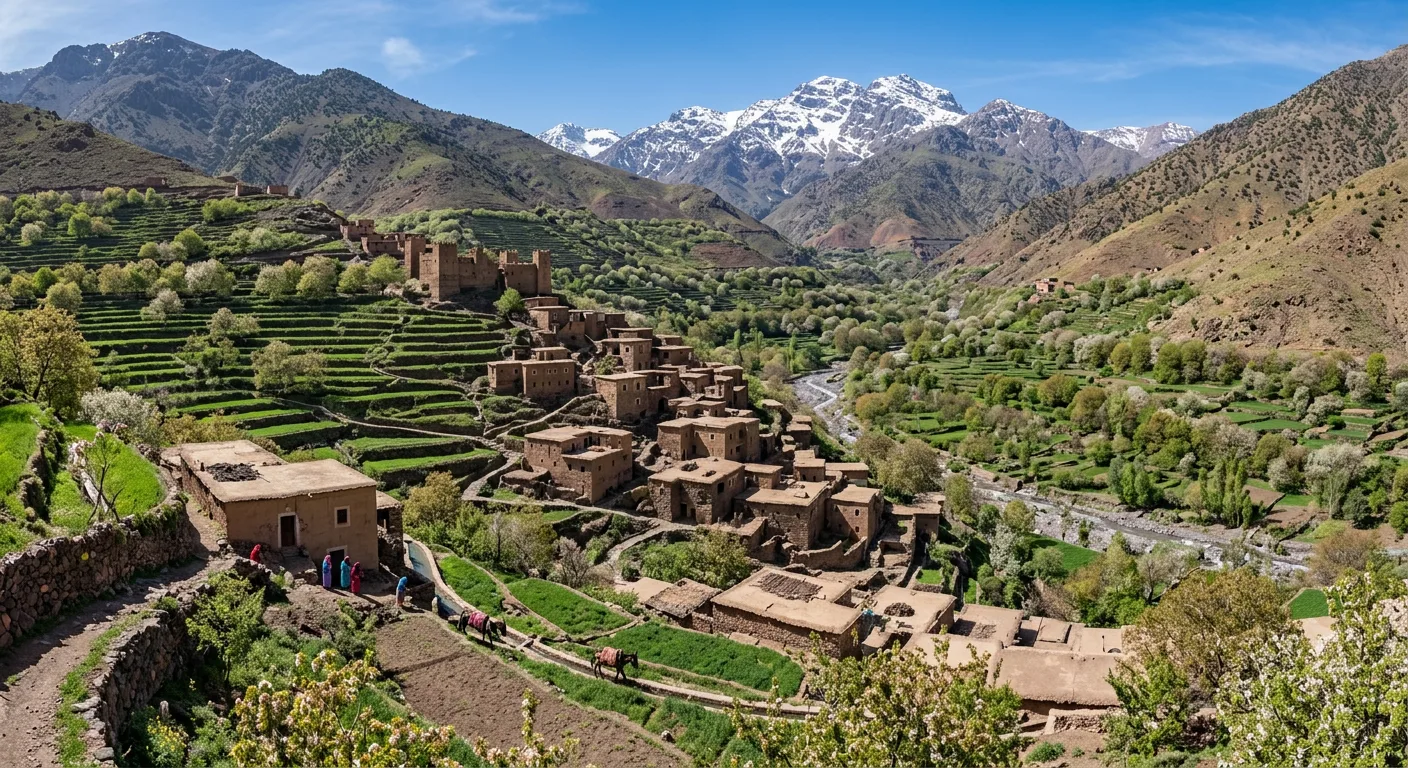
Midelt
On the long desert road over the Middle Atlas — Midelt, the apple-country crossroads between Fes and the Sahara.
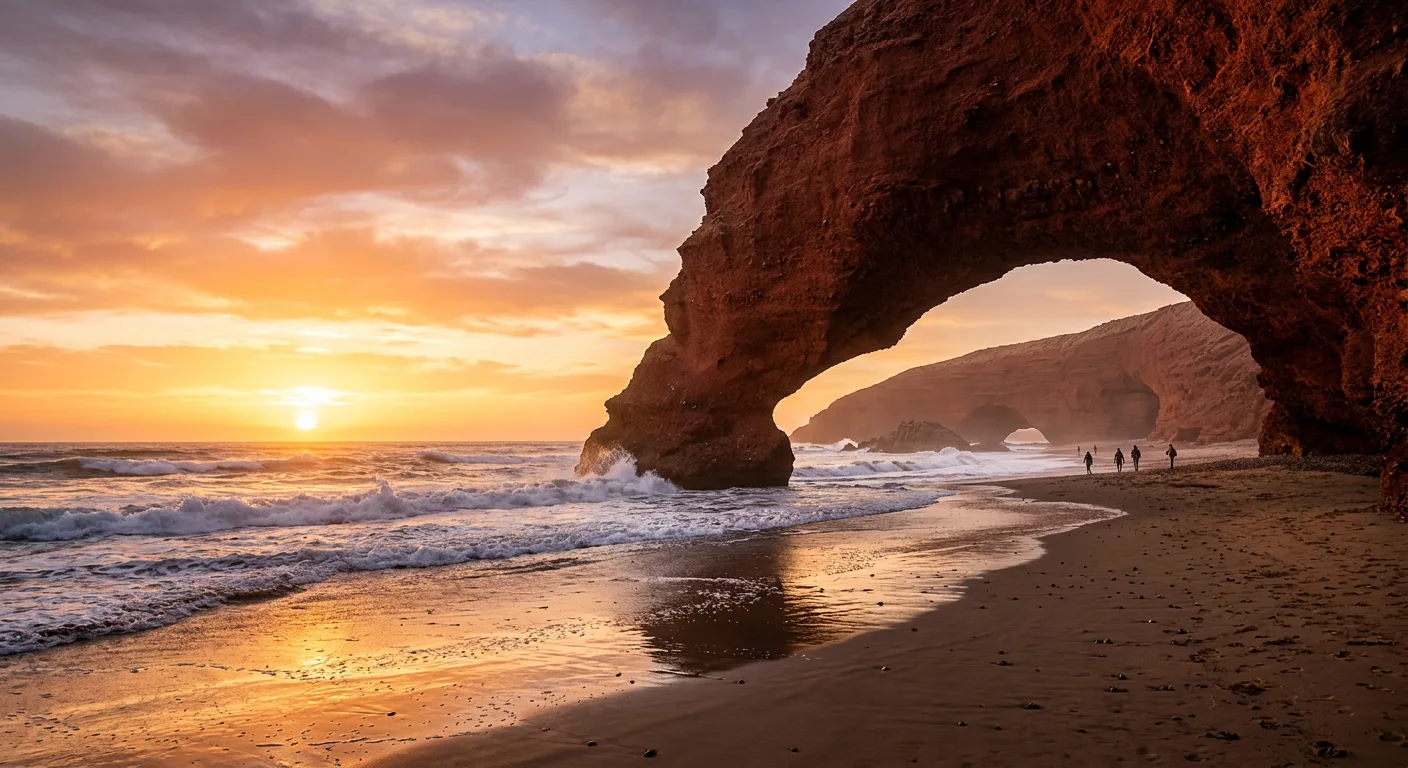
Sidi Ifni
An Art Deco Atlantic frontier town at the desert's coastal edge — Spanish colonial decay and the Legzira sea arches.
El Jadida
A UNESCO Portuguese Atlantic fortress 90 minutes from Casablanca — a coastal stop to bookend a desert trip.
Azrou
The cedar-forest macaque stop on the Fes road south — a cool green pause before the descent to the dunes.
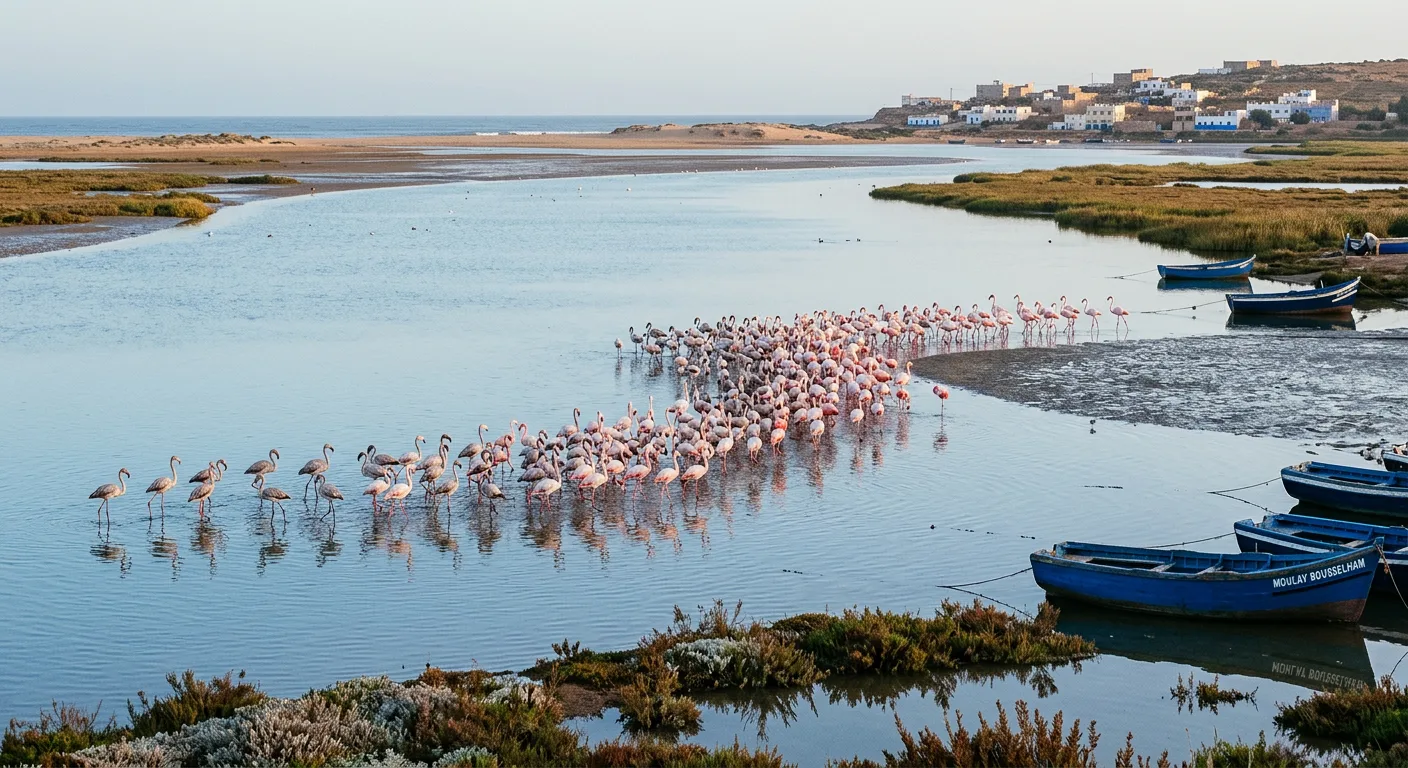
Moulay Bousselham
Morocco's premier birdwatching lagoon between Rabat and Tangier — a watery northern contrast to the desert.
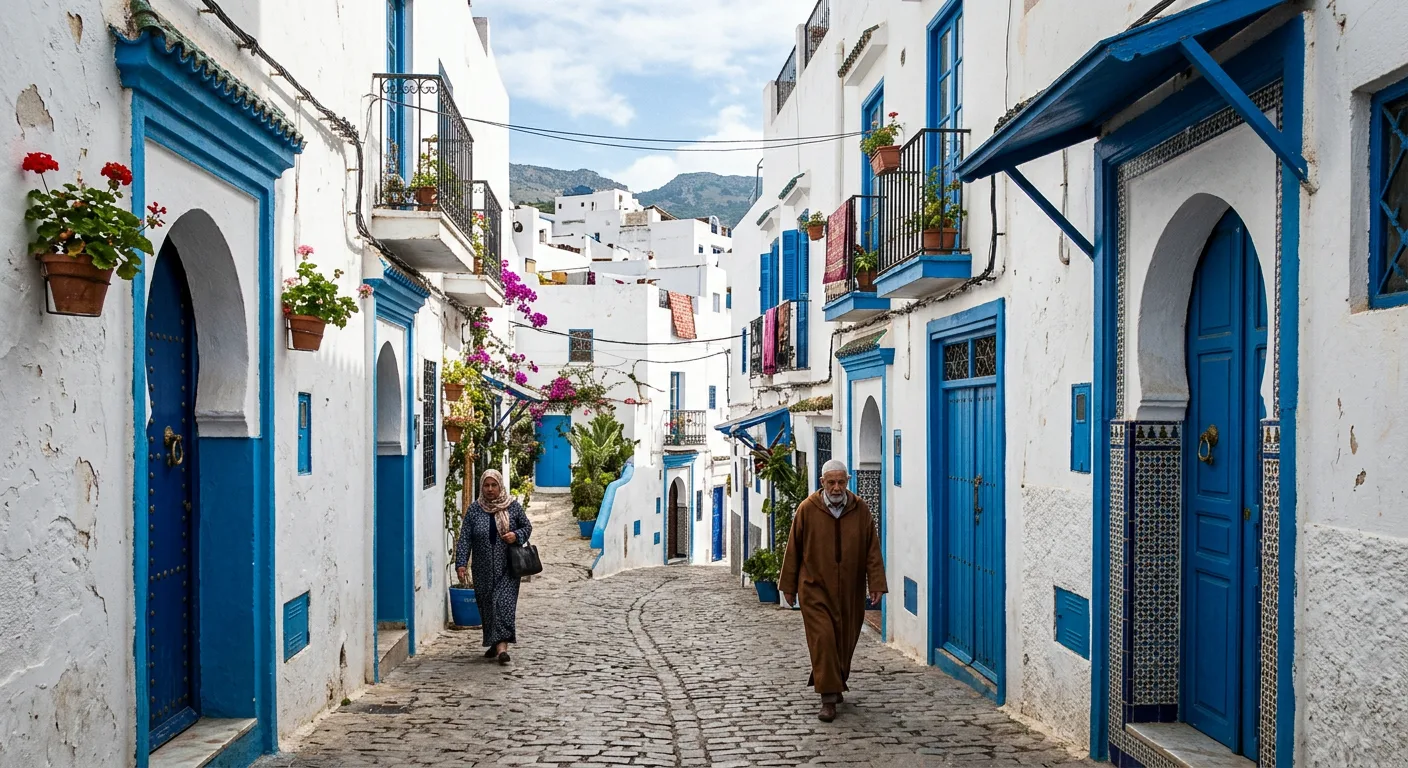
Tétouan
Morocco's Andalusian UNESCO medina near Tangier — a northern stop at the top of the desert road.
Tafraout
Morocco's pink-granite oasis in the Anti-Atlas — painted boulders and almond blossom on the southern desert back-route.
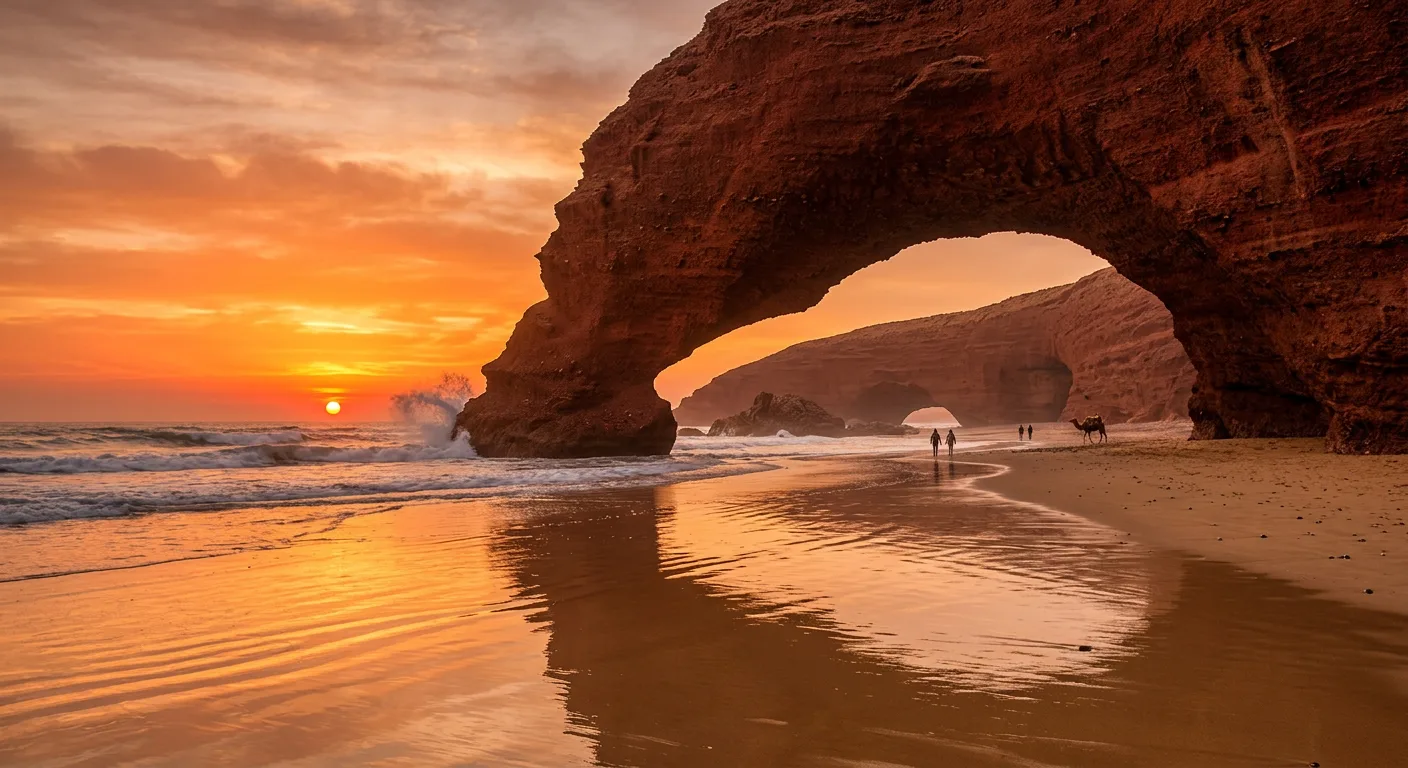
Mirleft
Morocco's finest undeveloped cliff-and-cove village — a wild Atlantic counterpoint to the desert south.
Larache
A quiet Spanish-colonial Atlantic port near the Roman ruins of Lixus — a calm northern stop before the desert road.
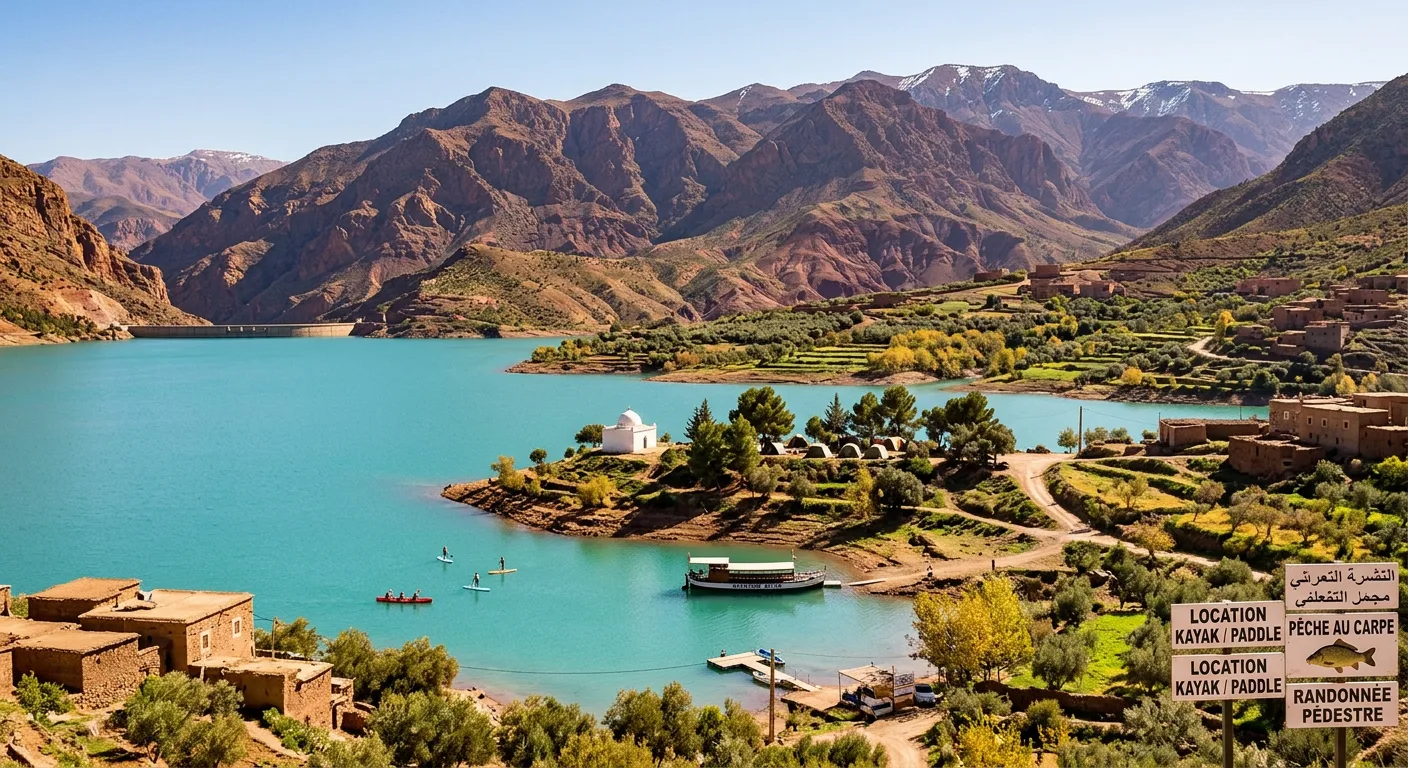
Béni Mellal
Springs, turquoise reservoirs and Atlas foothills — a green central crossroads between the desert gateways.
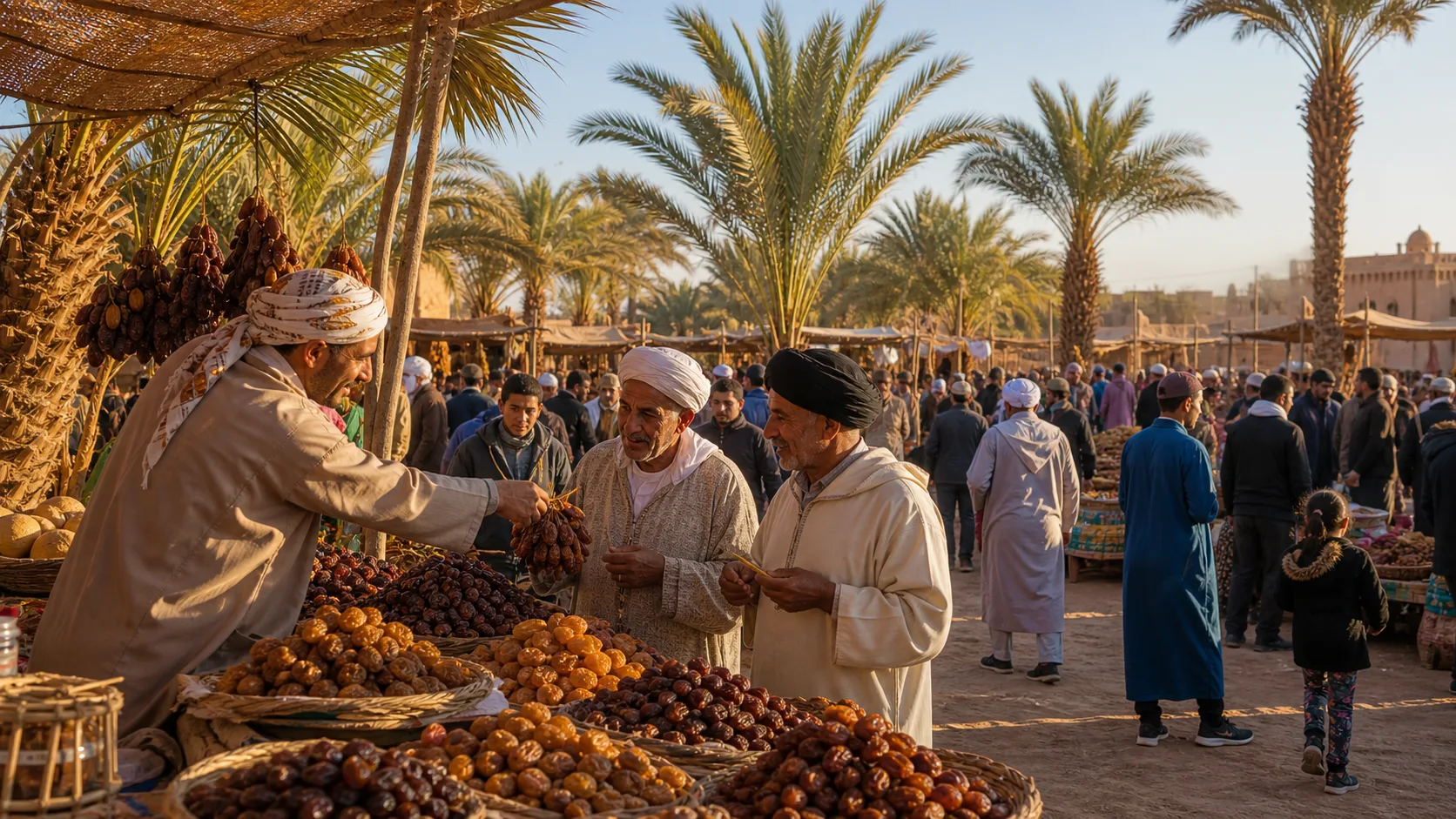
Rissani
The last big town before the sands — Rissani, ancient Tafilalt caravan gateway to Merzouga and Erg Chebbi.
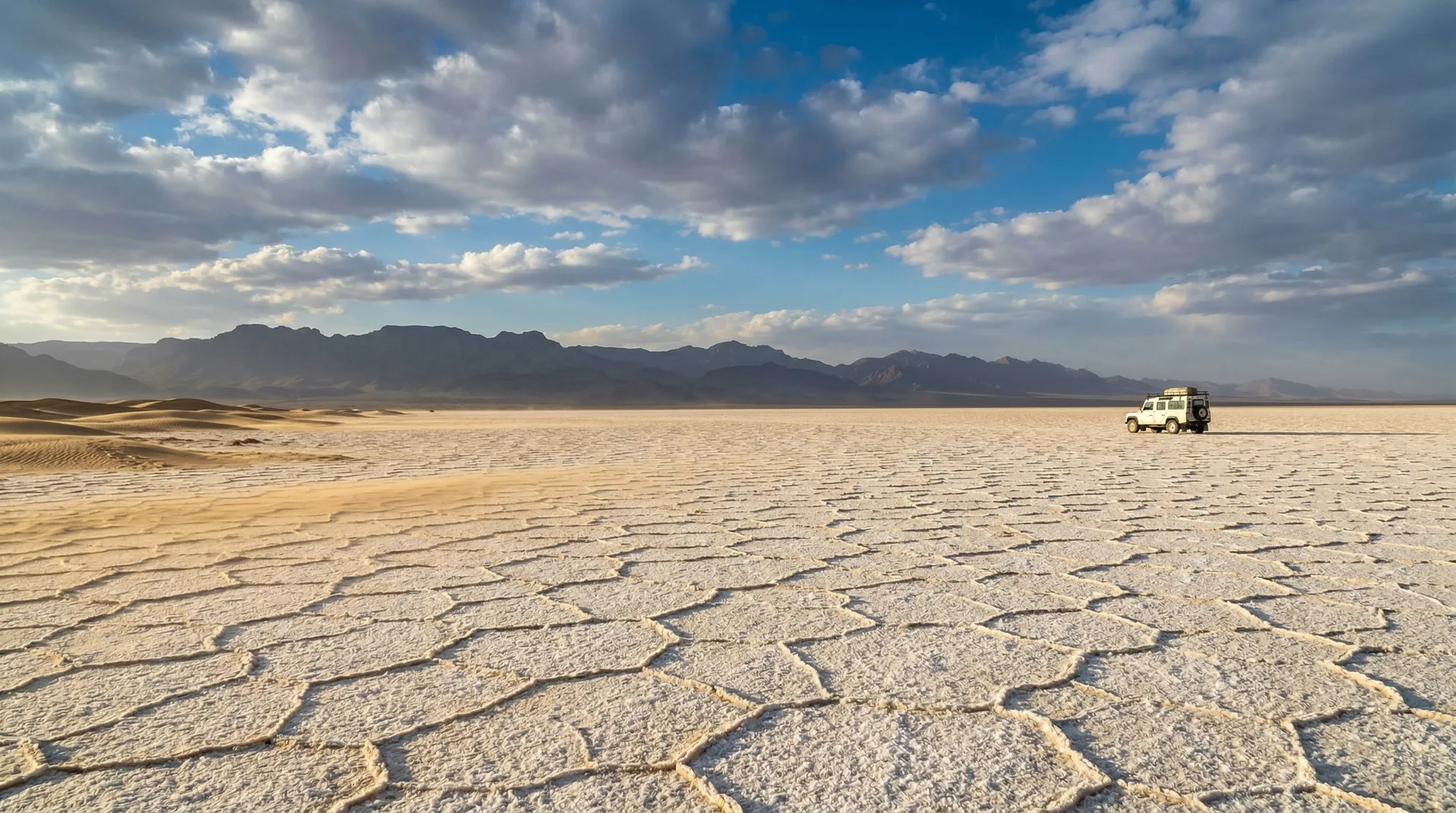
M'Hamid el Ghizlane
Where the tarmac ends and the dunes begin — M'Hamid el Ghizlane, our launch point for Erg Chigaga.
Aït Bougmez Valley
Morocco's remote 'Happy Valley' — a High Atlas trekking sanctuary whose M'Goun traverse drops to the desert's edge.
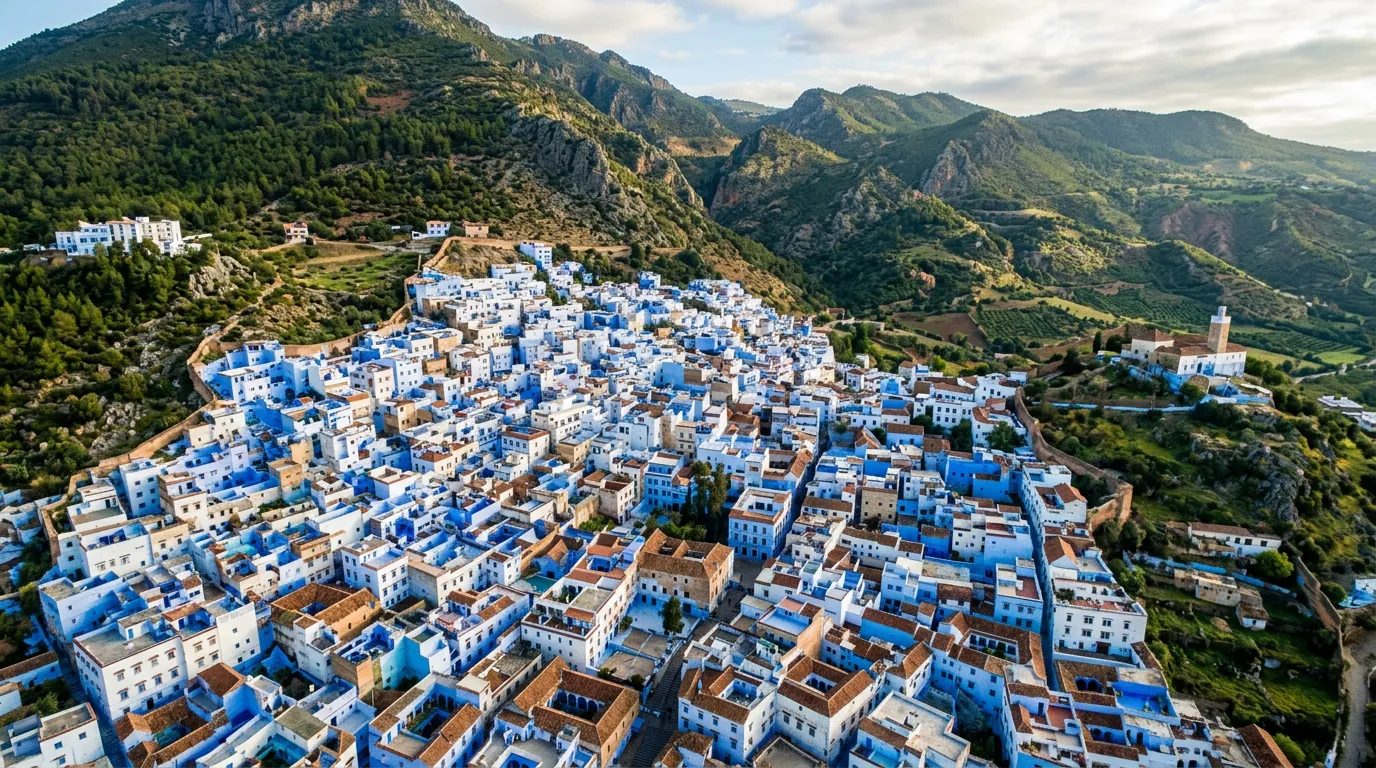
Akchour
The Rif's finest day hike — emerald waterfalls and a natural rock arch, the lush green opposite of the desert.
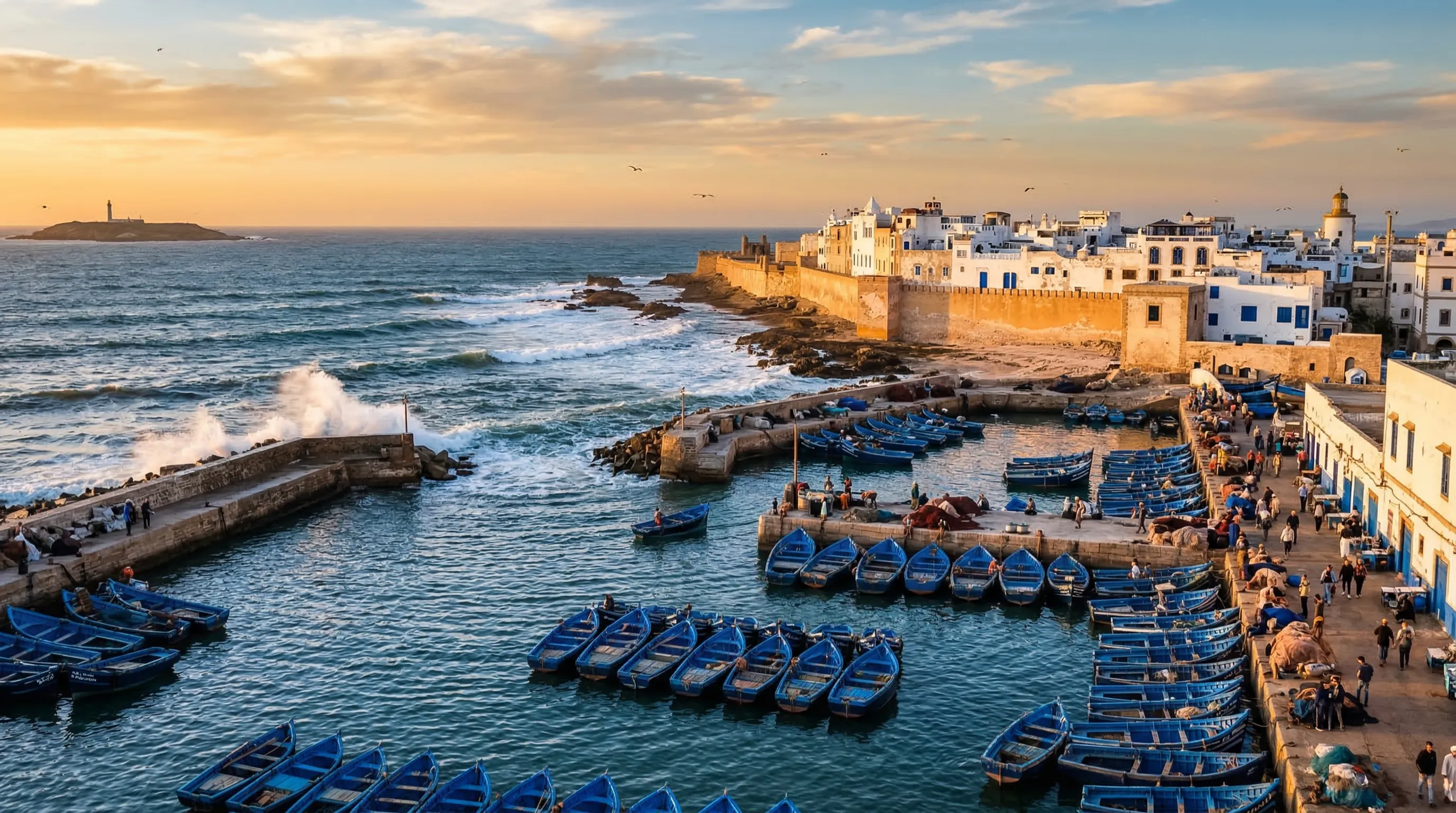
Saïdia
Morocco's Mediterranean blue-flag beach resort — 14 km of golden sand, the cool sea opposite of the desert.
Frequently asked
Frequently asked questions about Sahara desert destinations.
Where are the Sahara dunes in Morocco?
Morocco's two main dune fields ('ergs') lie in the south. Erg Chebbi sits beside the village of Merzouga in the south-east and has the tallest, most photographed dunes. Erg Chigaga lies further south-west beyond Zagora and M'Hamid, and is larger, wilder and more remote, reached by a long 4x4 approach over rough piste.
How do I get to the desert from Marrakech or Fes?
Both cities are common starting points. From Marrakech the route to Merzouga crosses the High Atlas via the Tizi n'Tichka pass, with the Dadès and Todra gorges along the way, and takes the better part of a day. From Fes the road runs south through Ifrane, the cedar forests near Azrou and the Ziz valley. Many trips run one-way between Fes and Marrakech with the desert in between, so you don't double back.
What can I see on the way to the dunes?
The drive south is part of the trip. Common stops include Aït Ben Haddou, a fortified earthen ksar and UNESCO World Heritage Site near Ouarzazate; the Dadès gorge with its winding road and rock formations; the Todra gorge with its high canyon walls; and the palm-lined oases of the Drâa and Ziz valleys.
When is the best time for a Sahara desert trip?
Spring (roughly March to May) and autumn (September to November) are generally the most comfortable, with warm days and cool nights. High summer brings very strong heat in the desert, so many travellers avoid the peak of July and August. Winter days are pleasant, but desert nights can be cold, so warm layers matter year-round.
What is the difference between Erg Chebbi and Erg Chigaga?
Erg Chebbi, by Merzouga, is the easier to reach, with the village right at the sand's edge and the tallest dunes. Erg Chigaga, beyond M'Hamid, is larger and more remote, requiring a longer off-road approach — a good choice if you want fewer people and a deeper-desert feel. Both offer camel treks and overnight desert camps.