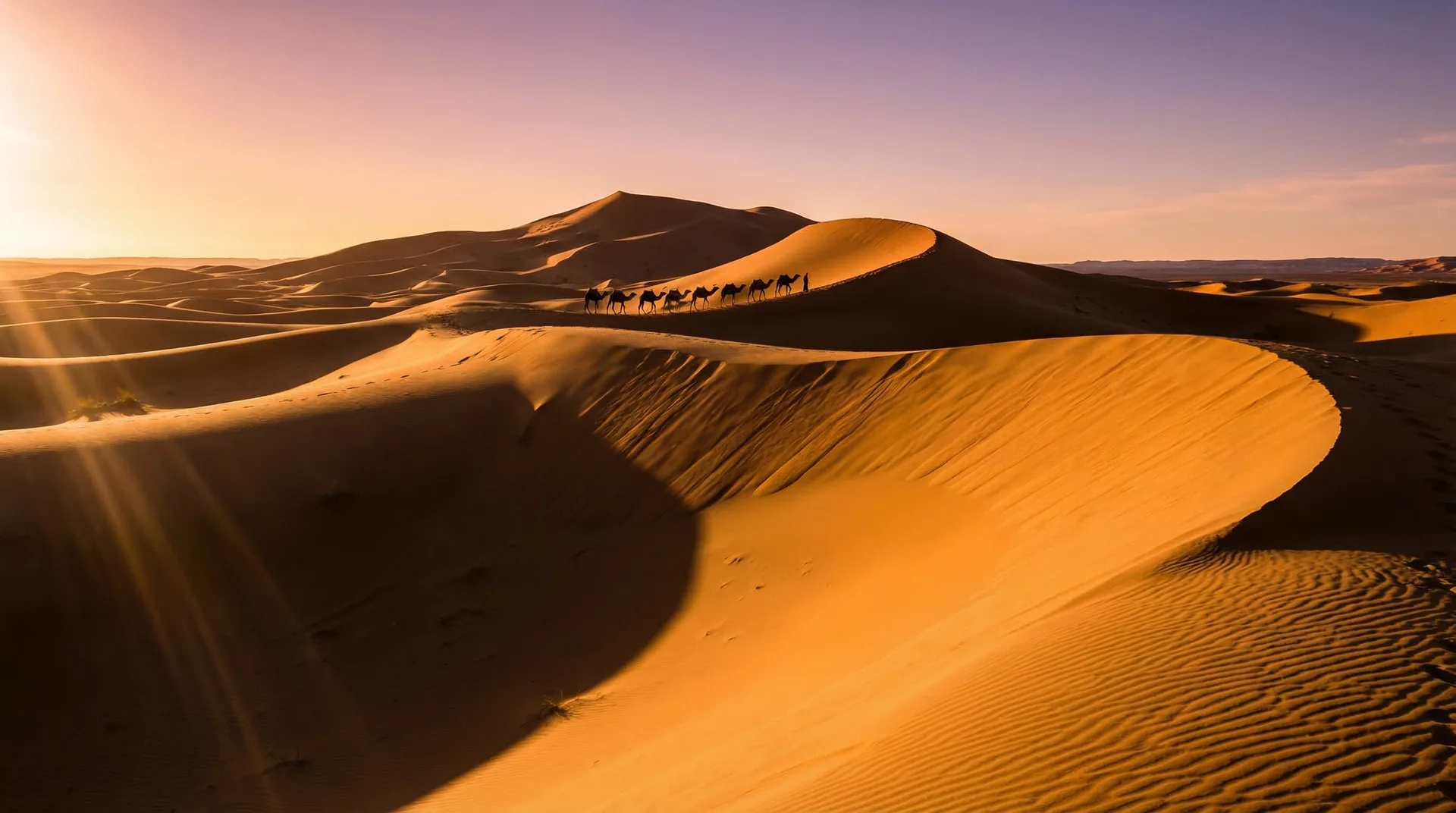
Yes — for most first-time visitors a Sahara desert tour from Marrakech is worth it, but only if you give it the time it needs: at least 2 days, and ideally 3. Merzouga and its great Erg Chebbi dunes are roughly 560 km and 8–9 hours by road from Marrakech, so the desert is a journey, not a day trip. With 3 days you reach the tall dunes, break the drive at Ait Ben Haddou and the Dades and Todra gorges, ride a camel into the sand at sunset and sleep in a tented camp under one of the clearest skies on Earth. With only 1 free day, the big dunes are out of reach — choose the small Agafay stone desert near Marrakech instead. Here's the full decision, question by question.
Is it actually worth it?
For the overwhelming majority of travellers, the honest answer is yes. Erg Chebbi is a real, towering sand sea — its tallest dunes reach around 150 metres — not a token patch of desert, and a quiet night under a sky with almost no light pollution is the part of Morocco people remember most. The single honest catch is the driving. The dunes sit far from the imperial cities, so the trip lives or dies on whether you give it enough days. Rush it into a one-day dash and you'll spend it in the vehicle and resent the whole thing; give it 3 days and it's very often the highlight of the entire trip. If you're starting from Fes rather than Marrakech, the same logic applies — Merzouga is about 470 km and 7–8 hours from Fes, which is why a one-way Fes-to-Merzouga route works so well as part of a crossing.
How many days do you really need?
This is the question that decides everything else. The big dunes are a long way from the cities, and that distance sets the minimum length. Here's how 2, 3 and 4 days compare.
2 days · 1 night
The rushed minimum
Two long drive days with a single sunset, night and sunrise in between. From Marrakech this realistically means Zagora rather than Merzouga, because Zagora is closer (about 6–7 hours each way). Doable if your time is fixed, but you spend most of it in the vehicle.
3 days · 2 nights
The classic sweet spot
The pace most people should book. It reaches the big Erg Chebbi dunes at Merzouga, breaks the drive at Ait Ben Haddou and the Dades and Todra gorges, and gives you a full, unhurried evening and morning in the sand without back-to-back marathon drives.
4+ days
Chigaga or the crossing
Four days or more lets you reach remote Erg Chigaga beyond M'hamid by 4x4, or do a one-way Marrakech-to-Fes desert crossing so you never retrace the route. Best if you want the wildest, quietest dunes or are continuing north to Fes afterwards.
Our short version: book 3 days / 2 nights if you possibly can. For the full breakdown by starting city and pace, see how many days you need for the Sahara.
Merzouga, Zagora or Erg Chigaga?
Morocco has three main desert bases reached from Marrakech, and the choice is mostly a trade-off between drive time and dune size.
Merzouga · Erg Chebbi
The tall, cinematic dunes most people picture — up to about 150 m. Farthest from Marrakech (8–9 hours) but with the widest choice of camps and the easiest dune access. Best on a 3-day trip. This is the dune experience most travellers are really after.
Zagora · Tinfou / smaller dunes
Closer to Marrakech (about 6–7 hours via the Draa Valley), so it fits a tight 2-day trip — but the dunes are smaller and scrubbier, and the experience is gentler. The sensible choice only when time is genuinely short.
Erg Chigaga · beyond M'hamid
The wildest, quietest big dunes, reached by 4x4 beyond M'hamid at the end of the Draa Valley. Fewer people, a more remote feel, and best on a 3–4 day trip for those who want the desert without the crowds.
For a deeper side-by-side, read our Merzouga vs Zagora comparison, the guide to where to stay in the Sahara, and our Erg Chebbi vs Erg Chigaga breakdown.
The drive: what you actually see en route
The long drive south is one of the best parts of a desert tour — the scenery changes hour by hour from mountains to gorges to palm valleys to bare, cinematic plateau. Here's the classic Merzouga route.
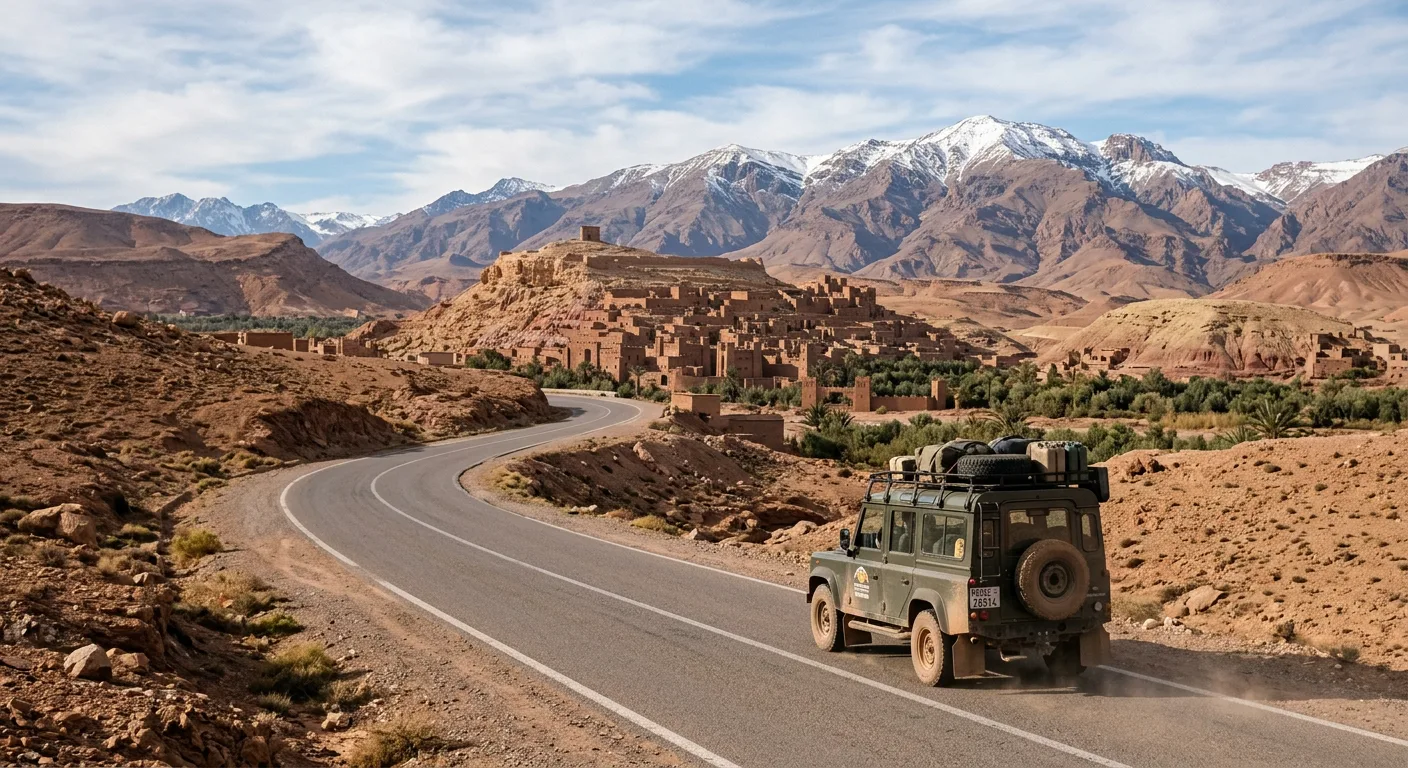
High Atlas & Ait Ben Haddou
Leaving Marrakech you climb the Tizi n'Tichka pass (2,260 m) through Berber villages and switchbacks, then descend to Ouarzazate and the UNESCO earthen ksar of Ait Ben Haddou — the most-filmed kasbah in Morocco.
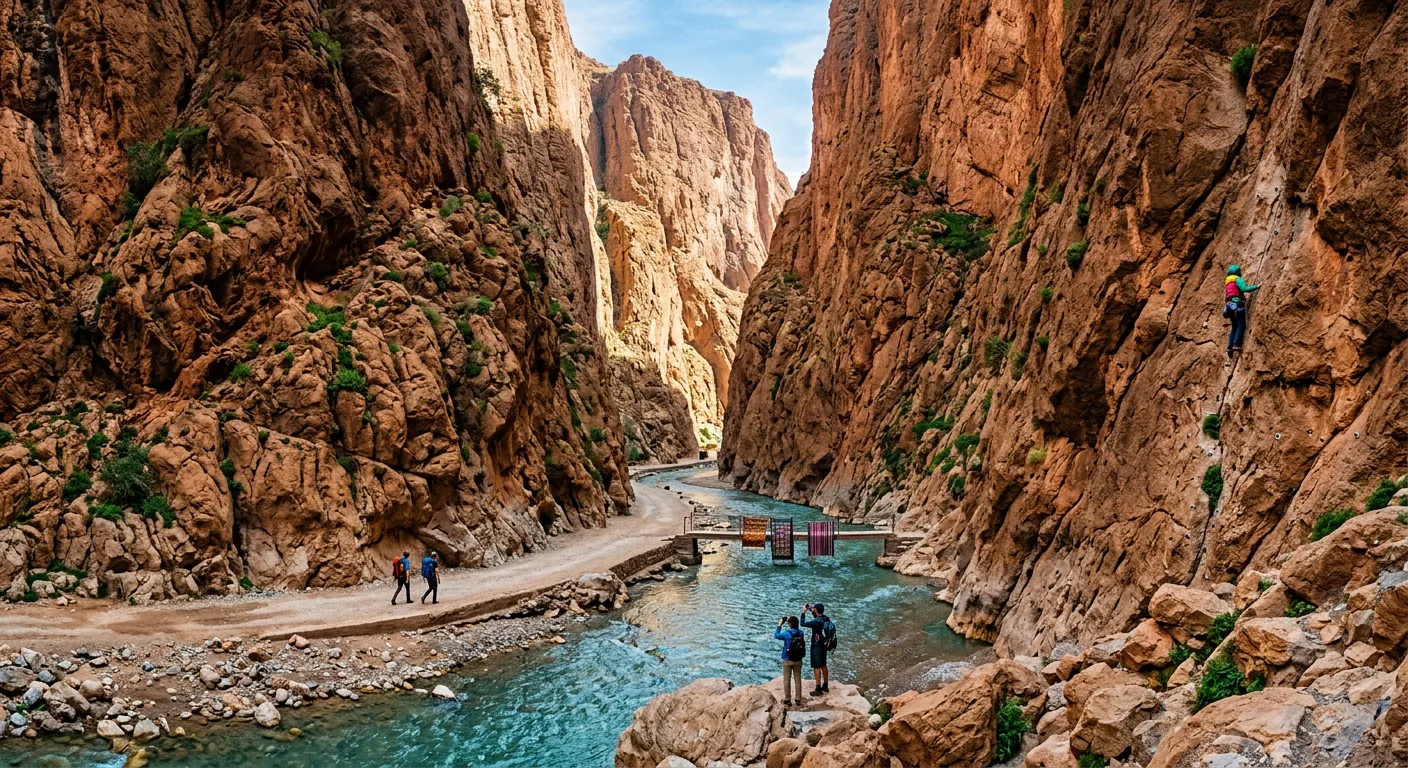
Dades & Todra gorges
The 3-day route follows the Dades Valley past the 'Valley of a Thousand Kasbahs', the famous hairpin road above the Dades Gorge, and the towering 300-metre red walls of the Todra Gorge near Tinghir.
Ziz Valley, Rissani & Merzouga
Beyond the gorges the road runs down the green Ziz Valley palm groves to Erfoud and Rissani — the old caravan capital and its Monday and Sunday souk — before the dunes of Erg Chebbi rise at Merzouga. From Zagora, the route instead follows the Draa Valley, Morocco's longest oasis.
The camel trek and the night in camp
Two things travellers worry about most — the camel trek and sleeping in a tent — are far easier than people fear. In the late afternoon you reach the edge of the sand, swap the vehicle for a camel (or a 4x4 if you'd rather not ride), and a guide leads the animals on foot into the dunes for about an hour, timed so you crest the sand at sunset. You don't steer; the only knack is leaning back then forward as the camel stands and sits. At camp you're shown to a tent, drink sweet mint tea, eat a tagine dinner by lantern light and often hear live drumming around a fire, then sleep under thick blankets — the desert turns genuinely cold after dark in every season. You wake early for sunrise over the dunes.
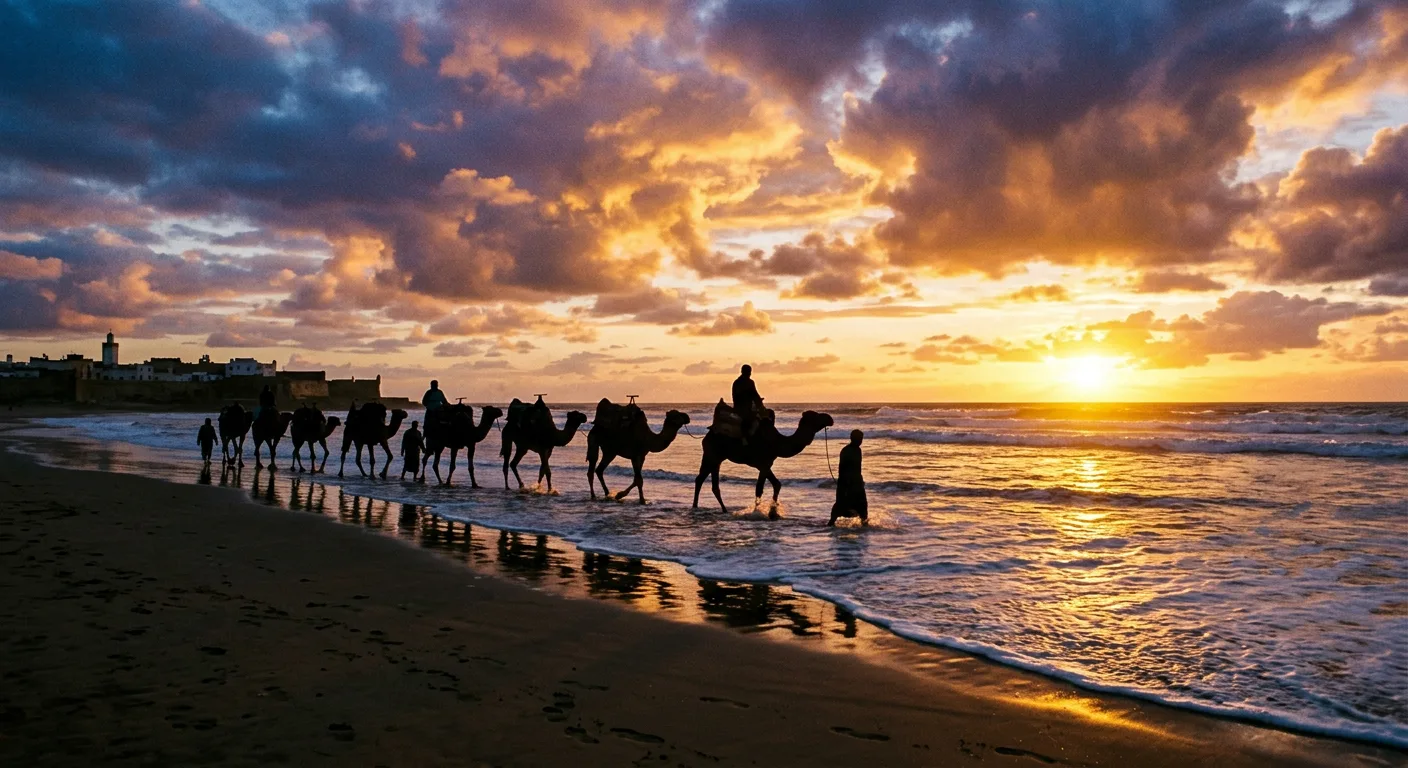
Camps scale with what you book, from simple shared-facility tents to private en-suite luxury — but the sky, the silence and the sunrise are the same. For the full picture, read staying in a desert camp and what a Sahara desert tour is actually like.
When should you go?
The desert is hot by day and cold at night, in every season, but some months are far kinder than others. Spring (March–May) and autumn (September–November) are the sweet spots — warm, clear days and cold but bearable nights. Winter (December–February) brings mild, mostly sunny days around 18–20°C and beautiful clear skies, but genuinely cold, sometimes near-freezing nights, so pack warm layers. Summer (June–August) is extreme — regularly into the mid-40s°C at midday — and only really works at sunrise and sunset. For the seasonal detail, see the Sahara in winter, the Sahara in summer, and why the nights get so cold.
The honest verdict
A Sahara desert tour from Marrakech isn't a casual excursion — it's a real journey, with long hours on the road and a genuinely cold night under canvas. But what you get back is the rarest thing a modern trip can offer: silence, a sky thick with stars, and the slow gold light of sunrise over an ocean of sand. For most travellers it's worth every kilometre. Give it 3 days if you can, choose Merzouga for the big dunes (or Zagora only if time is short), pack for both heat and cold, and the desert will repay you many times over.
If you'd like us to build the route, the camp and the pacing around your dates, browse our desert tour options or tell us when you're coming and we'll advise honestly on what's worth it for your trip.
Frequently asked
Is a Sahara desert tour from Marrakech worth it?
For most first-time visitors, yes. The dunes of Erg Chebbi at Merzouga are a genuine 150-metre-high sand sea, and a night in a quiet camp under a sky with almost no light pollution is the kind of memory people describe for years. The one honest caveat is the driving: Merzouga is roughly 560 km and 8–9 hours by road from Marrakech, so a worthwhile trip needs at least 2 days, and ideally 3. If you only have one free day, the deep desert is not reachable and back — choose the small Agafay stone desert near Marrakech instead, or skip it rather than rush it.
How many days do you need for a Sahara tour from Marrakech?
Two days (1 night) is the rushed minimum and means two long drive days bookending a single sunset and sunrise. Three days (2 nights) is the classic sweet spot: it adds time for the Dades and Todra gorges and a less punishing pace. Four days lets you reach remote Erg Chigaga by 4x4, or do a one-way Marrakech-to-Fes crossing without backtracking. If you have only one day, the big dunes are out of reach.
Is Merzouga or Zagora better for a desert trip?
Merzouga (Erg Chebbi) has the tall, cinematic dunes most people picture, but it is farther — about 8–9 hours from Marrakech. Zagora is closer, around 6–7 hours, but its dunes are smaller and scrubbier; it suits a short 2-day trip when time is tight. For the wildest, quietest big dunes, Erg Chigaga beyond M'hamid is the third option, reached by 4x4 and best on a 3–4 day trip. If you can spare the days, Merzouga is the dune experience most people are after.
What do you see on the drive to the Sahara?
From Marrakech the road climbs the High Atlas over the Tizi n'Tichka pass (2,260 m), then drops to Ouarzazate and the UNESCO kasbah of Ait Ben Haddou. Most 3-day routes then follow the Dades Valley and its gorge, the dramatic switchbacks above it, the Todra Gorge with its 300-metre red walls near Tinghir, and the long palm ribbon of the Ziz Valley before reaching Rissani and Merzouga. The drive is a real part of the trip, not just transit.
When is the best time to do a Sahara desert tour?
Spring (March–May) and autumn (September–November) are ideal: warm, clear days and cold but bearable nights. Winter (December–February) brings mild, sunny days around 18–20°C but genuinely cold, sometimes near-freezing nights — pack warm layers. Summer (June–August) is extreme, regularly into the mid-40s°C at midday, so go only at sunrise and sunset if at all. Whatever the season, the desert is hot by day and cold after dark.
What is the camel trek and desert camp actually like?
In the late afternoon you swap the vehicle for a camel at the edge of the dunes and a guide leads you on foot into the sand for about an hour, timed to crest the dunes at sunset. At camp you are shown to a tent, drink mint tea, eat a tagine dinner by lantern light and often hear live drumming around a fire, then sleep under thick blankets. You wake for sunrise over the dunes. Camps range from simple shared-facility tents to private en-suite luxury — the sky and silence are the same either way.
Thinking about the dunes?
We'll plan the route, the camp and the pacing so the desert is worth every kilometre.
Tell us your dates and how long you have — Sahara Desert Adventures will advise honestly on whether the deep desert fits your trip, which dunes suit you, and how to build a route you'll remember for years.
Request an itinerary