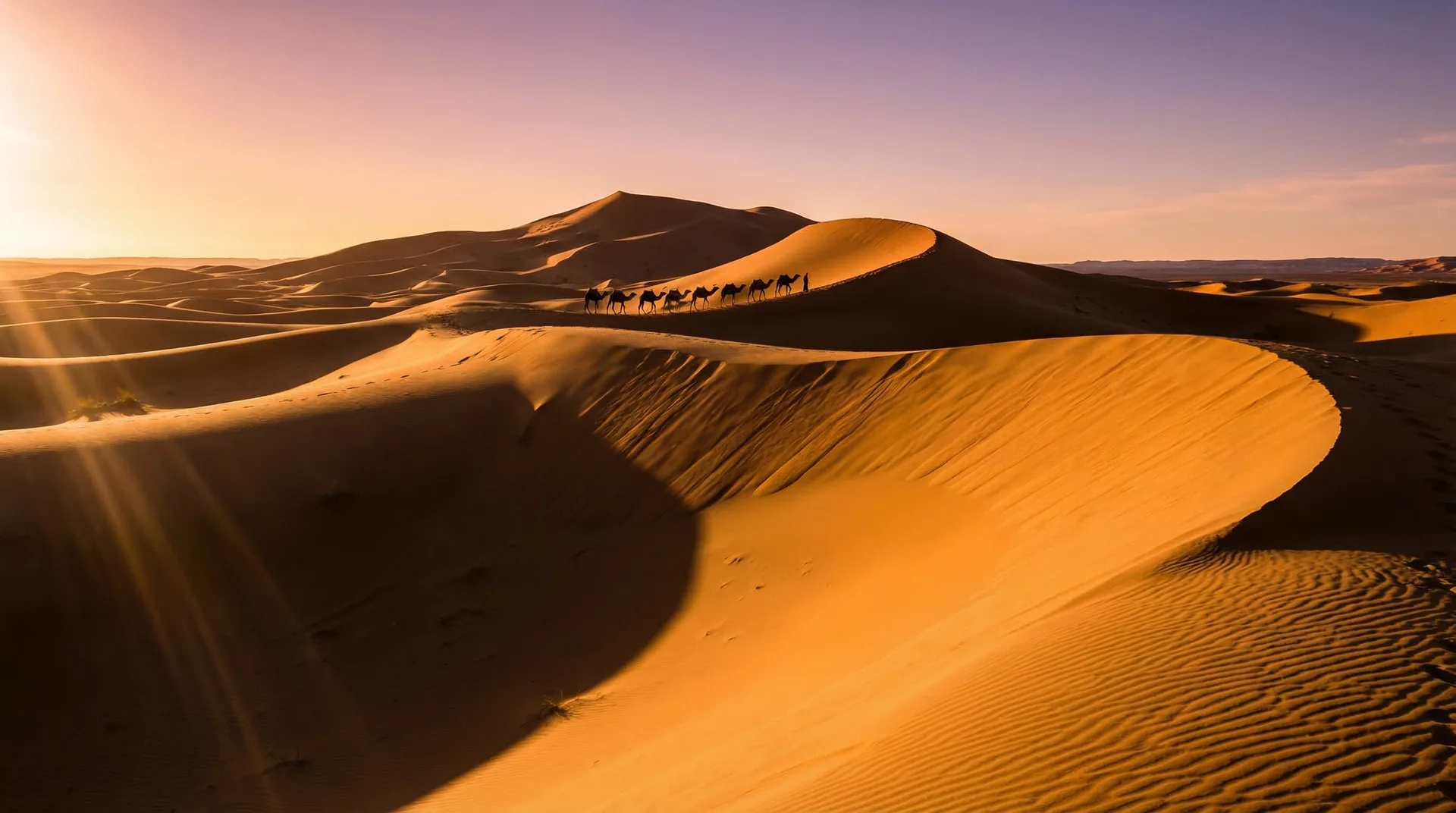
Let's be honest from the first line: summer is the hardest time to visit the Sahara. If your dates can move at all, this guide will gently steer you toward spring or autumn. But plenty of people only have July or August free — and a desert trip in high summer is still possible, provided you respect the heat and plan around it rather than against it. This is the safety-first briefing we'd give a friend before they went.
How hot it really is — June to August
In the deep desert — Merzouga and the dunes of Erg Chebbi, or down around Zagora — the height of summer is extreme. From roughly June through August, daytime temperatures commonly sit around the mid-40s°C and can climb higher, under intense, unbroken sun. Out on the open dunes there's almost no shade, and the sand itself radiates heat back at you. These aren't numbers to shrug at: midday exertion in those conditions is genuinely dangerous, and heat exhaustion and heatstroke are real risks for anyone pushing too hard at the wrong hour.
If you do go: travel only at sunrise and sunset
The single rule that makes a summer trip survivable is to do everything at the cool edges of the day. Travel, the camel trek into camp, sandboarding, dune walks, photography — all of it belongs to sunrise and sunset, when the temperature is at its lowest and, happily, the light is at its most beautiful. Through the middle of the day, the plan is simple and non-negotiable: rest in shade and stay still. Treat midday as downtime, not as time to explore.
Alongside that, the basics matter more in summer than at any other time: hydrate heavily — drink far more water than you think you need — cover up with loose, light, long clothing, and use strong sun protection: a wide-brimmed hat, high-factor sunscreen, sunglasses and a long scarf for your face and neck. Anyone with heart, circulation or heat-sensitivity concerns should be especially careful and take their own medical advice before committing to a summer desert trip.
The one upside: warmer nights
Summer's redeeming feature is the night. Desert nights in July and August are warmer than at any other season — still a real relief after the day's heat, and generally pleasant rather than cold. You won't need the heavy layers that spring, autumn and especially winter nights demand. Sitting out under a vast, clear sky after sunset, with the worst of the heat gone, is the part of a hot-season desert trip that people genuinely treasure.
The honest verdict: spring or autumn are better
Here's the part we won't dress up: summer is the least comfortable time for a Sahara trip, and many travellers prefer to avoid it altogether. The better seasons are clear. Spring (roughly March to May) and autumn (roughly September to November) bring days that are warm rather than brutal and nights that are cool — the sweet spot for the dunes. Winter days are pleasant and clear, though winter nights get genuinely cold. If your dates have any give in them, shifting away from the June–August peak is the single biggest thing you can do to enjoy the desert instead of merely enduring it.
So the verdict is this: a summer Sahara trip is doable with real care, built entirely around sunrise, sunset and shade — or, better still, shift it to spring or autumn if you possibly can. Either way, we're happy to plan the pacing so the heat works for you rather than against you. You can browse our desert tour options here or tell us your dates and we'll advise honestly.
Frequently asked
How hot does the Sahara actually get in summer?
Very hot. From June through August in the deep desert around Merzouga and Erg Chebbi, or down at Zagora, daytime temperatures commonly sit around the mid-40s°C and can climb higher, with intense, unrelenting sun. This isn't a 'warm holiday' kind of heat — midday exertion in those conditions is genuinely dangerous, and the open dunes offer almost no shade. Treat the figures seriously rather than as a number on a forecast.
Is it safe to visit the desert in summer?
It's doable with care, but it demands real discipline about the heat. The honest answer is that summer is the least comfortable time for a Sahara trip, and many travellers choose to avoid it. If you do go, the non-negotiables are: do all dune activity and travel only around sunrise and sunset, rest in shade through the middle of the day, drink far more water than usual, and cover up with strong sun protection. Anyone with heart, circulation or heat-sensitivity issues should be especially cautious and seek their own medical advice first.
Are the desert nights cooler in summer?
They are warmer than at any other time of year, but still a relief after the day. A summer night at a desert camp is generally pleasant rather than cold — you won't need the heavy layers that spring, autumn and especially winter nights call for. That warmer night is one of the few comforts summer offers: sitting out under the stars after sunset is the part of a hot-season desert trip people tend to enjoy most.
When is the best time to visit the Sahara instead?
Spring (roughly March to May) and autumn (roughly September to November) are the sweet spots: days are warm rather than brutal and nights are cool. Winter days are pleasant and clear, though winter nights get genuinely cold. If your dates are flexible at all, shifting away from the June–August peak is the single biggest thing you can do to make a desert trip more comfortable.
How should I plan a summer desert day?
Build the whole day around the cool edges. Travel and do your camel ride, sandboarding or dune walk at sunrise and again at sunset, when the light is also at its best. Through the middle of the day, stay in shade, keep still, and rehydrate — this is rest time, not activity time. Carry plenty of water, wear a wide-brimmed hat and a long scarf, use high-factor sunscreen, and keep loose, covering clothing on. Planned this way, summer is survivable; planned around midday, it isn't.
Thinking about the desert?
We'll plan the season, the timing and the pacing so the heat never catches you out.
Tell us your dates and how flexible they are — Sahara Desert Adventures will advise honestly on whether to go in summer with care, or shift to spring or autumn, and build a route around the cool edges of the day.
Request an itinerary