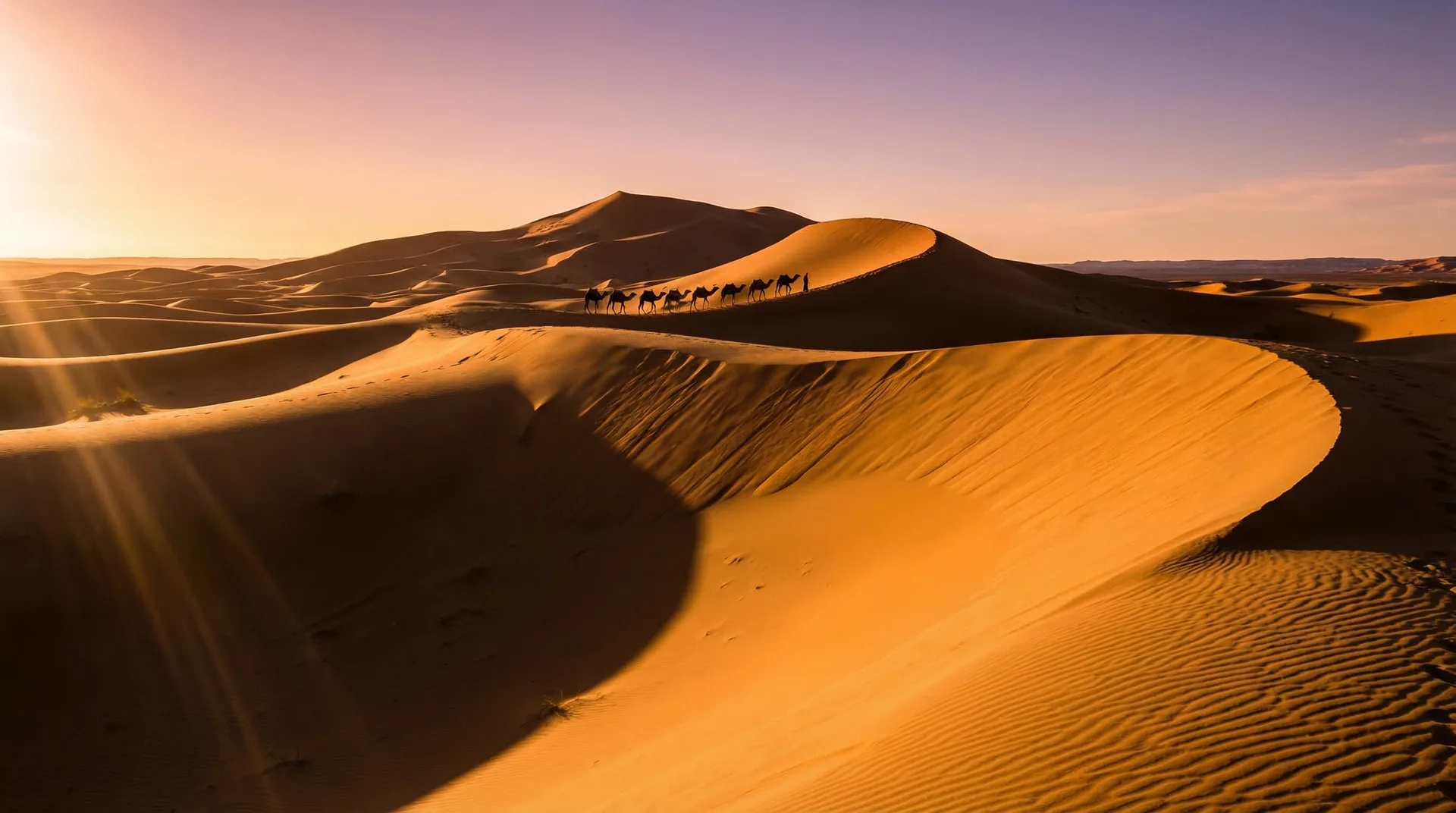
Winter is one of our favourite times to send people into the Sahara — but it comes with a catch that's easy to underestimate. The days are mild and mostly sunny, ideal for the dunes; the nights, out in the deep desert, get genuinely cold. Get the packing right and a winter desert trip is comfortable, crisp and magical. Get it wrong and you'll spend a long, cold night wishing you'd brought a warmer layer. Here's the honest briefing.
The days: mild, clear and mostly sunny
From roughly December through February, the deep desert — Merzouga and the dunes of Erg Chebbi, or down around Zagora — enjoys some of its most pleasant weather of the year. Expect mostly sunny, clear days with comfortable daytime temperatures, typically around 18–20°C. That's mild enough for camel rides, dune walks and 4x4 trips without the relentless, dangerous heat of high summer. For active days out on the sand, the winter daytime is hard to beat.
The nights: genuinely cold
Here's the part that catches people out. The desert sheds its heat fast once the sun drops, and winter nights get genuinely cold — out in the deep desert they can fall to near or below freezing. A night at a desert camp in December, January or February is a chilly one. The camps provide thick blankets, and they help a great deal, but you should come prepared yourself: bring warm layers, a hat, and a warm layer to sleep in. This is the single thing winter visitors most often misjudge, so plan for the cold and it simply won't be an issue.
Clear skies, golden light and superb stargazing
The same crisp, dry air that makes winter nights cold is also what makes them so beautiful. The clear winter skies give superb stargazing — wrap up warmly, step away from the camp lanterns, and the night sky over the dunes is extraordinary. By day, the low golden winter light is a gift for photography, raking long shadows across the sand at sunrise and sunset. One practical note: winter days are short, so sunsets come earlier — build your dune time around that, and you'll catch the best of the light.
The honest verdict: a great time to go — if you pack for the cold
So here's our honest take: winter is a great time for the desert. You get comfortable, sunny days that are easy on the body, magical clear skies and stargazing, the beautiful low golden light, and usually fewer crowds than the spring and autumn peaks. The trade-offs are real but manageable — short days with early sunsets, and properly cold nights. Don't underestimate the night cold, pack genuinely warm layers, and winter rewards you handsomely.
If a winter desert trip is on your mind, we're happy to plan the pacing and the kit list so the cold never catches you out. You can browse our desert tour options here or tell us your dates and we'll advise honestly.
Frequently asked
What is the weather like in the Sahara in winter?
Mostly very pleasant by day. From December through February in the deep desert around Merzouga and Erg Chebbi, or down at Zagora, you can expect mostly sunny, clear days with comfortable daytime temperatures — typically around 18–20°C. That's mild enough for camel rides, dune walks and 4x4 trips without the punishing heat of summer. The catch is the night: once the sun sets, desert temperatures plummet, and in the deep desert they can fall to near or below freezing.
How cold does it get at night in the Sahara in winter?
Genuinely cold. The desert loses its heat quickly after dark, and on a clear winter night temperatures can drop to near or below freezing out in the dunes. A night at a desert camp in December, January or February is chilly. Camps provide thick blankets, but you'll want to bring warm layers, a hat and a warm layer to sleep in. Don't underestimate this — it's the one thing winter visitors most often get caught out by.
Is winter a good time to visit the Sahara?
Yes — winter is a great time for the desert, as long as you pack for cold nights. The days are comfortable rather than brutally hot, the skies are crisp and clear, the low winter sun gives beautiful golden light for photography, and there are usually fewer crowds than in spring and autumn. The trade-offs are short days with early sunsets and properly cold nights. Pack warm layers and winter becomes one of the most rewarding seasons in the Sahara.
What should I pack for a winter desert trip?
Layer for a big swing between day and night. For the day: light, breathable clothing, sunglasses and sunscreen — the winter sun is still strong. For the evening and night: warm layers, a fleece or insulated jacket, a hat, and a warm layer to sleep in. The contrast between a mild, sunny afternoon and a near-freezing night is the defining feature of the winter Sahara, so the single most useful thing you can do is pack genuinely warm clothing for after dark.
Is the stargazing better in the Sahara in winter?
It's superb. The crisp, dry, clear winter air and the absence of light pollution make for some of the best stargazing you'll find anywhere. The cold nights are the price of those clear skies — the same conditions that make it chilly are exactly what make the stars so vivid. Wrap up warmly, step away from the camp lights, and the winter night sky over the dunes is unforgettable.
Thinking about a winter desert trip?
We'll plan the season, the timing and the kit so the cold nights never catch you out.
Tell us your dates — Sahara Desert Adventures will advise honestly on what winter is really like in the deep desert, what to pack for the cold nights, and how to build a route around the short, golden winter days.
Request an itinerary