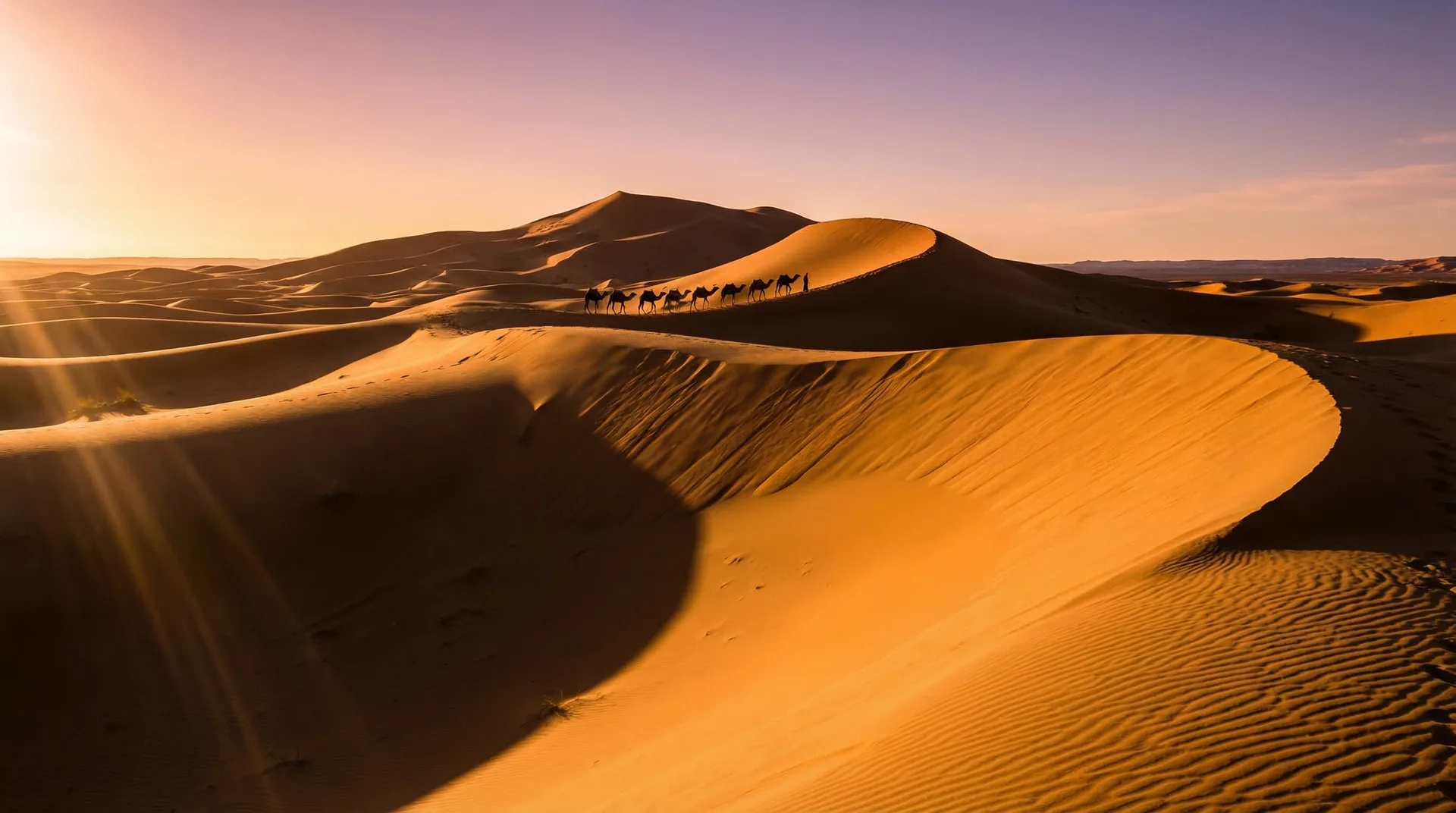
Yes — the Sahara gets cold at night, all year round. Even after a blistering day, dry desert air and clear skies let the heat escape fast once the sun drops. In winter the deep desert around Merzouga and Erg Chebbi can fall to near or below freezing; in spring and autumn nights are cool to chilly; and even in high summer the night is far cooler than the day. None of this is a problem — it's simply the one thing you must pack for. Here's the honest, first-hand briefing on what to expect and exactly what to bring.
Why the Sahara gets so cold at night
It feels like a contradiction — how can somewhere this hot turn cold in a matter of hours? Two things drive it. First, desert air is extremely dry. Water vapour is what normally traps the day's heat near the ground overnight, like a blanket; without it, that heat has nothing to hold it down. Second, the skies are usually clear, so there are no clouds to reflect warmth back to the surface. The sand soaks up heat all day, then radiates almost all of it straight back to space after sunset. The result is one of the biggest day-to-night temperature swings anywhere on Earth — and why a single desert day can feel like two different climates.
The short version: dry air plus clear skies equals fast cooling. The hotter and clearer the day, the colder the night that follows. That's why the most beautiful, cloudless nights — the ones with the best stargazing — are also the coldest.
How cold does it get? Night temperatures by season
The honest answer is that it depends heavily on the month. Below is the pattern we see in the deep desert around Merzouga and Erg Chebbi. These are general expectations, not guarantees — desert weather varies, so always check a current forecast for your exact dates before you finalise your packing.
Winter · Nov–Feb
- Day:
- Mild & sunny, often ~18–20°C
- Night:
- Near or below freezing in the deep desert
The coldest nights of the year — and the best days for active dune time.
Spring · Mar–May
- Day:
- Warm, comfortable
- Night:
- Cool to chilly — single digits to low teens °C
Mild nights and pleasant days. One of the easiest seasons to pack for.
Summer · Jun–Aug
- Day:
- Punishing heat, can exceed 40°C
- Night:
- Markedly cooler, but can still feel cold once you stop moving
Warmest nights of the year, but daytime heat is the real concern.
Autumn · Sep–Oct
- Day:
- Warm, settling down
- Night:
- Cool and pleasant
Shoulder-season sweet spot — bearable days, mild nights.
The takeaway: no season is warm around the clock. Winter gives you gorgeous, mild days but properly cold nights. Summer flips it — warm nights but dangerous daytime heat. The shoulder seasons of spring and autumn are the easiest to pack for, with mild nights and bearable days. If you want the full season-by-season picture, our Sahara in winter and Sahara in summer guides go deeper.
What to pack for cold desert nights
The cold is a packing problem, not a reason to skip the desert. The travellers who get caught out are the ones who arrive in shorts and a t-shirt, picturing the Sahara as hot around the clock. The fix is simple: layers. You want to peel off as the campfire warms up and pile back on when you step out to watch the stars. Here's the kit that handles the swing.
Warm base & mid layers
Thermal or merino base layers plus a fleece or light insulated jacket. Layering beats one bulky coat — you peel off as the fire warms up and pile back on for the star-watching.
A hat, gloves & warm socks
A beanie matters more than people expect — you lose real heat through your head. In deep winter, light gloves and thick socks turn a cold night comfortable.
Something warm to sleep in
Camps give you thick blankets, but the air inside canvas still gets cold. Sleep in a warm layer and warm socks rather than relying on bedding alone.
Daytime sun kit too
The same trip that's cold at night is hot and bright by day. Sunglasses, sunscreen, a sun hat and light breathable clothing handle the swing from one extreme to the other.
For an overnight trip, keep your warm layers in a small bag you carry to camp rather than buried in a big suitcase left behind in town. For a full Morocco kit list across every climate, see our Sahara packing guide and the broader seasonal Morocco packing list.
What desert camps provide — and what they don't
Camps help, but they don't do all the work for you. Every camp worth its name provides plenty of thick blankets, and better lodge-grade or luxury camps add a small heater or a wood brazier in the cold months. Standard camps lean mostly on blankets. What none of them are is a sealed, centrally heated room — a canvas tent breathes, heaters fade or switch off overnight, and the desert air finds its way in. Treat camp bedding as a welcome boost on top of your own warm layers, not as your entire cold-weather plan. Get that balance right and you sleep warmly under more stars than you've ever seen. For more on what a night under canvas is actually like, read staying in a desert camp.
The upside of the cold: the same crisp, dry, cloudless air that makes desert nights chilly is exactly what makes the stargazing so extraordinary. Wrap up, step away from the camp lanterns, and the night sky over the dunes is something you'll remember long after the chill is forgotten.
The honest verdict
Is it cold in the Sahara at night? Yes — and that's completely fine. The night cold is real in every season and genuinely sharp in winter, but it's the easiest thing in the world to prepare for. Pack warm layers, a hat and warm socks, lean on the camp blankets, and a night in the dunes goes from a thing you worried about to one of the highlights of your whole trip. The travellers who remember the cold for the wrong reasons are simply the ones who didn't pack for it. Don't be one of them — and the desert rewards you with the warmest welcome and the coldest, clearest, most beautiful nights you'll ever sleep under.
If you'd like us to plan the pacing and the kit list around your dates, browse our desert tour options or tell us when you're coming and we'll advise honestly on what the nights will really be like.
Frequently asked
Is it cold in the Sahara desert at night?
Yes. Even after a hot day, the Sahara gets cold at night all year round because dry desert air and clear skies let the day's heat escape fast after sunset. In winter (roughly November to February) nights in the deep desert around Merzouga and Erg Chebbi can drop to near or below freezing. In spring and autumn nights are cool to chilly, and even in high summer the night is markedly cooler than the day. Whatever the season, pack a warm layer for after dark.
How cold does the Sahara get at night?
It varies sharply by season. On a clear winter night (December to February) the deep desert can fall to near or just below 0°C. In spring and autumn nights are typically cool, often in the single digits to low teens Celsius. Even in summer, when days are dangerously hot, nights cool to a far more comfortable range and can still feel cold once you stop moving. These are general patterns rather than guarantees — always check a current forecast for your dates before you pack.
Why does the desert get so cold at night when it is so hot in the day?
Two reasons: dry air and clear skies. Desert air holds very little moisture, and water vapour is what normally traps heat near the ground overnight. Without it, and under cloudless skies, the heat the sand absorbed all day radiates straight back out to space after sunset. The result is one of the largest day-to-night temperature swings on Earth — blistering by day, genuinely cold by night.
What should I wear to sleep in a desert camp?
In the cold months, sleep in warm layers: thermal or merino base layers, a fleece or light insulated jacket within reach, warm socks and a beanie. Camps provide thick blankets, and better camps add a small heater in winter, but the air inside a canvas tent still gets cold. A warm hat matters more than people expect — you lose a lot of heat through your head. In summer, lightweight layers are usually enough, but still bring one warm top.
Do desert camps have heating and blankets?
Most camps provide plenty of thick blankets, and many lodge-grade or luxury camps add a small heater or a wood brazier in the cold season. Standard camps rely mainly on blankets. None of this replaces your own warm layers — heaters are switched off or fade overnight, and a tent is not a sealed, heated room. Treat camp bedding as a help, not your whole cold-weather plan.
What is the best month to avoid cold nights in the Sahara?
If cold nights are your main worry, the shoulder seasons either side of summer — roughly April to early June, and September to October — give you the mildest nights paired with bearable days. High summer (July and August) has the warmest nights but punishing daytime heat. Deep winter (December to February) has the most pleasant days for active dune time but the coldest nights of the year.
Will I be warm enough on a one-night desert tour?
Yes, if you pack for it. The cold is entirely manageable — it only catches out travellers who arrive in shorts and a t-shirt expecting the desert to be hot around the clock. Bring a warm layer, a hat and warm socks in your overnight bag, use the camp blankets, and a night in the dunes is comfortable in any season. The cold is a packing problem, not a reason to skip the desert.
Thinking about a night in the dunes?
We'll plan the season, the timing and the kit so the cold nights never catch you out.
Tell us your dates — Sahara Desert Adventures will advise honestly on what the nights will really be like in the deep desert, what to pack for the cold, and how to build a route around the best of the dunes.
Request an itinerary