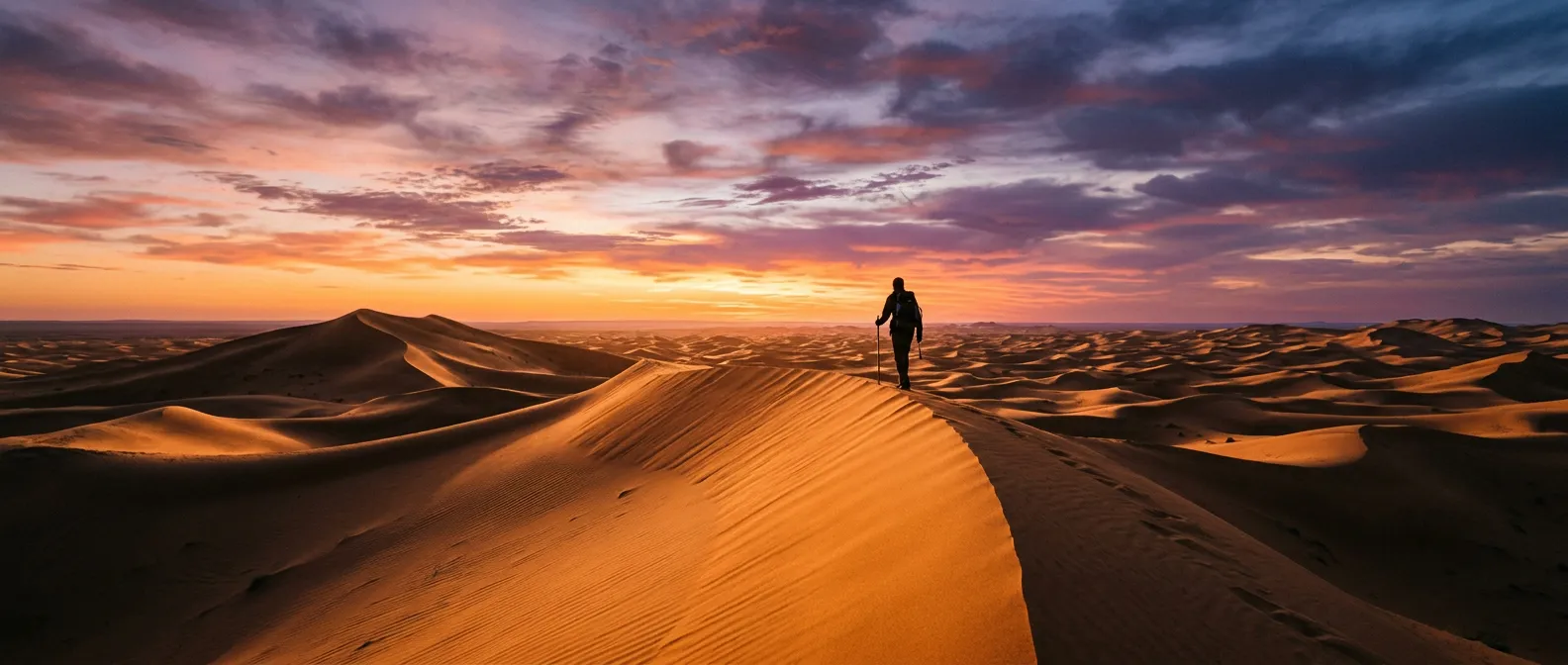
The short answer: spring (roughly March–May) and autumn (roughly September–November) are the sweet spot for a Sahara desert tour — warm, clear days and cool but bearable nights. Summer (June–August) is the season to plan around rather than avoid: midday heat at Erg Chebbi can climb well above 40°C, so you travel at sunrise and after dark. Winter (December–February) gives you mild, sunny days and the clearest skies of the year, but genuinely cold nights that can dip toward freezing on the dunes. The desert is, in truth, hot by day and cold after dark in every season — the trick is matching the month to the kind of trip you want. Here's what each one is really like.
The best time at a glance
If you have a free choice of dates, aim for the shoulder seasons. Here's how the four seasons compare for comfort, crowds and the overnight desert experience.
Spring · Mar–May
The sweet spot
Warm, clear days and cool-but-bearable nights make spring the most comfortable window for camel treks and camping. It's popular, so camps and roads are busier and booking ahead helps — but conditions are hard to beat.
Summer · Jun–Aug
Very hot by day
Daytime heat at Erg Chebbi can climb well above 40°C, so activities shift to sunrise and after dark, with midday spent resting in the shade. Nights stay warm and the camps are quieter — it works if you're happy with heat and early starts.
Autumn · Sep–Nov
The runner-up
The other ideal window. Once the summer heat fades, days turn warm and nights mild, with stable weather and usually fewer crowds than spring — excellent for slow camel treks, stargazing and photography.
Winter · Dec–Feb
Warm days, cold nights
Mild, sunny days (often around 18–20°C) and the clearest skies of the year, but genuinely cold nights that can dip to near freezing on the dunes. Pack serious layers and you're rewarded with empty camps and brilliant stars.
What's the Sahara like in summer?
Hot — there's no kinder way to put it. Through June, July and August the daytime temperature in the dunes around Merzouga can climb well above 40°C, and because the open desert has almost no shade, the midday hours are for resting, not exploring. That doesn't mean summer is a write-off. The rhythm simply changes: you head out for the camel trek in the cool of late afternoon, watch the sunset, sleep under a warm night sky, and rise for sunrise before the heat returns. Plenty of travellers still choose summer on purpose — nights are balmy rather than cold, the camps are quieter, and a dawn ride over empty dunes has its own magic. It suits people who are comfortable in heat and happy with an early-start, late-finish day. Hydration, a sun hat and a midday siesta are not optional.
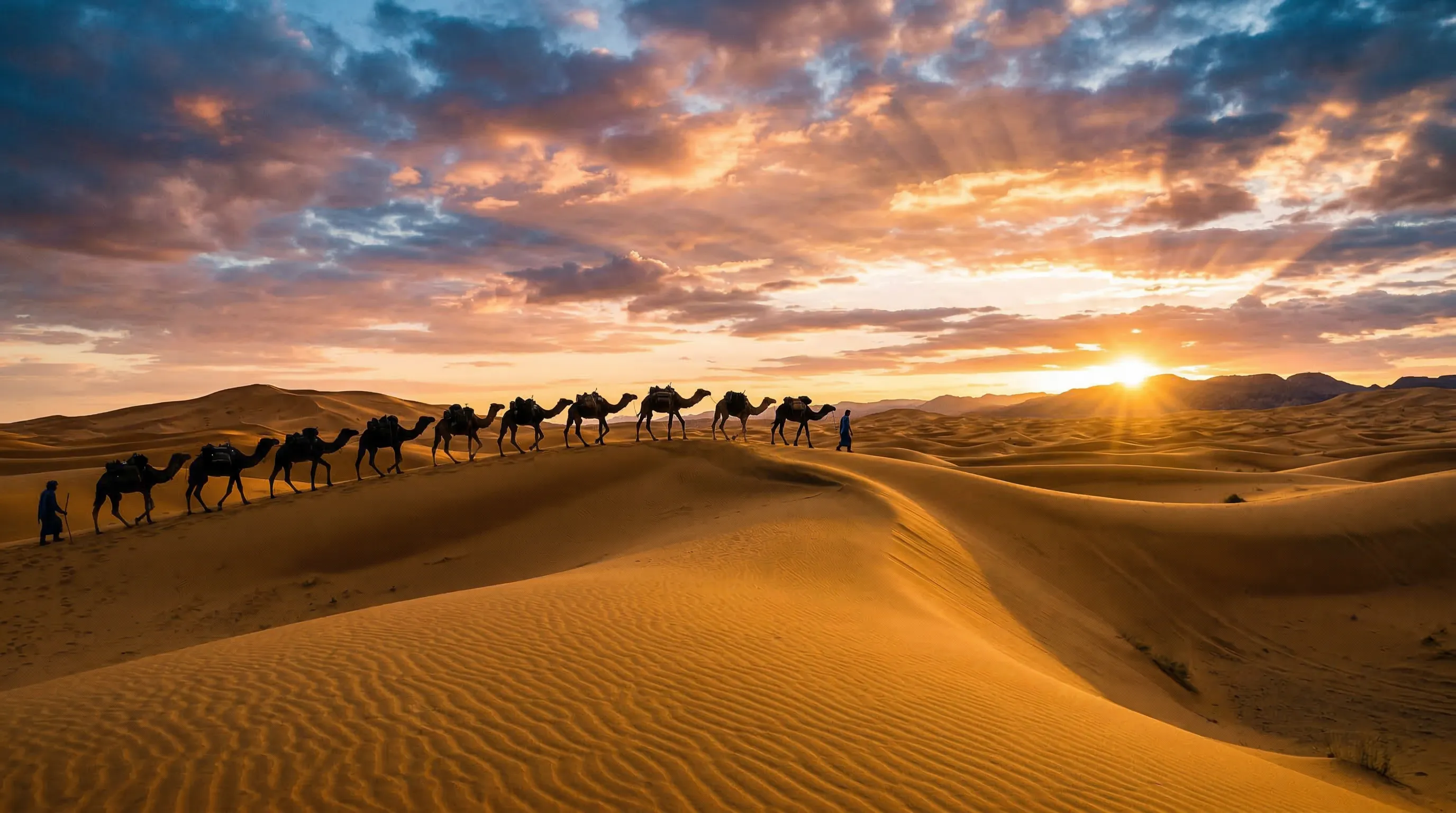
For the full survival-guide version — what to wear, when to move, and why some people love it — read the Sahara in summer.
What's the Sahara like in winter?
Winter is the season people most often misjudge. The days are lovely — mild, calm and sunny, frequently around 18–20°C, with the softest low-angle light of the year and skies so clear the stars at night are extraordinary. The surprise is how cold it gets after sunset. Sand and clear skies lose heat quickly, so desert nights in December, January and February can fall to near or below freezing, and the pre-dawn hour is the coldest of all. This is entirely manageable if you pack for it: a warm jacket, a hat, gloves and a thermal layer turn a cold night into a cosy one, and the camps provide thick blankets. In return you get the emptiest camps, the best stargazing and dunes almost to yourself.
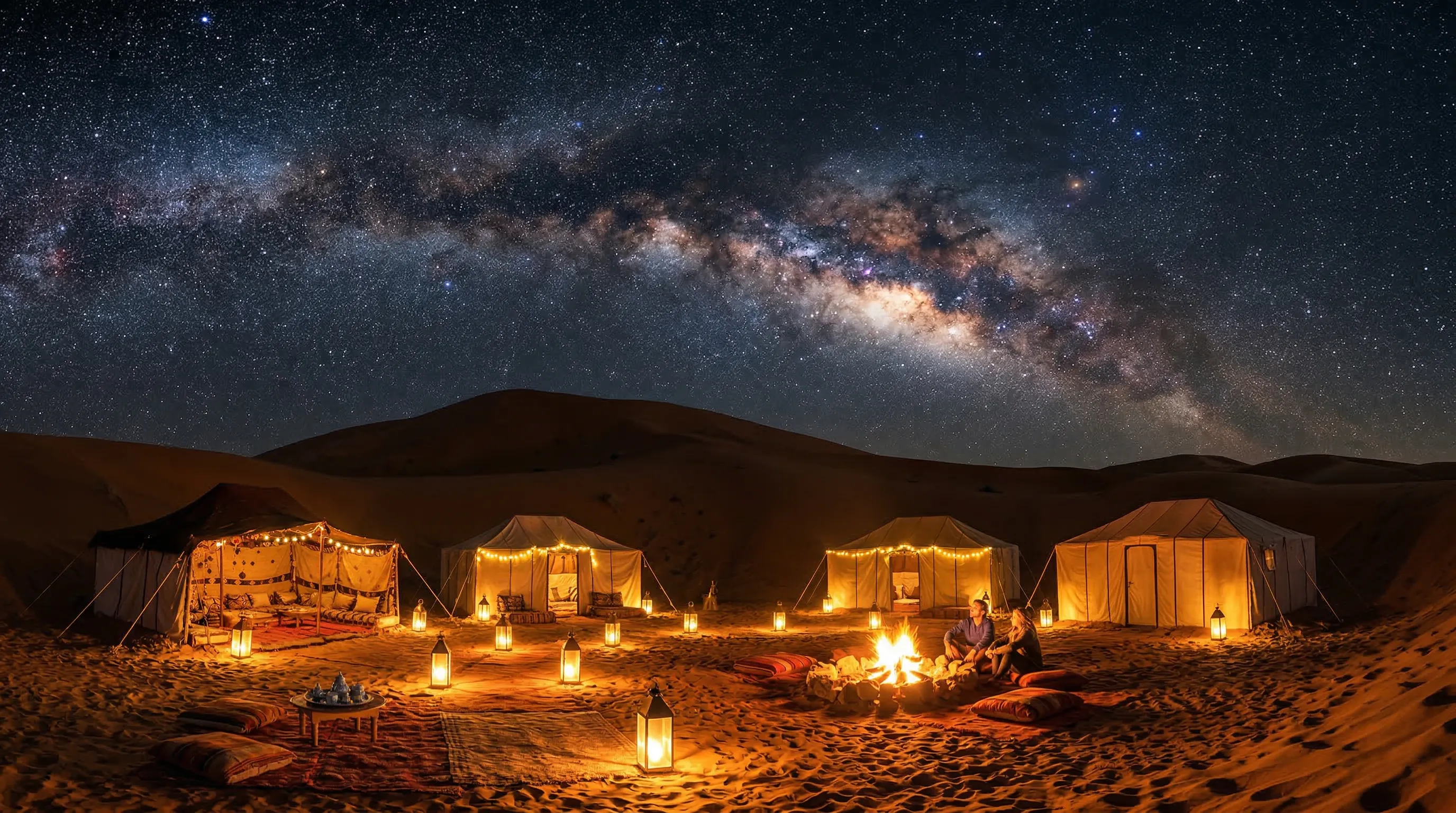
For the detail on the cold — and exactly why the nights drop so far — see the Sahara in winter and is it cold in the Sahara at night?
Spring and autumn — the sweet spot
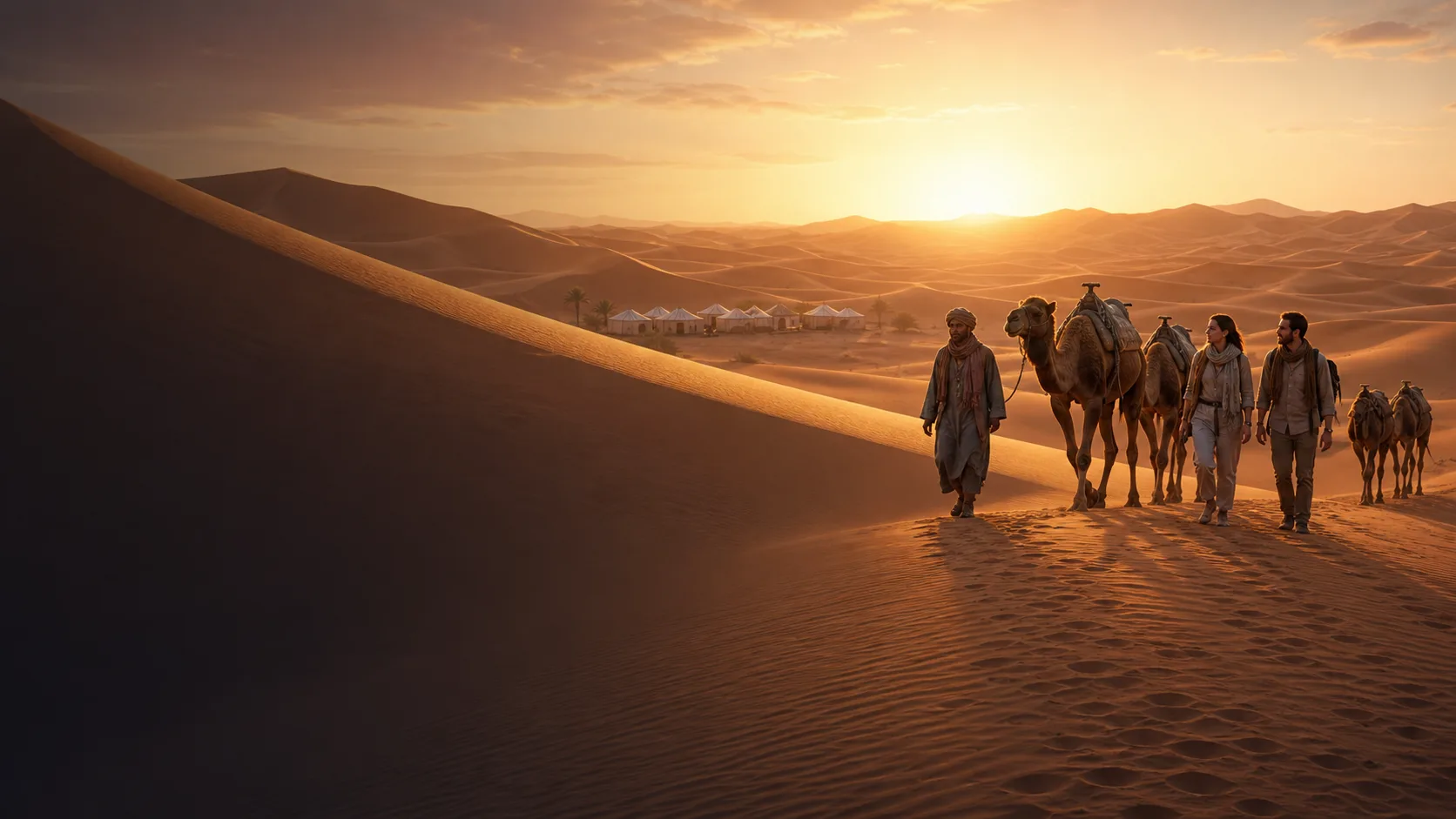
If you can travel whenever you like, this is where to aim. In spring (March–May) and autumn (September–November) the desert finds its balance: days are warm without being punishing, nights are cool rather than bitter, and the weather is at its most settled. That comfort shows up in every part of the trip. The camel trek into the dunes is a pleasure instead of an endurance test, dinner around the fire doesn't require three jackets, and the gentle light at either end of the day is a gift for photography. The only real trade-off is popularity — spring in particular draws the most visitors, so camps fill and booking ahead matters. Autumn often feels like the quieter twin: nearly the same conditions with a few more dunes to yourself.
Month-by-month: a quick, honest guide
Desert weather varies year to year, so treat this as a feel for each month rather than a forecast. The temperatures behind it are approximate ranges, not promises.
For measured averages (temperature, rain and sunshine), see Merzouga and Sahara weather by month.
January
Crisp, clear, very quiet. Pleasant by day, cold at night — bring real warm layers.
February
Similar to January, gradually warming. Quiet dunes and excellent stargazing.
March
Spring begins; comfortable days, cooler nights, the odd windy spell. A lovely time to go.
April
One of the best months — warm clear days and manageable nights. Popular, so book ahead.
May
Warm and reliable, edging toward early-summer heat by late month. Still excellent.
June
Heat builds fast; midday can be intense. Sunrise and sunset trips; rest at midday.
July
Peak heat — often well above 40°C by day. For heat-tolerant travellers and early risers.
August
Still very hot by day, warm at night. Quieter camps; plan around the midday sun.
September
Heat eases through the month; autumn comfort returns. A strong, less-crowded choice.
October
One of the best months — warm days, mild nights, stable weather and clear skies.
November
Early November is superb; later it cools toward winter, with chillier nights.
December
Sunny mild days, cold nights and the year's clearest skies. Pack warm; enjoy the quiet.
Does it ever rain in the Sahara?
Hardly ever — the Moroccan Sahara is one of the driest places on Earth, and most desert trips see no rain at all. When it does come it's usually a brief shower, most often in late winter or spring, and on rare occasions it can leave an unpaved desert track muddy for a day. Far more common than rain are the windy, dusty spells (the locals call the hot wind the chergui) that show up mainly in spring and early summer and can briefly cut visibility before they pass. None of this should change your season — but keeping one flexible day in your itinerary means a dusty afternoon never costs you your night on the dunes.
In short: rain is rare and brief; wind and dust are the more likely disruption, mostly in spring and early summer, and they pass.
When is it cheapest and least crowded?
As a rule of thumb, the desert is quietest in the heat of high summer and the cold of deep winter — the two seasons most travellers skip — while spring and the major holiday periods are the busiest. Quieter months can also mean better availability and, sometimes, gentler pricing, though rates vary by operator and camp and we'd never quote a figure that might be out of date. If your priority is having the dunes to yourself, a winter trip (packed warm) or late summer can be wonderfully empty. If your priority is the most forgiving weather, accept the spring and autumn crowds and book early. There's no wrong answer — just a trade-off between comfort, solitude and timing.
Quietest dunes: high summer and deep winter. Best weather: spring and autumn (busier). Whichever you pick, booking ahead secures the camp you want.
What to pack for desert nights
Whatever the season, pack for two climates in one day. The sun is strong year-round, so bring a hat, sunglasses, high-factor sunscreen and light, breathable layers that cover your skin. Then pack for the cold that arrives after sunset: a warm fleece or jacket in spring and autumn, and a proper insulated layer, hat and gloves in winter, when nights can reach near freezing. Closed shoes beat sandals for the cool evenings and the dune sand, and a scarf earns its place against both sun and blowing dust. The camps supply thick blankets, but the layer you carry yourself is what makes the difference between a cold night and a comfortable one.
Pack for both: sun protection and light cover for the day, a warm layer (more in winter) for the night, closed shoes and a scarf. For the full list, see our seasonal Morocco packing guide and the practical things to know before a Sahara trip.
A note for photographers
The desert rewards the edges of the day in every season. Sunrise and sunset bring the long shadows and warm colour that make the dunes look the way you imagined, so plan an overnight to catch both rather than a rushed daytime visit. Winter adds the clearest night skies for stars, autumn offers soft stable light with fewer people in your frame, and the brief dusty spells of spring can paint dramatic, hazy backdrops if you're willing to wait them out. Whatever the month, the magic hour does the work.
Shoot the edges: sunrise and sunset in any season, plus winter for stars. An overnight on the dunes lets you catch both ends of the day.
Our honest take
If your dates are open, go in spring or autumn for the most forgiving weather and the most comfortable nights — and book early, because everyone else has the same idea. If you can only travel in summer, go anyway, but build the day around sunrise and sunset and treat midday as rest. If winter is your window, embrace it: pack like you're going to the mountains at night and you'll be rewarded with empty dunes and the clearest stars of the year. The Sahara is genuinely a year-round destination — there's no bad season, only different ones, and the right answer is whichever matches the trip you want.
When you're ready to plan the dates around the experience, our 3-day Marrakech-to-Merzouga desert tour and 4-day Erg Chigaga expedition run in every season — and we'll advise honestly on what your chosen month will feel like.
Frequently asked
When is the best time to do a Sahara desert tour?
Spring (roughly March to May) and autumn (roughly September to November) are the sweet spots. Days are warm rather than scorching, nights are cool but bearable, the skies are usually clear, and camel treks and overnight camps are at their most comfortable. If you can only travel in summer or winter the desert is still worth it — you just plan around the heat or the cold rather than fighting it.
Is it too hot to visit the Sahara in summer?
Summer (roughly June to August) is genuinely hot — daytime temperatures at Erg Chebbi and Merzouga can climb well above 40°C, and the open desert offers little shade. It is not too hot to visit, but it changes how you visit: trips run at sunrise and after sunset, with the scorching midday hours spent resting indoors or in the shade. Many people still go in summer because nights are warm and pleasant and the camps are quieter, but it suits travellers who are comfortable with heat and an early-start, late-finish rhythm.
How cold does the Sahara desert get at night?
Colder than most people expect. Sand and clear skies shed heat fast after sunset, so even after a warm day the temperature can drop sharply. In winter, desert nights can fall to near or below freezing, and you will want a hat, gloves and a proper warm layer. In spring and autumn nights are merely cool, but a fleece or jacket is still essential. The camps provide thick blankets, but the night chill is real in every season.
What is the best month for a Sahara desert tour?
There is no single perfect month, but April, May, October and early November are widely considered the most comfortable — warm clear days, manageable nights and reliable conditions. March and late November are very good with a little more chance of a cold snap. These are approximate windows, not guarantees, because desert weather varies year to year.
Does it ever rain in the Moroccan Sahara?
Rarely, but yes. The Sahara is one of the driest places on Earth, so most desert trips see no rain at all. When rain does come it is usually a brief shower, most often in late winter or spring, and it can occasionally make unpaved desert tracks muddy for a day. Far more common than rain are windy, dusty spells in spring and early summer, which can briefly reduce visibility before they pass.
Is winter a bad time for a Sahara tour?
Not at all — winter is one of the most rewarding times if you pack properly. Days are mild and sunny, often around 18–20°C, the light is soft and golden, the skies are at their clearest for stargazing, and the camps are at their quietest. The catch is the cold nights, which can dip to near freezing, so warm layers are non-negotiable. Trade the chill for empty dunes and brilliant stars and many travellers think it is a fair deal.
Picking your dates?
Tell us when you're coming and we'll tell you exactly what the desert will feel like.
From a balmy spring camel trek to a cold, star-filled winter night, Sahara Desert Adventures will match the route, the camp and the pacing to your season — and advise honestly on heat, cold and what to pack.
Plan my desert trip