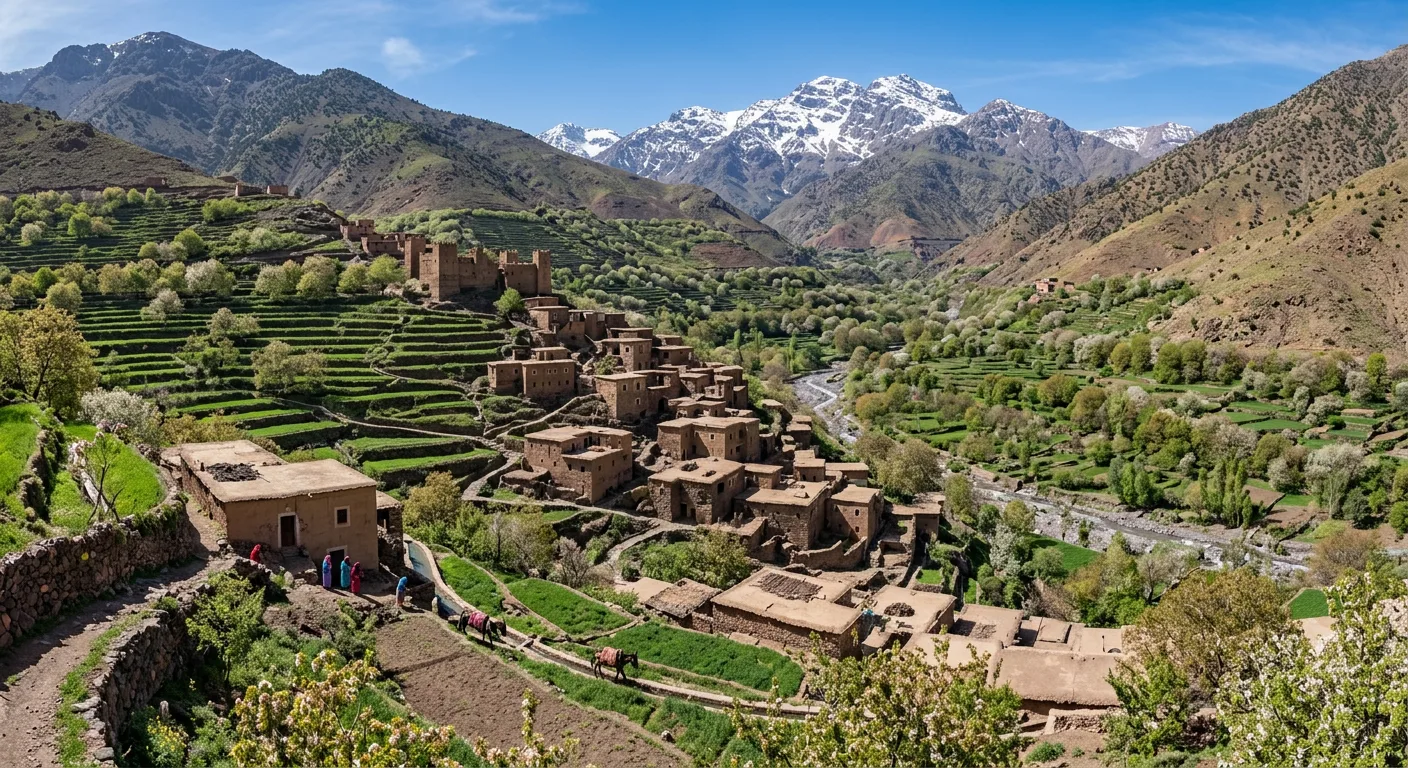
The Moroccan Sahara is not empty: it is home to Amazigh (Berber) communities and to nomadic families who still move with the seasons along the desert fringe. A respectful cultural visit — sharing bread and mint tea, hearing desert music around the fire, learning how oasis water systems work — can be the most memorable part of a desert trip. This guide explains what these encounters involve and how to take part with courtesy.
Some families still live semi-nomadically on the edge of the dunes, moving with their goats and camels to find grazing and water. A guided visit may include sitting in a tent, sharing tea and hearing how they live through the seasons. Always visit with a local guide and only if the family has agreed to welcome guests.
02Berber culture
Who the Amazigh (Berber) people are
Amazigh, often called Berber, are the indigenous people of North Africa, with their own language (Tamazight) and deep roots across Morocco. In the southeast they include settled oasis communities and nomadic groups. Many speak Tamazight alongside Arabic, and a few words of greeting are warmly received.
03Desert music
Gnaoua music around the fire
Gnaoua music, with its hypnotic call-and-response singing, hand-clapping, krakeb (metal castanets) and the deep-toned guembri lute, has roots in West African and Sufi traditions and is strong in the desert south, especially around Khamlia near Merzouga. Many camps host an evening session by the fire.
04Desert music
Amazigh desert songs and drumming
Around the camp fire you may also hear local Amazigh songs and drumming on the bendir frame drum and djembe. The rhythms invite everyone to clap along, and joining in is welcomed. Ask before filming a performance, and consider a small tip for the musicians.
05Food & hospitality
Traditional bread and mint tea
Hospitality centres on bread and tea. Khobz flatbread is baked daily, and in the desert you may see medfouna, a stuffed flatbread sometimes called Berber pizza. Sweet mint tea, poured from a height to build foam, is offered to every guest — accepting a glass is part of the welcome.
06Food & hospitality
The ritual of mint tea
Mint tea is made with green tea, fresh mint and plenty of sugar, and poured in three rounds. It is a gesture of welcome and friendship, so take time over it rather than rushing. Receiving and passing items with the right hand is the polite custom.
07Water & oases
Oasis and khettara water systems
Desert oases survive on ingenious water management. The khettara (also called foggara) is a centuries-old network of underground channels that carries groundwater by gravity from the foothills to the palm groves, reducing evaporation. Above ground, palmeraies layer date palms over fruit trees and small garden plots.
08Water & oases
Life in the palmeraie
The palm groves of the Draa and Ziz valleys are the green heart of the desert, where families grow dates, vegetables and fodder in the shade of the palms. Walking an oasis with a local guide shows how irrigation channels are shared and how the desert is farmed against the odds.
09Geology & fossils
Fossils of the Erfoud region
The rock around Erfoud and Rissani was once an ancient sea, and the hills are rich in marine fossils, especially black orthoceras and ammonites hundreds of millions of years old. Local workshops cut and polish the stone into tables and ornaments, and you can visit to see the fossils worked by hand.
10Etiquette
Respectful cultural-visit etiquette
Dress modestly with shoulders and knees covered, greet people before taking photos and always ask permission before photographing anyone, especially women and children. Accept tea when offered, remove shoes if entering a home or tent on rugs, and buy or tip fairly. Visit with a local guide who has an existing relationship with the community.
Frequently asked
Can you really meet nomad families in the Moroccan Sahara?
Yes. Some Amazigh families still live semi-nomadically on the desert fringe, moving with their goats and camels for grazing and water. A guided visit may include sharing tea in a tent and hearing how they live through the seasons. Go with a local guide and only where the family welcomes guests.
What music will I hear in the desert?
Around the fire you are likely to hear Gnaoua music, with its call-and-response singing, krakeb castanets and guembri lute, strongest around Khamlia near Merzouga, as well as local Amazigh songs and drumming on the bendir and djembe. Joining the clapping is welcomed; ask before filming.
What is a khettara?
A khettara, also called a foggara, is a centuries-old underground channel that carries groundwater by gravity from the foothills to the oasis palm groves, cutting down evaporation. These systems made desert farming possible and still feed many palmeraies in the Draa and Ziz valleys.
How should I behave respectfully when visiting a Berber or nomad community?
Dress modestly, greet people before photographing them and always ask permission first, especially for women and children. Accept tea when offered, remove shoes when entering a home or tent on rugs, tip musicians and buy fairly, and visit with a local guide who already knows the community.
See it with a local
Turn this into a private Sahara trip.
We'll build a private, guided plan around the experiences you care about — with a driver, hand-picked riads and a written quote. We confirm by email within 24 hours.