Sahara Desert Festivals: Nomad Culture & Desert Music
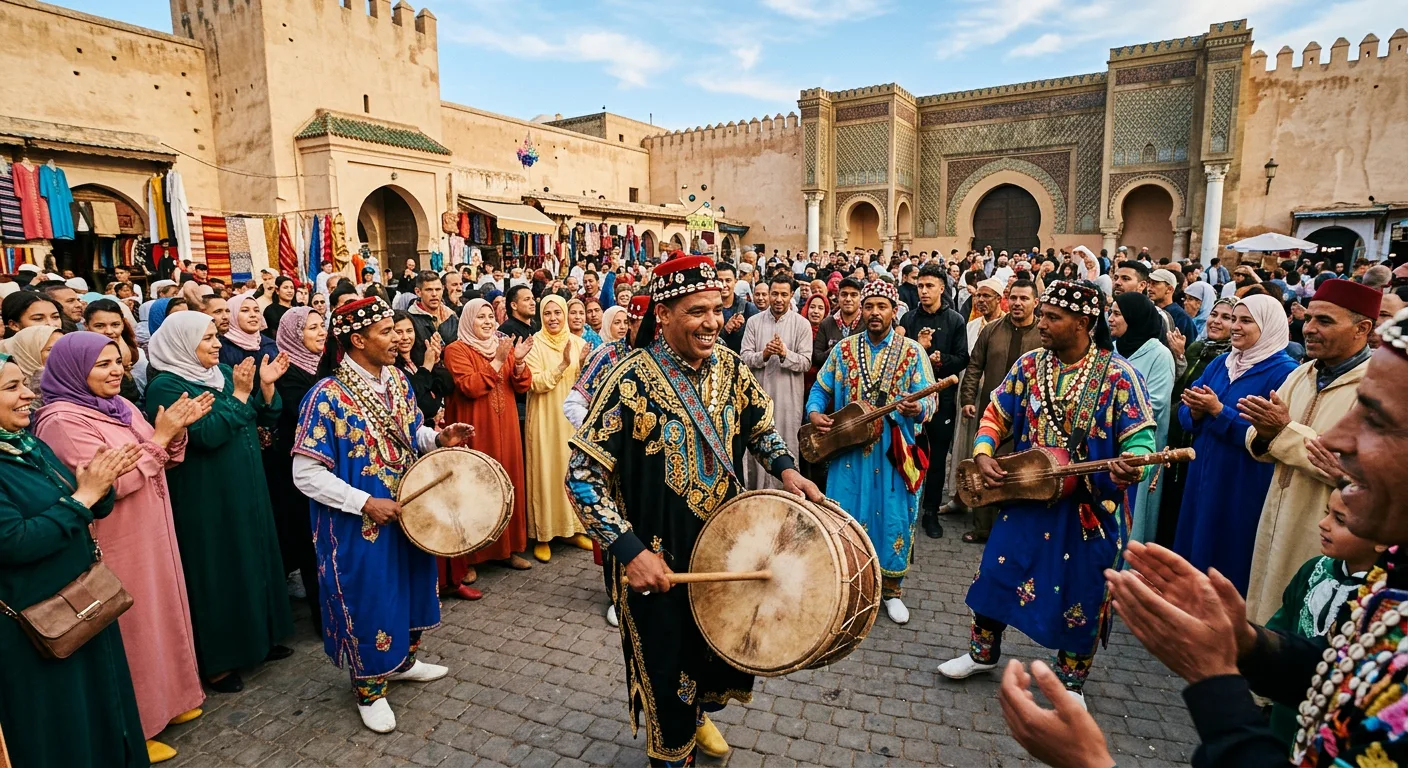
The southern fringe of the Sahara is not only dunes and silence; at certain times of year it becomes a stage for atmospheric desert festivals that celebrate nomad culture, caravans and the region's music. The best known is the Taragalte Festival, held in M'hamid el Ghizlane, the last village before the great dunes of Erg Chigaga, usually around the autumn. Alongside these gatherings, the wider region keeps a living musical heritage year-round, from the Gnaoua tradition of Khamlia to the nomad culture of the deep south. This guide explains what these festivals are about and how one might fit into a desert trip — but because they are small, remote and variable, dates change every year and some events do not run every year, so always check whether a particular festival is actually happening before you plan around it.
The Taragalte Festival is the region's most celebrated desert music and culture gathering, staged near M'hamid el Ghizlane on the edge of the dunes. It typically brings together Saharan and desert-blues music, Gnaoua rhythms, nomad culture, craft stalls and a camp-like atmosphere out among the sand. It is usually held around the autumn, but the exact dates change from year to year and the event does not necessarily run every single year, so treat any timing you read as provisional and confirm before booking.
02Desert festivals
M'hamid el Ghizlane: the last village before Erg Chigaga
M'hamid el Ghizlane sits at the end of the road in the Draa Valley, the last settlement before the remote dunes of Erg Chigaga. This frontier-of-the-desert setting is part of what gives the area's festivals their atmosphere, with music and gatherings staged close to open sand. Reaching M'hamid usually means a long drive south, often via Zagora, so factor in the journey when thinking about attending anything held here.
03The music
Desert blues, Saharan and Gnaoua music
The sound of these festivals leans towards desert blues and Saharan music, the hypnotic, guitar-driven style associated with the wider Sahara, alongside Gnaoua and nomad traditions. Line-ups vary from year to year and are not announced far in advance, so rather than expecting particular performers, come for the overall experience of live music in a dune setting. If a specific act matters to you, check the festival's own announcements close to the date.
04Culture & heritage
Nomad culture, caravans and crafts
Beyond the music, festivals like Taragalte foreground nomad culture: camel caravans, tents, storytelling, crafts and the customs of the desert's traditional inhabitants. The emphasis is often as much on celebrating and sustaining nomad heritage as on entertainment, with workshops, exhibitions and gatherings that change each edition. Treat the cultural side as a genuine encounter with desert life rather than a staged spectacle.
05Culture & heritage
Khamlia and the region's year-round Gnaoua heritage
You do not need a festival to experience the region's living music. The village of Khamlia, south of Merzouga, is known for keeping Gnaoua music alive, with musicians who commonly welcome visitors for a short performance and mint tea. This means that even outside festival season, the deep south offers a real, living musical and nomad heritage — useful to know, since the festivals themselves are occasional and their dates uncertain.
06Culture & heritage
Other nomad and desert music gatherings
Taragalte is the most prominent, but it is not the only desert gathering the region has seen. There have been other nomad and music events around the south, including festivities tied to the Gnaoua heritage of places like Khamlia and the trading history around Rissani. These smaller events come and go and can be hard to pin down in advance, so ask locally and online about anything that might coincide with your trip rather than assuming a fixed calendar.
07Experience
The dune setting and atmosphere
What sets these gatherings apart is where they happen: out near the sand, with music drifting over the dunes, fires, tents and clear desert skies after dark. Many people come as much for that atmosphere as for any particular performer. Conditions can be basic, with simple camping or tented accommodation, so come prepared for a rustic experience and let the desert setting be the main draw.
08Planning
Remote logistics: book ahead and check it's on
These are remote, small-scale events, so logistics need care. Accommodation near M'hamid is limited and fills up around any festival, the drive south is long, and facilities are modest. Crucially, confirm the festival is actually taking place and lock in its real dates before you build a trip around it, because small desert festivals can shift dates, scale back or skip a year. Book transport and a place to stay well ahead once you have confirmation.
09Planning
Fitting a festival into a desert itinerary
If a festival is confirmed, it can become the centrepiece of a southern desert loop: travelling down the Draa Valley through Zagora to M'hamid, attending the gathering, and pairing it with an excursion into the dunes of Erg Chigaga. Because the timing is fixed by the event and uncertain until close to the date, it is usually wise to keep the rest of the itinerary flexible and build around the festival once dates are confirmed, rather than the other way round.
10Experience
Combining a festival with Erg Chigaga and the Draa Valley
M'hamid is the gateway to Erg Chigaga, the wilder and more remote of Morocco's two great dune seas, reached by 4x4 or camel rather than a quick roadside stop. A festival trip can naturally extend into a night or two camping among those dunes, with the palm groves and kasbahs of the Draa Valley filling the journey down. Treat the festival as one highlight within a broader southern desert experience rather than a standalone reason to rush in and out.
Frequently asked
When is the Taragalte Festival held?
The Taragalte Festival, near M'hamid el Ghizlane, is usually held around the autumn, but the exact dates change every year and are not always announced far ahead. Small desert festivals like this can also shift or skip a year, so treat any timing as provisional and check the festival's own announcements to confirm whether it is on, and when, before you plan around it.
Where does the festival take place?
It takes place near M'hamid el Ghizlane, the last village in the Draa Valley before the remote dunes of Erg Chigaga, in Morocco's deep south. The setting close to open sand is part of its appeal. Reaching M'hamid usually means a long drive south, often via Zagora, so allow plenty of time for the journey.
What kind of music and culture can I expect?
Expect desert blues, Saharan and Gnaoua music together with nomad culture: caravans, crafts, tents and gatherings celebrating desert heritage. Line-ups vary year to year and are not fixed far in advance, so come for the overall atmosphere of live music in a dune setting rather than for specific performers, and check announcements close to the date if a particular act matters to you.
Can I experience desert music outside festival season?
Yes. The region has a living musical heritage year-round, so you are not dependent on the festivals. The village of Khamlia, south of Merzouga, is known for Gnaoua music, with musicians who commonly welcome visitors for a short performance and mint tea. Because the festivals are occasional and their dates uncertain, places like Khamlia are a reliable way to encounter the south's music and nomad culture any time.
See it with a local
Turn this into a private Sahara trip.
We'll build a private, guided plan around the experiences you care about — with a driver, hand-picked riads and a written quote. We confirm by email within 24 hours.