The dunes of Erg Chebbi near Merzouga and Erg Chigaga near M'Hamid are some of the most photogenic landscapes in Morocco, but the desert rewards good timing and a little planning. This guide covers shooting the dunes at golden hour, capturing the night sky, protecting your gear from sand, and photographing people respectfully.
The dunes look their best at sunrise and sunset, when low side-light rakes across the sand. The grazing light brings out the ripples and casts long shadows down each face, giving the dunes shape and depth that flat midday light flattens out completely.
02Composition
Look for clean, untrodden ridgelines
A curving, unbroken dune ridge makes a powerful line through the frame, so scout for crests that have not been crossed by footprints. Footprints are hard to avoid near camp, so walk a little further out to find clean, sculpted sand to photograph.
03Composition
Use people and camels as scale
The dunes are vast and a single figure or a camel train gives a sense of just how big they are. Placed small against a large sweep of sand, people read as scale, and at sunrise or sunset they can be turned into striking silhouettes against the sky.
04Light & timing
Avoid the flat midday light
Around midday the sun is high and the light is flat and harsh, washing out the texture and contrast that make the dunes interesting. This is the time to rest in the shade, back up your photos and recharge, then head out again as the light softens.
05Night sky
Photograph the Milky Way on a new moon
With almost no light pollution, the desert night sky is superb and the Milky Way is clearly visible. Plan for the nights around a new moon, when the sky is darkest, as a bright moon washes out the fainter stars and the band of the Milky Way.
06Night sky
Settings and kit for astrophotography
Night-sky shots need a sturdy tripod, a wide and fast lens and a long exposure at high ISO, with focus set manually on a bright star. Let your eyes adapt to the dark for twenty minutes or so first, and use a red light to keep your night vision.
07Gear protection
Protect gear from sand and dust
Fine Sahara sand gets everywhere, so keep your camera in a bag or cover when you are not shooting and change lenses inside a vehicle or tent rather than out in the open. To clean dust off, use a blower rather than a cloth, which can grind grains into the glass.
08Kit tips
Bring spare batteries and cards
Cold desert nights drain batteries faster, so carry spares and keep them warm in an inside pocket. Bring more memory cards than you think you need, since long sessions of dune and night-sky shooting fill cards quickly and there is nowhere to buy more.
09Respect & etiquette
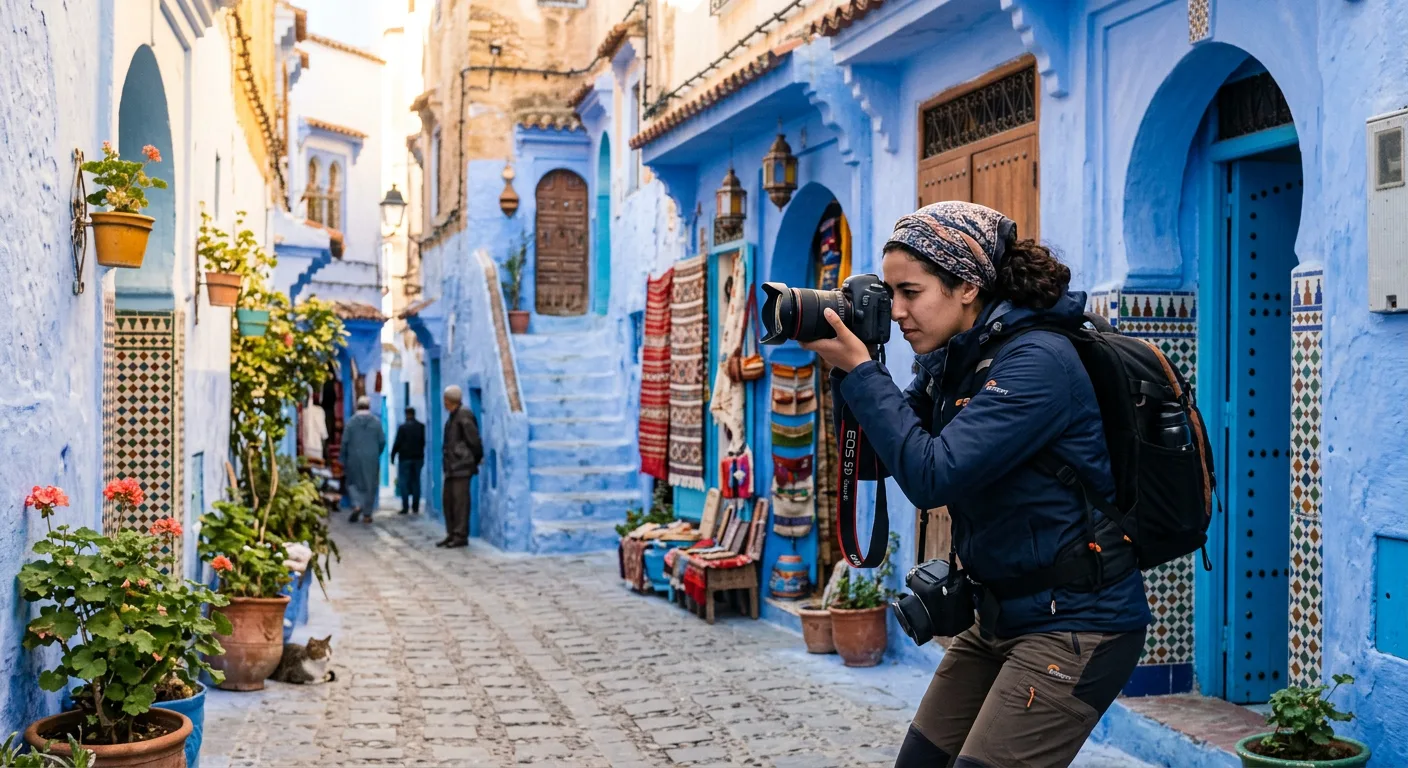
Ask before photographing people
Always ask before photographing nomads, Berber hosts or camel guides, ideally with a smile and a gesture rather than a raised lens. Many people are happy to be photographed when asked, and a fair tip is a courteous way to thank someone who poses for you.
10Composition
Watch your horizons and foreground
On a sea of dunes it is easy to let horizons drift, so keep them level unless you are deliberately tilting for effect. Use a small object in the foreground, a single shrub, a ripple pattern or a footprint trail, to anchor the eye and lead it into the scene.
Frequently asked
When is the best time of day to photograph the Sahara dunes?
Sunrise and sunset are best, when low side-light rakes across the sand to bring out the ripples and long shadows. Midday light is flat and harsh and washes out the texture, so it is better to rest then and shoot again as the light softens.
Can you photograph the Milky Way in the Sahara?
Yes. With almost no light pollution the night sky is superb and the Milky Way is clearly visible. Plan for the nights around a new moon and use a tripod, a wide fast lens and a long exposure at high ISO, focusing manually on a bright star.
How do I protect my camera from sand in the desert?
Keep the camera in a bag or cover when you are not shooting, and change lenses inside a vehicle or tent rather than in the open. Clean off dust with a blower rather than a cloth, and carry spare batteries since cold nights drain them faster.
Is it okay to photograph the nomads and camel guides?
Always ask first, with a smile and a gesture rather than a raised lens. Many people are happy to be photographed when asked, and offering a fair tip is a courteous way to thank someone who poses for you.
See it with a local
Turn this into a private Sahara trip.
We'll build a private, guided plan around the experiences you care about — with a driver, hand-picked riads and a written quote. We confirm by email within 24 hours.