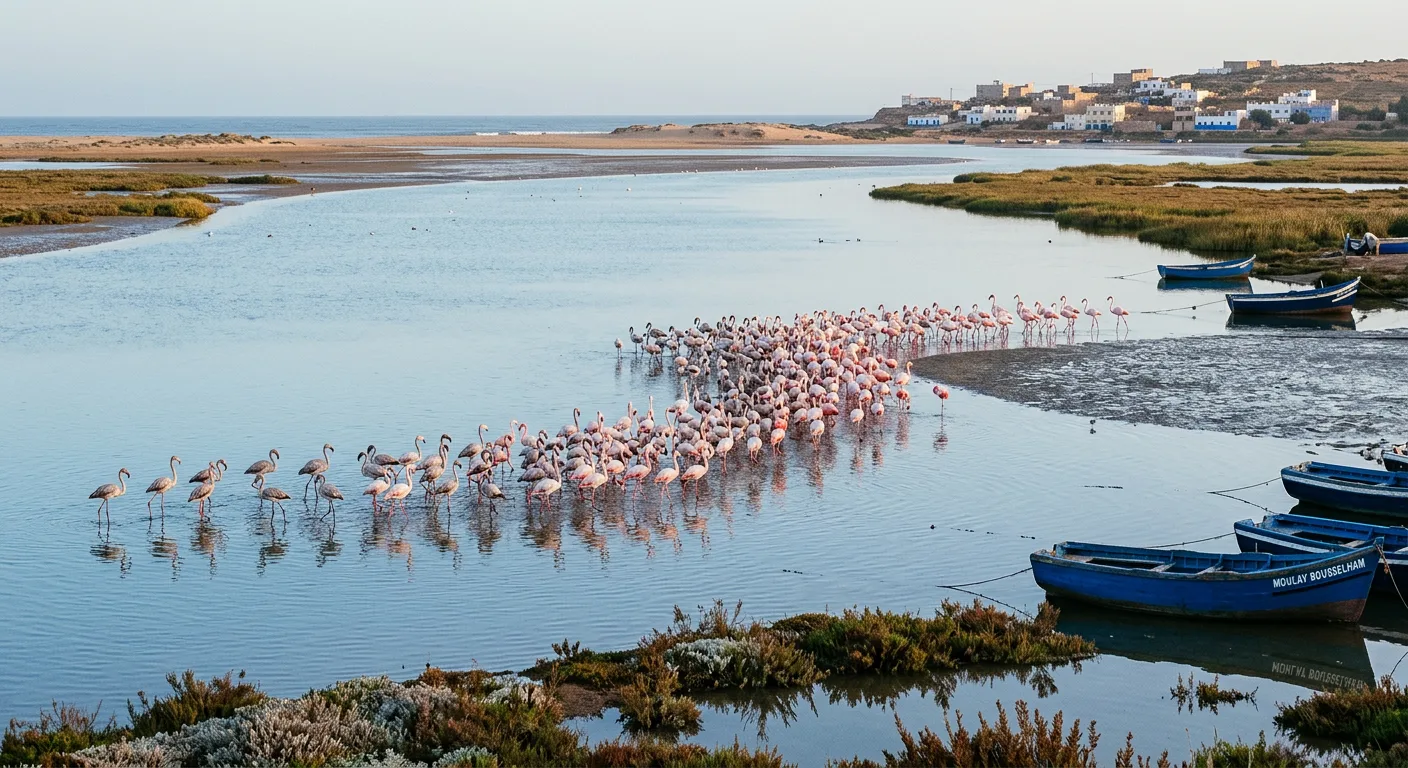
Dayet Srji: Merzouga's Seasonal Lake and the Flamingos of the Dunes
On the western edge of Merzouga, in the flats just beside the great dunes of Erg Chebbi, lies Dayet Srji (also spelled Dayet Sriji or Srij) — a shallow, seasonal salt lake that is one of the desert's most surprising sights. It is not a permanent body of water: it fills after winter rains and the snowmelt draining off the High Atlas, typically in late winter and spring, and can dry up completely in the heat of summer, leaving only a pale, cracked salt pan. When it does hold water, it draws migratory birds — most famously pink flamingos, but also egrets, ducks and assorted waders — and the sight of flamingos wading against a backdrop of orange dunes is genuinely surreal. The lake sits only a short drive or walk from Merzouga and is a favourite at sunrise and sunset. Because its very existence depends on the season and the rains, the honest advice is to check current conditions before you build a trip around it. This guide explains the seasonal nature of Dayet Srji, the birdlife it attracts, when and how to visit, and how to watch without disturbing the birds.
Dayet Srji is a seasonal salt lake, not a year-round one, so the single most important thing to grasp is that it may simply not be there when you arrive. It fills after winter rains and Atlas snowmelt, usually in late winter and spring, and can shrink or dry out entirely as summer heat takes hold. In a dry year it may barely fill at all. Treat any water — and any flamingos — as a happy bonus rather than a guarantee, and check recent conditions locally before planning around it.
02Birdwatching
The flamingos of Erg Chebbi
The lake's headline draw is its pink flamingos, which appear when there is enough water to feed in. Seeing these tall, pale-pink waders standing in shallow desert water against a wall of orange dunes is one of the most unexpected images in the Moroccan Sahara. Their numbers vary with the water level and the season, and like all the birds here they come and go with conditions, so sightings are never certain — but in a good spring they can be a real highlight of a Merzouga visit.
03Birdwatching
Egrets, ducks and waders beyond the flamingos
Flamingos get the attention, but when Dayet Srji holds water it becomes a magnet for a wider cast of birds. Egrets stalk the shallows, ducks paddle the open water, and assorted waders work the muddy margins, with the mix shifting through the migration seasons. For anyone with even a passing interest in birds, a flooded Dayet Srji is one of the most rewarding spots around Merzouga simply because so much life concentrates on this one shallow pool in the desert.
04Photography
Sunrise and sunset reflections
When the lake is full and still, it turns into a mirror, doubling the dunes and the colour of the sky across its surface. Early morning and late afternoon are the best windows, when low light warms the sand and the water lies calm before the wind picks up. The combination of reflected dunes, soft light and, with luck, the silhouettes of wading birds makes this one of the most photogenic corners of the Erg Chebbi area.
05Photography
Photographing the flamingos and the dunes
Dayet Srji offers a rare composition: pink birds, a sheet of water and the orange ramparts of Erg Chebbi all in one frame. A longer lens helps you reach the birds without crowding them, and shooting from a low angle catches their reflection in the shallows. Keep your distance so you do not flush the flock, mind the soft, salty ground at the water's edge, and let the early or late light do the work rather than chasing the birds for a closer shot.
06How to visit
How to visit from Merzouga
The lake lies just on the western side of Merzouga, a short distance from the village and the dunes, reachable by a brief drive or, when it is close enough, on foot or by camel as part of a desert outing. Many guides and camps know exactly where the water sits in a given season and can take you to the best vantage point. Going with someone local is the simplest way to find it, since the lake's position and size shift with the water.
07Plan ahead
Choosing the best time to come
The likeliest time to find water and birds is spring, after the winter rains and snowmelt have drained down to the flats — roughly late winter into spring, though it varies year to year. Summer is the worst bet, as heat tends to dry the lake to a salt crust. Even in spring nothing is guaranteed, since it all depends on how much rain and snowmelt arrived that year, so think of timing as improving your odds rather than promising a result.
08Birdwatching
Birdwatching etiquette: keep your distance
Flamingos and the other birds here are easily disturbed, and a flushed flock both loses energy it needs and ruins the moment for everyone. Watch quietly from a distance, avoid sudden movements and loud noise, and resist the urge to edge closer for a better photo — use a longer lens instead. Keep any vehicles well back from the water, do not try to herd or chase the birds, and let them feed and rest undisturbed.
09Plan ahead
Setting honest expectations — it may be dry
It is worth saying plainly: there is a real chance you will arrive to find Dayet Srji dry, a flat white pan with no water and no birds. That is normal for a seasonal salt lake, especially outside spring or in a dry year. Going in with that expectation means a flooded, flamingo-dotted lake feels like the bonus it is, rather than a disappointment. If seeing the birds matters a lot to you, ask locally about current conditions before you commit.
10How to visit
Pairing the lake with the dunes of Erg Chebbi
Because Dayet Srji sits right beside Erg Chebbi, it slots easily into a wider Merzouga itinerary rather than being a trip in itself. A natural pattern is to take in the lake at sunrise or sunset around a dune walk, a camel trek or a night at a desert camp. Even when the water is low or gone, the western flats and the edge of the dunes are a quiet, scenic corner of the desert worth the short detour from the village.
Frequently asked
Will there always be water and flamingos at Dayet Srji?
No. Dayet Srji is a shallow, seasonal salt lake that fills after winter rains and Atlas snowmelt, typically in late winter and spring, and can dry up completely in summer. When it holds water it can attract flamingos and other birds, but in dry periods or dry years it may be an empty salt pan with no birds at all. Sightings are never guaranteed, so check current conditions locally before planning around it.
When is the best time to see the flamingos?
Spring, after the winter rains and snowmelt have drained down to the flats, is generally the best window, roughly late winter into spring. Summer is the least likely time, as the heat tends to dry the lake out. Even in spring nothing is certain, since it depends on how much rain and snowmelt arrived that year, so the season improves your odds rather than guaranteeing flamingos.
How do I get to Dayet Srji from Merzouga?
The lake lies just west of Merzouga, a short drive from the village and the dunes, and when it is close enough it can be reached on foot or as part of a camel outing. Local guides and camps usually know exactly where the water is sitting in a given season and can take you to the best spot, which is the easiest way to find it since the lake's size and position shift with the water.
How should I behave around the birds?
Keep your distance and watch quietly. Flamingos and other waders are easily disturbed, and a flushed flock wastes energy and spoils the sight for everyone. Avoid sudden movements and loud noise, use a longer lens instead of edging closer for photos, keep vehicles well back from the water, and never try to chase or herd the birds. Let them feed and rest undisturbed.
See it with a local
Turn this into a private Sahara trip.
We'll build a private, guided plan around the experiences you care about — with a driver, hand-picked riads and a written quote. We confirm by email within 24 hours.