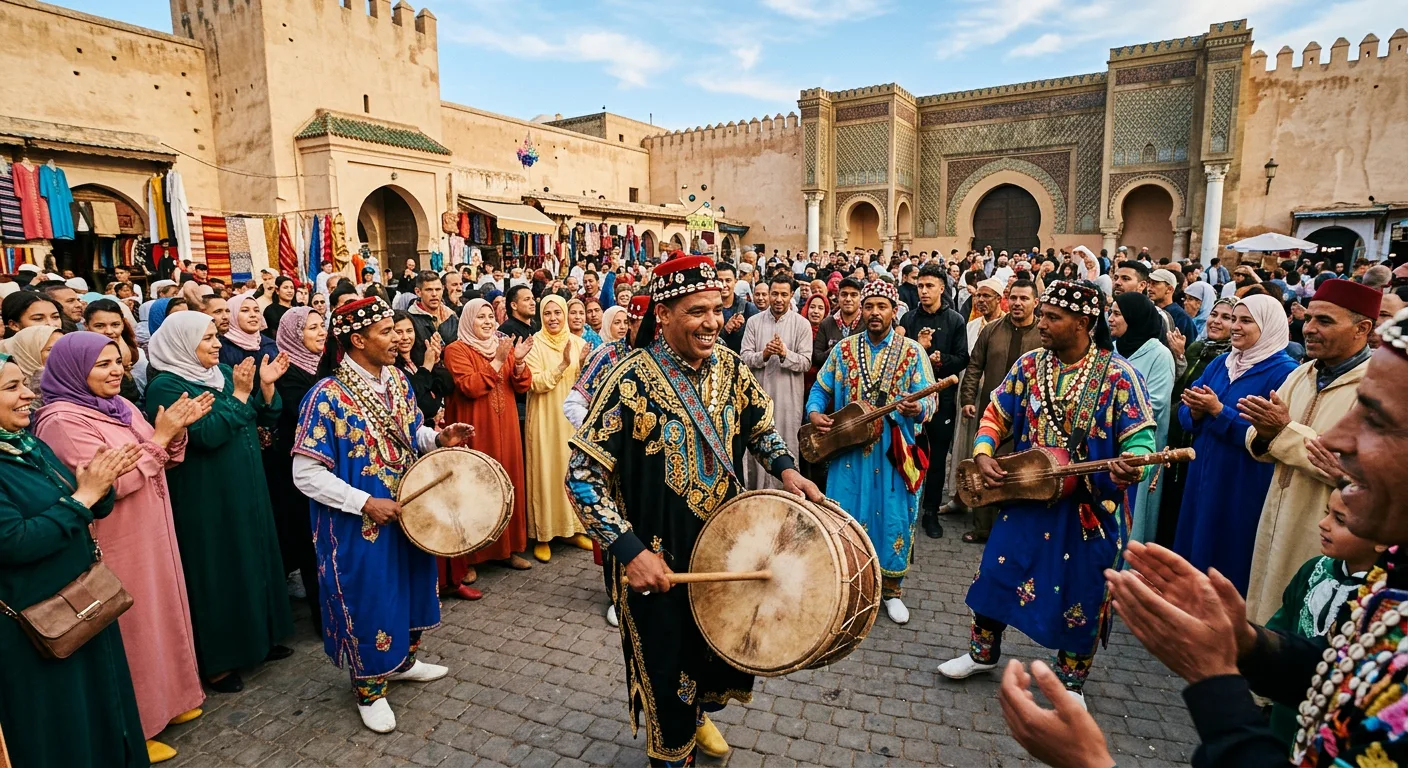
Ramadan reshapes the rhythm of Morocco — quiet daytime towns, then electric, communal evenings. For desert travellers it can be a special time to visit: the camps and tours run normally, the dunes are uncrowded, and an iftar shared in an oasis town is unforgettable. The key is knowing what changes and planning around it.
In this guide
When Ramadan falls
Ramadan moves roughly eleven days earlier each year in the Gregorian calendar — which, helpfully for desert travellers, keeps it in the cooler, dune-friendly half of the year through the late 2020s. It falls approximately as follows: 2027 in late January to late February; 2028 in mid-January to mid-February; 2029 in January. Because dates are set by moon sighting, always verify in the year you travel. The holy month lasts 29 or 30 days.
- 2027: approximately 28 January – 26 February
- 2028: approximately 17 January – 15 February
- 2029: approximately 6–25 January
What changes during Ramadan
Tourist-area restaurants mostly stay open, but neighbourhood eateries, juice stalls and roadside cafés along the desert route often close in daylight, so plan lunch stops on long transfer days and let your driver guide you. Café culture goes quiet, and the pace slows in the late afternoon as everyone conserves energy before iftar (the sunset breaking of the fast).
After sunset the country transforms. Squares fill, families gather, and in the oasis towns and at your camp the breaking-fast meal — harira soup, dates, chebakia, msemen — becomes a generous, communal occasion. Sharing iftar with a desert camp team or an oasis family during Ramadan is one of the warmest experiences Morocco offers.
What stays open and what to expect
Desert tours, camps, kasbahs and museums all run normally; your itinerary is unaffected. Riads and camps serve food throughout the day for guests, so you won't go hungry on the road. The main practical wrinkle is town driving in the frantic hour before iftar — your driver will time stops around it.
As a visitor, eat, drink and smoke discreetly in public during daylight out of respect for those fasting — appreciated even though non-Muslims aren't required to fast. Dress a touch more conservatively, especially in the traditional southern villages, and look forward to evenings that are warmer and more festive than at any other time of year.
Is Ramadan a good time for a desert trip?
For culturally curious travellers, it can be a highlight. The cooler late-2020s Ramadan dates land squarely in prime desert season, the dunes are uncrowded, some camps and riads ease their rates, and the nightly iftar atmosphere is genuinely moving. The trade-off is limited daytime food outside camps and hotels and a slower overall pace — ideal for those who want depth over a packed sightseeing sprint.
Frequently asked
Can I do a desert tour during Ramadan?
Yes — desert tours, camps and camel treks run normally through Ramadan. Your camp serves meals as usual, and the dunes are quieter than in peak season. Just be discreet about eating and drinking in public during daylight, especially in the traditional oasis villages.
Are restaurants open during Ramadan in Morocco?
Tourist-facing restaurants and all riads and camps generally serve food through the day. Local neighbourhood spots and roadside cafés on the desert route often close until iftar, so plan lunch stops on long driving days.
Will desert tours and attractions run during Ramadan?
Yes. Tours, camps, kasbahs, museums and souks operate normally. The one difference is a slower late-afternoon pace and frantic town traffic just before the sunset iftar, which your driver will plan around.
When is Ramadan in Morocco in the coming years?
Ramadan moves roughly eleven days earlier each Gregorian year. In 2027 it falls approximately late January to late February; in 2028, mid-January to mid-February. Confirm exact dates close to your travel date, as they depend on the moon sighting.
Is Ramadan a bad time for a Sahara trip?
Not at all — it's simply different, and the late-2020s dates fall in cool, ideal desert season. The daytime pace is slower and some roadside food disappears, but the dunes are quiet, the evening iftar atmosphere is wonderful, and camps and tours run as normal.
Planning a trip?
Let our desert team handle the details.
Tell us your dates and style and we'll send a written itinerary and a transparent quote. We confirm by email within 24 hours.
Request an itineraryKeep reading
Planning
The Best Time to Visit Morocco
If the desert is the heart of your trip, plan around the dunes first. October to April is the prime Sahara window — comfortable days in Merzouga and Erg Chigaga, brilliant stargazing and cold but magical camp nights. Spring and autumn are the all-round sweet spots for combining the dunes with the cities and the Atlas.
Culture
Morocco Etiquette & Customs
A little cultural awareness goes a long way in the desert south, where village and nomadic life is more traditional than in the cities. Dress modestly, greet warmly, ask before photographing people, use your right hand, and lean into the unhurried rhythm of mint tea, conversation and Berber hospitality.
Culture
Moroccan Food & Drink
Food on the desert route is its own pleasure: slow-cooked tagines bubbling over coals, bread baked in the sand, dates from the oasis palmeries, and the endless ritual of sweet mint tea poured under the stars at camp.