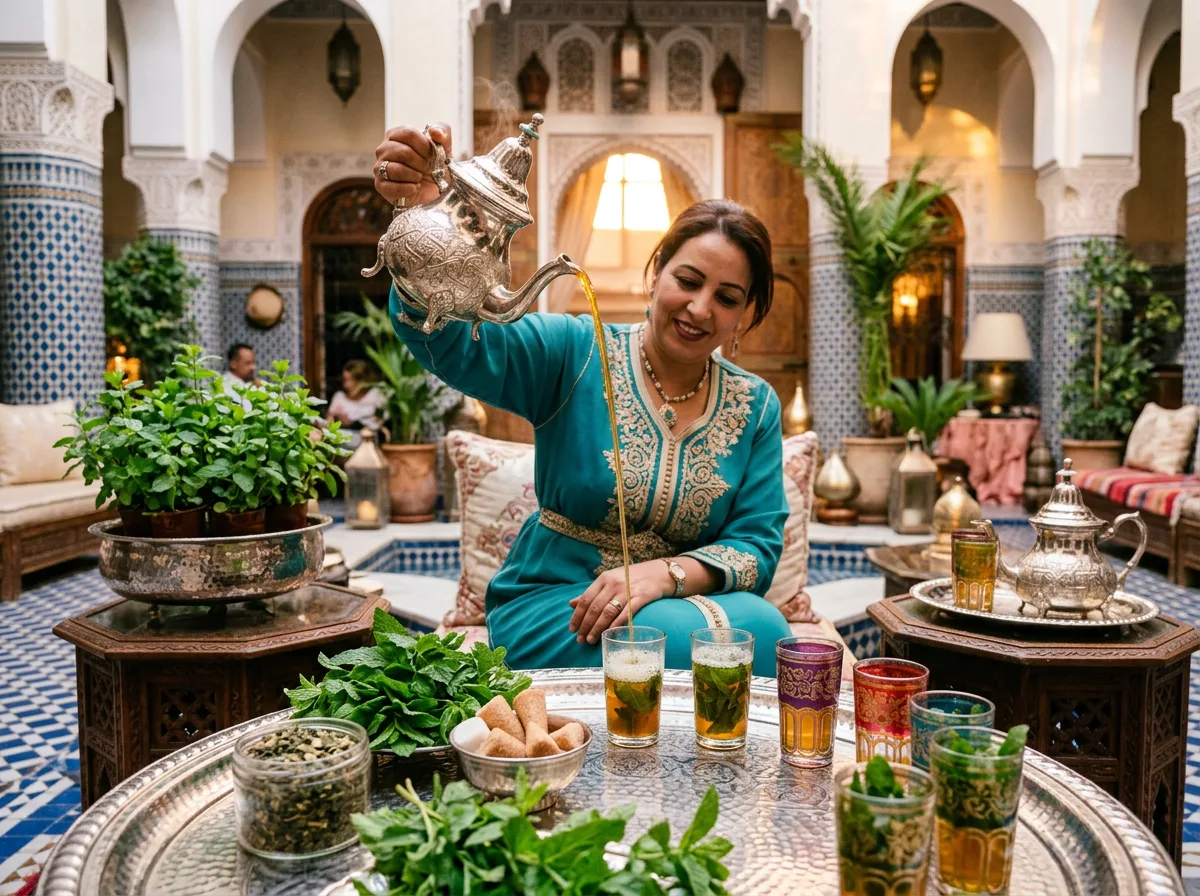
A little cultural awareness goes a long way in the desert south, where village and nomadic life is more traditional than in the cities. Dress modestly, greet warmly, ask before photographing people, use your right hand, and lean into the unhurried rhythm of mint tea, conversation and Berber hospitality.
In this guide
Dress and behaviour in the south
Morocco is a Muslim country, and the oasis towns and desert villages along the route — Rissani, Zagora, M'Hamid, the gorges — are more conservative than Marrakech or the coast. Covering shoulders and knees, for men and women, is appreciated everywhere off the dunes. A scarf you can drape over your head in a village or against the sand is both practical and respectful. Keep public displays of affection low-key.
Greetings, hands and Berber hospitality
Greetings matter: a warm 'salam' and a handshake (same gender; follow the other person's lead across genders) opens doors, and a few words of Arabic or Tamazight delight desert hosts. Eat and pass items with your right hand, especially at the communal table at camp. Hospitality here is generous and sincere — if you're offered tea by a camp host, a nomad family or a camel handler, accepting graciously is part of the experience, not optional politeness.
Photography, bargaining and tipping
Always ask before photographing people — nomads, camel handlers and villagers especially; some welcome it, others decline, and a few will ask a small fee. Respect every answer. Bargaining in the souks of Rissani or Marrakech is expected and good-humoured: open below the asking price and keep it friendly. On a desert tour, modest tips for your driver-guide, camel handlers and camp team are customary and warmly received — keep small notes handy, since there are no card machines in the dunes.
Frequently asked
How much should I tip on a desert tour?
Tipping is customary but discretionary. A sensible approach is a per-day amount for your driver-guide and a smaller shared tip for the camp team and camel handlers, given in cash at the end. Carry small dirham notes, as there's nowhere to withdraw money out at the camps.
How does bargaining work in the souks?
It's expected and part of the fun, whether in Marrakech or the date market at Rissani. Decide what an item is worth to you, open below the asking price, stay friendly and be ready to walk away — often the best price appears as you leave.
Is it rude to refuse mint tea at a camp?
Tea is a sincere gesture of welcome, so accept it when you reasonably can — it's central to desert hospitality. If you genuinely can't, decline warmly and with thanks; your hosts will be gracious about it.
Planning a trip?
Let our desert team handle the details.
Tell us your dates and style and we'll send a written itinerary and a transparent quote. We confirm by email within 24 hours.
Request an itineraryKeep reading