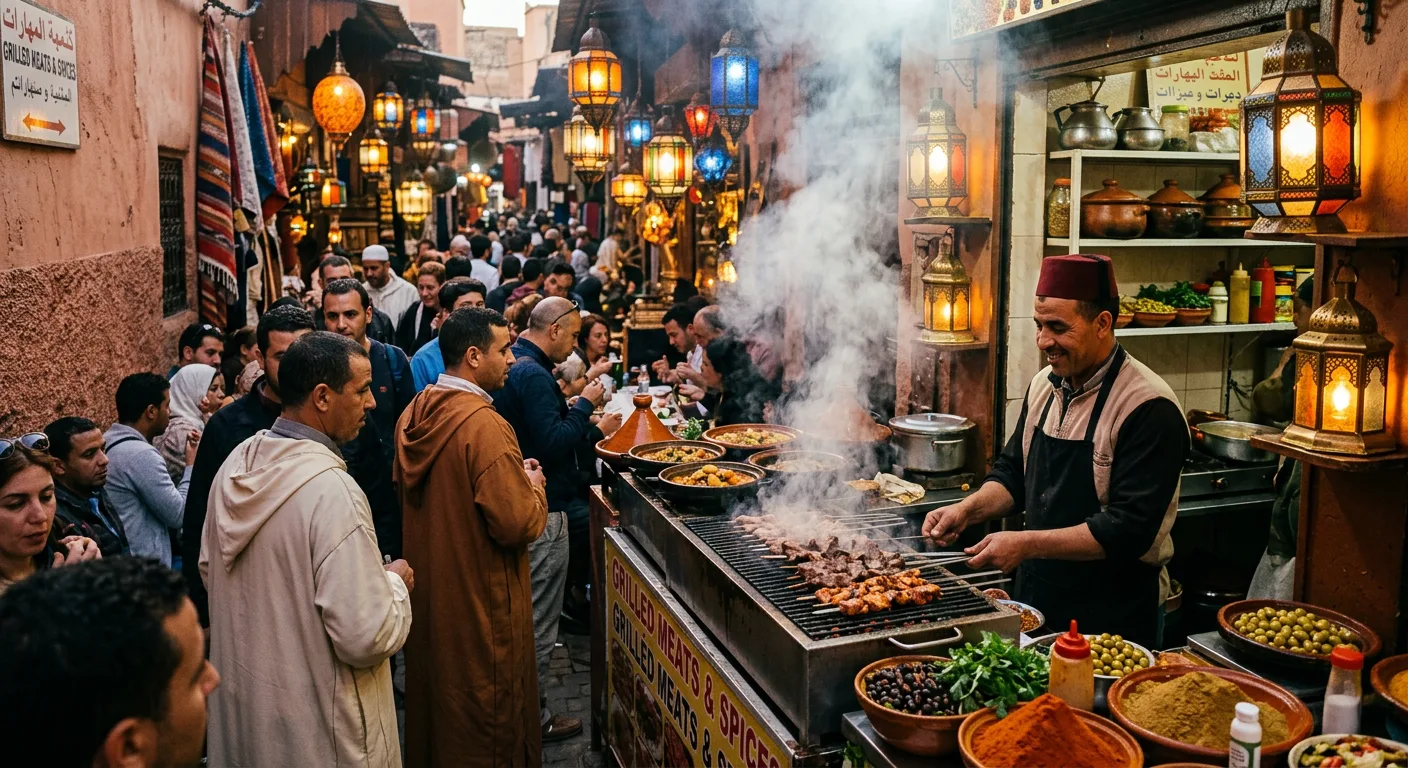
Food on the desert route is its own pleasure: slow-cooked tagines bubbling over coals, bread baked in the sand, dates from the oasis palmeries, and the endless ritual of sweet mint tea poured under the stars at camp.
In this guide
Dishes to seek out on the desert road
Beyond the famous tagine and couscous, the south has its own specialities, many tied to the oases and the nomadic life of the dunes.
- Tagine — slow-cooked stews (lamb with prunes, chicken with preserved lemon and olives, kefta with egg), the staple dinner at every desert camp.
- Couscous — traditionally the Friday family meal, steamed with seven vegetables and served generously along the route.
- Madfouna — the 'Berber pizza' of the Tafilalet around Rissani and Merzouga, a stuffed flatbread baked in the embers.
- Dates and oasis fruit — the Tafilalet and Draa Valley are famous date country; the souk at Rissani is one of Morocco's great date markets.
- Harira and bread — the hearty tomato-lentil soup, and khobz or bread baked under the sand, a desert tradition guides love to show off.
The tea ritual under the stars
Mint tea — green tea, fresh mint and plenty of sugar, poured from height — is the thread running through Moroccan hospitality, and nowhere does it feel more meaningful than at a desert camp. Welcomed off the camels with a glass of tea, or sharing a round with the camp team after dinner under a sky thick with stars, you understand why Saharan and Berber culture treats tea as ceremony, not just refreshment.
Eating well on the route
Morocco is largely Muslim, so pork is rare and alcohol is served mainly in city hotels and licensed restaurants rather than out in the desert; most camps are dry, though luxury ones may offer wine. Drink bottled water and carry plenty on long transfer days. Camps cater easily to vegetarians — vegetable tagines, couscous, lentil soups, salads and fruit are everywhere — and meals are usually communal, eaten around a shared table or low cushions.
Frequently asked
What food do you eat on a Sahara desert tour?
Expect generous home-style cooking: tagines and couscous, fresh bread, soups, salads, oranges and dates, and plenty of mint tea. Many camps cook over coals, and guides often demonstrate bread baked in the hot sand. Vegetarian options are easy to arrange in advance.
Can you drink alcohol at a desert camp?
Usually not at standard camps, which tend to be dry. Some luxury camps at Erg Chebbi and Erg Chigaga offer wine or beer. If alcohol matters to you, ask before booking and consider buying a bottle in Marrakech or Fes for your riad nights.
Is desert-tour food good for vegetarians?
Very. Vegetable tagines, couscous, lentil soups, salads, bread and fruit make the Moroccan desert one of the easier places to travel as a vegetarian — just flag it when you book so the camp prepares accordingly.
Planning a trip?
Let our desert team handle the details.
Tell us your dates and style and we'll send a written itinerary and a transparent quote. We confirm by email within 24 hours.
Request an itineraryKeep reading
Culture
Morocco Etiquette & Customs
A little cultural awareness goes a long way in the desert south, where village and nomadic life is more traditional than in the cities. Dress modestly, greet warmly, ask before photographing people, use your right hand, and lean into the unhurried rhythm of mint tea, conversation and Berber hospitality.
Planning
The Best Time to Visit Morocco
If the desert is the heart of your trip, plan around the dunes first. October to April is the prime Sahara window — comfortable days in Merzouga and Erg Chigaga, brilliant stargazing and cold but magical camp nights. Spring and autumn are the all-round sweet spots for combining the dunes with the cities and the Atlas.