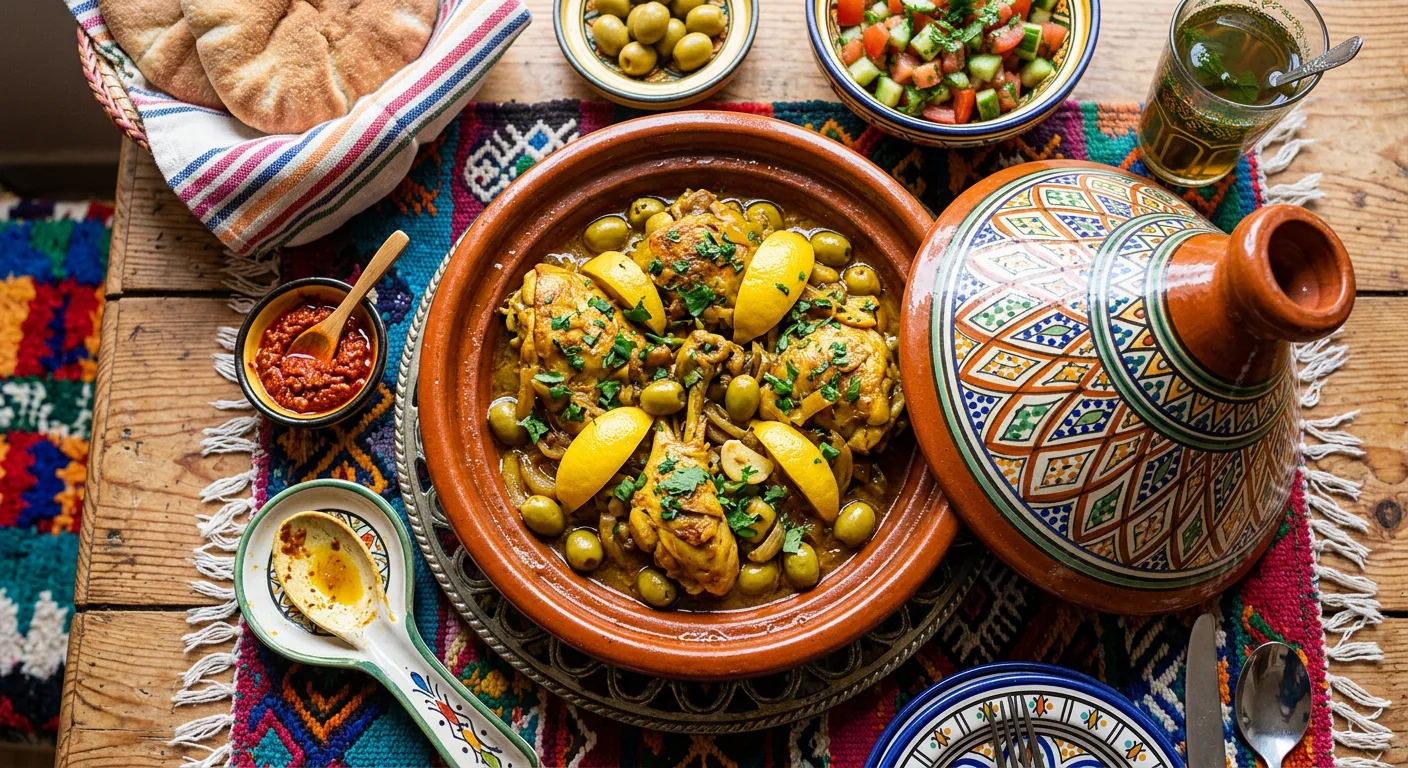
The food of the Moroccan Sahara is not the food of the city. Out here in the Tafilalet — the great oasis region around Rissani, Erfoud and the Ziz Valley, with the Erg Chebbi dunes beyond — cooking is shaped by Amazigh (Berber) and nomad traditions, by the date palm, and by the simple problem of feeding people well in a place with little fresh produce and long distances. The result is a handful of dishes you will struggle to find anywhere else in Morocco. Here is what to look for, and where it comes from.
Madfouna — the “Berber pizza”
If you eat one thing in the desert, make it madfouna. It is the signature dish of the Tafilalet and a speciality of Rissani and Erfoud. A round of dough is rolled thin, packed with a filling of minced meat, onion, almonds, herbs and spices — sometimes a beaten egg — then sealed over and baked into a thick, stuffed flatbread. Travellers call it “Berber pizza,” though it is closer to a giant filled bread.
The name tells the story. Madfouna means “buried” in Arabic: traditionally the loaf was cooked buried in hot sand and embers rather than in an oven, the desert's own slow bake. Cut open at the table it steams and smells of toasted almond and onion — rich, smoky and made for sharing. In Rissani you will see it sold from dedicated bakeries; many camps and kasbahs will make one to order if you ask ahead.
Dates — the heart of the Tafilalet
The Tafilalet is one of the great date regions of Morocco. Its palm groves, fed by the Ziz and strung along the oases around Rissani and Erfoud, produce dozens of varieties — from the prized, soft, caramel-dark Mejhoul (Medjool) to smaller everyday types eaten by the handful with a glass of tea. Dates are not a garnish here; they are a staple and the backbone of the local economy, and the autumn date festival at Erfoud marks the harvest each year.
The Rissani souk is the place to see this up close — one of the country's most important date markets, with sacks of fruit graded by variety and quality. Buy a mix, taste the difference between a firm everyday date and a melting Mejhoul, and you will understand why the palm has anchored desert life here for centuries. Dates also turn up in cooking: stuffed with almond paste, simmered into tagines, or simply served to break the day.
Bread baked in the sand
Nomad Amazigh families have long baked bread without an oven at all. A fire heats a patch of ground; the embers are raked aside; a disc of plain dough is laid into the hot sand, covered again with sand and coals, and left to bake through. The finished loaf is brushed and tapped clean of grit, then torn and shared. It is the same buried-in-the-sand technique that gives madfouna its name.
In a fixed camp today you will more often get bread from a simple oven or griddle, but on a multi-day camel trek the sand-baked loaf is still very much alive — a small piece of desert know-how worth watching if your guides make one. It pairs with everything: olive oil, honey, a smear of tagine sauce.
Slow tagines and kalia in camp
Camp dinners are deliberately simple. The centrepiece is usually a tagine — vegetables, or lamb or chicken with preserved lemon and olives — left to cook low and slow over coals while the sun goes down. Around it: bread, a few salads, fruit, and the ever-present pot of mint tea. On Fridays you may be served couscous instead, the traditional family dish of the day across Morocco.
One desert staple worth knowing is kalia (also kaliya or khlea): strips of meat dried and preserved in spiced fat so they keep without refrigeration — exactly the kind of food that suited a nomadic life on the move. A little kalia enriches a tagine, eggs or rice, and dried meat is among the things you'll see in the Rissani souk. Almonds and local honey round out the desert pantry, both used in sweets and to finish dishes.
Mint tea — the “Berber whisky”
Nothing happens in the desert without tea. Brewed strong with gunpowder green tea, a fat bunch of fresh spearmint and plenty of sugar, it is poured from a height into small glasses to raise a frothy crown and to cool and aerate it. Hosts joke that it is “Berber whisky” — there is no alcohol in it; the name simply reflects how constantly it is offered. Accepting a glass is accepting hospitality, the single most important ritual of any desert welcome. The full mint tea ritual is worth reading on its own.
Eating in a camp vs a kasbah
Where you sleep shapes what you eat. In a desert camp out on the dunes, dinner is communal, cooked over coals and kept simple — a tagine, bread, salad, fruit and tea, eaten under an open sky. In a kasbah or oasis guesthouse on the edge of the dunes, the kitchen is fixed and can do more: a proper madfouna to order, a wider spread of starters, and pastries with the tea. Neither is better; they are two sides of the same desert table. Our Sahara tours can build either in.
Frequently asked
What is madfouna, the Berber pizza?
Madfouna is the signature dish of the Tafilalet desert and the towns of Rissani and Erfoud. It's a stuffed, baked flatbread: a disc of dough is filled with minced meat, onion, almonds, spices and sometimes egg, sealed like a giant calzone, then baked. Traditionally it was cooked buried in hot sand and embers — madfouna means 'buried' in Arabic — which is where the nickname 'Berber pizza' comes from. It's hearty, smoky and unlike anything you'll be served in Marrakech.
Where do the dates in Morocco come from?
Many of Morocco's finest dates come from the palm groves of the Tafilalet, the oasis belt around Rissani, Erfoud and the Ziz Valley. The Rissani souk is one of the country's great date markets, with dozens of varieties on offer — from the prized, soft Mejhoul (Medjool) to smaller everyday types. Dates are both a staple food and the backbone of the local economy here, and the Erfoud date festival each autumn celebrates the harvest.
How is bread baked in the desert?
Nomad Amazigh (Berber) families traditionally bake a flat country bread directly in the sand. A fire is lit to heat the ground, the embers are raked aside, the dough is laid in the hot sand and covered with more hot sand and coals to bake through. The crust is brushed clean before eating. The same buried-in-sand technique gives madfouna its name. In camps today bread is more often baked in a simple oven, but the sand-baked loaf is still made on desert treks.
What is 'Berber whisky'?
It's mint tea — there is no alcohol in it. Moroccans, and especially desert hosts, joke that sweet green tea with mint is 'Berber whisky' because it's offered constantly and at every occasion. It's brewed strong with gunpowder green tea, fresh spearmint and plenty of sugar, then poured from height into small glasses to build a frothy head. Refusing the first glass is fine, but sharing tea is the core ritual of desert hospitality.
What do you actually eat in a desert camp?
Camp dinners are simple and slow-cooked: usually a vegetable or meat tagine simmered over coals, bread, salads, fruit and mint tea, sometimes preceded by harira soup. On Fridays you may be served couscous, the traditional family dish of the day. Portions are generous and the cooking is unfussy — the point is warm, shared food under the stars rather than a long menu.
What is kalia or kaliya?
Kalia (also spelled kaliya or khlea) is a traditional preserved meat: strips of beef or lamb dried and cooked in fat and spices so they keep without refrigeration — a practical food for nomadic desert life. It's used to enrich tagines, eggs and rice. You'll also find dried meat sold in the Rissani souk, a reminder of how desert cooking adapts to a place with little fresh produce and long distances.
Taste the desert
We can build a madfouna and a Rissani souk stop into your route.
From a date-market wander in Rissani to a slow tagine under the stars at Erg Chebbi, tell us how you like to travel and we'll shape the food into the trip.
Request an itinerary