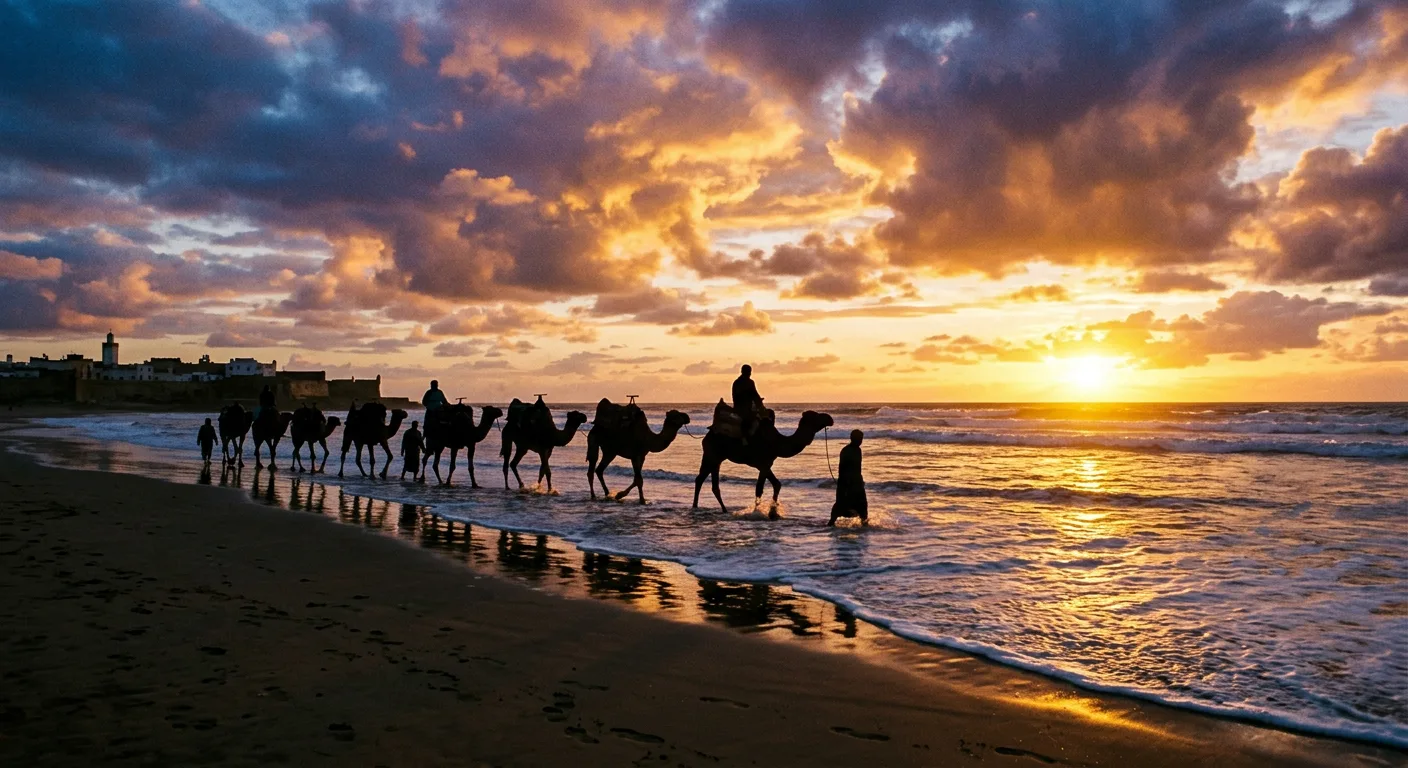
A Sahara trip is one of the most rewarding family adventures we know — and one of the most underestimated. The camel ride, the dune-climbing, the firelit music and a sky full of stars give children a story they actually keep, the kind another European city break never quite delivers. It does take planning, mostly around the long drive and the desert heat. Here is what we have learned from years of building family desert itineraries.
Which stops on the desert route work best for children?
Marrakech is the natural gateway and a good first base — compact enough to manage for two or three days while you find your feet. The Jemaa el-Fna square is a natural theatre children find spellbinding in the early evening: acrobats, storytellers, snake charmers (best watched from a café terrace) and the organised chaos of the food stalls setting up. Save the souks for a short guided visit with older children, and let a riad courtyard absorb the rest before you head south.
The High Atlas and the kasbah road break up the drive to the dunes. The Tizi n'Tichka crossing, the film-set kasbahs around Ouarzazate and Ait Benhaddou, and a gentle palmery walk give restless children something to look forward to between the long stretches of tarmac — and the cooler mountain air is a relief in summer.
The Draa Valley and the dunes of Erg Chebbi are the trip highlight for most families. The road south through kasbahs and palmeries to the red sand of Merzouga is one of the world's great drives, and the payoff — a sunset camel ride and a night in a canvas tent under the Sahara's stars — is what children talk about for years afterwards.
The Todra Gorge and the Dades Valley make an easy, scenic detour on the way back. The towering canyon walls and the shallow river crossings give younger children somewhere to splash and clamber, and the winding 'monkey fingers' road keeps teenagers glued to the window — a calm bookend to the intensity of the dunes.
How should you pace a family desert trip?
The single most common mistake families make is trying to reach the dunes too fast. The nine-to-ten-hour haul from Marrakech is brutal in one day with children — split it across two, with a night in Ouarzazate or the Dades Valley. Build in real downtime: a riad courtyard or pool afternoon between long drives keeps everyone sane, and the dune overnight lands far better when children arrive rested rather than carsick and frayed.
A comfortable ten-day shape: two nights Marrakech to settle in, one night Ouarzazate or the kasbah road, two nights at Erg Chebbi (one of them in the desert camp), two nights back via the Dades and Todra gorges, then a final night in Marrakech. This suits children aged six and up. For younger children, shorten the camel leg, keep the camp night to one, and add a slow day wherever the road allows.
What kind of desert camp works for families?
For the gateway nights, riads — the traditional courtyard houses that now serve as boutique hotels — are ideal: the inner courtyard removes street noise, the architecture is naturally child-friendly, and the staff-to-room ratio is high. Out in the dunes, look for a camp with proper family tents (real beds, a private bathroom), a crew used to children, and a kitchen happy to plate something plain. Skip the bare bivouac with kids — the small comforts matter when the temperature swings overnight. We pre-inspect every riad and camp we recommend. See our destinations guide for our current shortlist.
What should children eat and drink on the desert run?
The food along the route is broadly child-friendly. Tagines with chicken, olives and preserved lemon; couscous with seven vegetables; harira soup; kefta (spiced minced lamb) grilled on skewers; and msemen (griddle-fried flatbreads) with honey and argan oil are all approachable, lightly spiced and freshly made. Roadside restaurants and desert camps will usually plate something plain — grilled chicken, plain rice, eggs — for young children if you ask.
Water: bottled only, and lots of it — the dry desert air dehydrates children faster than parents expect, and shops disappear past Erfoud, so stock the car before the dune leg. Tap water is chlorinated and technically safe in the cities, but its mineral balance upsets unfamiliar stomachs. Fresh orange juice from the Jemaa el-Fna stalls (US$0.50–1 a glass) is safe and excellent. Avoid ice unless you know it is made from bottled water.
What practical tips make a desert trip with kids easier?
- Book a private vehicle for the road south — buses and shared taxis are fine for adults but exhausting with children, luggage and a nine-hour day.
- Carry a child-specific sun cream rated SPF 50+; the dune glare is intense, and spring and autumn are far kinder than high summer.
- Pack oral rehydration sachets — the dry air makes them genuinely useful, and pharmacies thin out the further south you go.
- Bring a warm fleece per child for the camp night; the dunes can fall near freezing in winter long after a hot afternoon.
- Keep the first camel ride short — 30 minutes to a sunset dune is plenty for small children, and you can always do more the next morning.
- Pack a small torch and let children spot constellations at the camp — the stargazing is the part they remember most, so make it theirs.
Frequently asked
Is a Sahara tour safe for families with young children?
Yes — a guided desert trip is a genuinely family-friendly adventure, and Moroccan culture places enormous value on children, so families are met with warmth rather than fuss. The real things to plan for are the long drive south, the daytime heat on the dunes, and dehydration in the dry air (carry plenty of water and stick to bottled). A private vehicle with a trusted driver removes the logistical strain and lets you break the journey at the kids' pace.
What is the best age to take children on a desert trip?
Children from about 5 years old get the most out of the Sahara — old enough to remember the sunset camel ride, the dune-climbing and a night under more stars than they have ever seen. Younger children do well if you keep the camel leg short and the camp comfortable. Teenagers often rate the desert overnight, the Todra Gorge and the kasbah road among the most memorable trips they have taken.
What should children eat on the road to the desert?
The food along the desert route is largely child-friendly: tagines, couscous, flatbreads, harira soup and grilled meats are all mild and approachable, and camps will usually prepare simpler plates on request. Avoid salads washed in tap water, raw roadside snacks and unpasteurised dairy. Carry bottled water for the whole drive and the dune leg — shops thin out fast past Erfoud — and pack familiar snacks for the long stretches between towns.
How long does it take to reach the Sahara with children?
From Marrakech, the drive to Merzouga (the main Erg Chebbi gateway) is nine to ten hours one-way over the High Atlas and down the Draa Valley — a lot for small children in one go. We recommend splitting it across two days each way, with an overnight in Ouarzazate or the Dades Valley to break up the road. A fly-drive option (Marrakech–Errachidia by Royal Air Maroc) trims the final overland leg to roughly two hours.
Can children ride camels in the Sahara?
Yes — the dromedary ride into the dunes is the highlight for most children from about 4 years old. Guides seat young children in front of a parent and keep the pace gentle. A 30–60 minute ride to a sunset dune is comfortable; full-day treks suit adults better. Always choose a camp that keeps its animals in good condition and fits proper saddles — we inspect every operator we use.
Do desert camps and riads have family accommodation?
Most gateway riads have suites or interconnecting rooms that work well for families, typically sleeping two adults and two children with a private bathroom; ask about fencing if there is a plunge pool. Out in the dunes, family tents at the better camps sleep four with proper beds and a private bathroom, and crews will set up extra bedding or a cot on request. We confirm the family setup at every camp before we book it.
Family desert itineraries
We design desert trips children remember for life.
Private transport, paced days on the road south, child-inspected camps and a gentle camel ride under the stars — tell us the ages and we will build the itinerary.
Plan our family trip