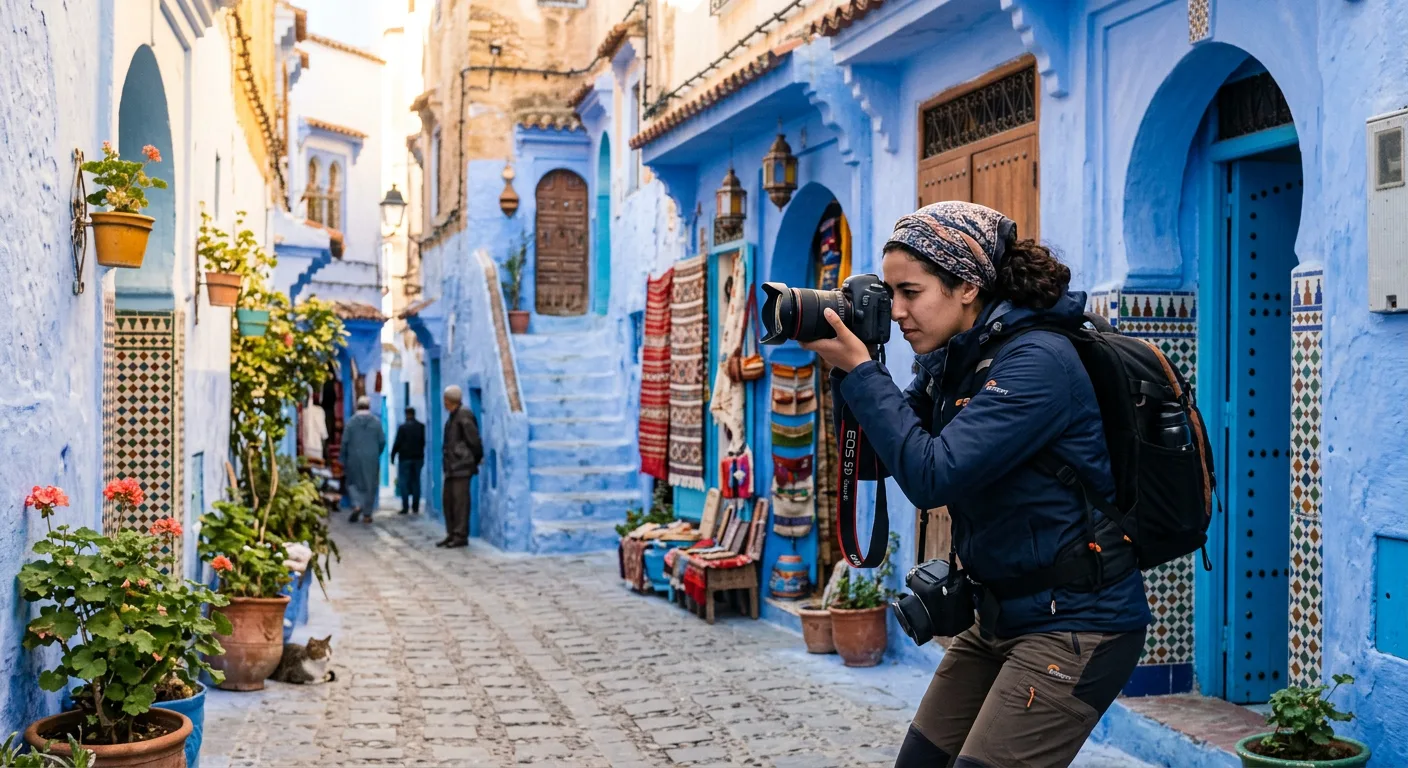
The Moroccan Sahara is one of the most photogenic landscapes on earth — sculpted dunes that turn from gold to deep orange at the edges of the day, star-filled night skies and the kasbah road in between. Knowing where to stand, when the light works, and how to photograph people respectfully makes all the difference.
In this guide
Best desert locations and light
For the dunes, the canonical times are the hour after sunrise and the hour before sunset, when the shadows are long and the sand glows. Erg Chebbi at Merzouga delivers the postcard golden-orange ridgelines; the remote Erg Chigaga rewards the long journey with taller, emptier dunes and no footprints but your own. Climb a high crest before dawn and shoot back across the camp as the sun breaks the horizon — the signature Sahara frame.
The road in is its own gallery: Aït Ben Haddou photographs extraordinarily in late-afternoon light from the opposite riverbank, the Todra and Dadès gorges offer dramatic rock and shadow, and Skoura's palmery glows green against the red earth. After dark the Sahara becomes an astrophotographer's dream — almost zero light pollution, the Milky Way overhead, and a camp tent lit from within for the foreground.
Photographing nomads, camel handlers and villagers
The single most important rule on the desert route: ask before photographing people, every time. A camel handler, a nomad at a well, a woman weaving in an oasis village — each deserves the choice. The phrase is 'mumkin sura?' (may I take a photo?). Many will agree warmly; some ask a small fee — 5–20 MAD is fair; some decline, and that must be respected without argument.
Candid long-lens shooting of people who would say no if asked is considered disrespectful and can cause real friction, even out in the south. The best portraits come from connection: share the tea, ask the question, spend a few minutes, and the image reflects that warmth. Your guide can often introduce you, which transforms the encounter.
Gear and practical notes for the desert
Sand and fine dust are the desert photographer's main enemy — bring a sealed bag, lens cloths and a blower, and change lenses as little as possible out on the dunes (ideally inside a tent or the vehicle). A versatile zoom (24–70mm equivalent) covers most of the trip; a wide lens captures the dune sweep and the night sky. The desert sun is harsh, so shade your lens against flare and keep the camera out of direct heat when you're not shooting.
- Bring extra batteries and keep them warm — cold desert nights drain them faster than expected.
- A sturdy tripod is essential for sunrise dune shots and Milky Way astrophotography at camp.
- Pack a wide, fast lens (f/2.8 or faster) for stargazing; the Sahara's dark skies are exceptional.
- Modern phone cameras handle the golden desert light beautifully — don't feel obliged to carry heavy gear.
Drone rules in Morocco
Drone operation in Morocco requires authorisation from the Moroccan Civil Aviation Authority (DGAC). Flying without a permit is illegal, and drones have been confiscated at customs and in the field. The process for obtaining authorisation is bureaucratic and time-consuming. For most travellers, the advice is to leave the drone at home — Morocco's landscape is extraordinary enough at ground level, and the legal risk is not worth it.
Frequently asked
How do I photograph the dunes for the best shots?
Shoot in the hour after sunrise and the hour before sunset, when the side-light sculpts the ridgelines and the sand glows orange. Climb a high crest before dawn, keep footprints out of the frame, and use a tripod. At night the Sahara's dark skies make for superb Milky Way photography.
When is the best time of day to photograph the Sahara?
Golden hour at each end of the day, plus the night sky. The dune shadows are long and the colour deepest just after sunrise and before sunset; midday light is harsh and flat. After dark, the lack of light pollution opens up astrophotography.
How do I protect my camera from sand in the desert?
Use a sealed bag, change lenses as little as possible (do it inside the vehicle or tent), and carry a blower and lens cloths. Keep the camera out of direct heat and bring extra, kept-warm batteries for the cold nights.
Are drones allowed in Morocco?
Not without prior authorisation from the Moroccan DGAC, and drones have been confiscated at customs. Tempting as the dunes are from the air, unless you've navigated the permit process in advance, leave the drone at home.
What is 'mumkin sura' and when should I use it?
'Mumkin sura?' means 'may I take a photo?' in Darija. Use it every time before photographing a person — a camel handler, a nomad, a villager. It takes three seconds, shows respect and produces a far more natural, willing subject.
Planning a trip?
Let our desert team handle the details.
Tell us your dates and style and we'll send a written itinerary and a transparent quote. We confirm by email within 24 hours.
Request an itineraryKeep reading
Culture
Morocco Etiquette & Customs
A little cultural awareness goes a long way in the desert south, where village and nomadic life is more traditional than in the cities. Dress modestly, greet warmly, ask before photographing people, use your right hand, and lean into the unhurried rhythm of mint tea, conversation and Berber hospitality.
Planning
The Best Time to Visit Morocco
If the desert is the heart of your trip, plan around the dunes first. October to April is the prime Sahara window — comfortable days in Merzouga and Erg Chigaga, brilliant stargazing and cold but magical camp nights. Spring and autumn are the all-round sweet spots for combining the dunes with the cities and the Atlas.
Itineraries
Morocco Itinerary: 10 Days
Ten days is the sweet spot for a desert-led trip — long enough to reach the dunes unhurried, spend two nights deep in the Sahara, and still see the gorges, kasbahs and one imperial city, with the coast as an optional finish.