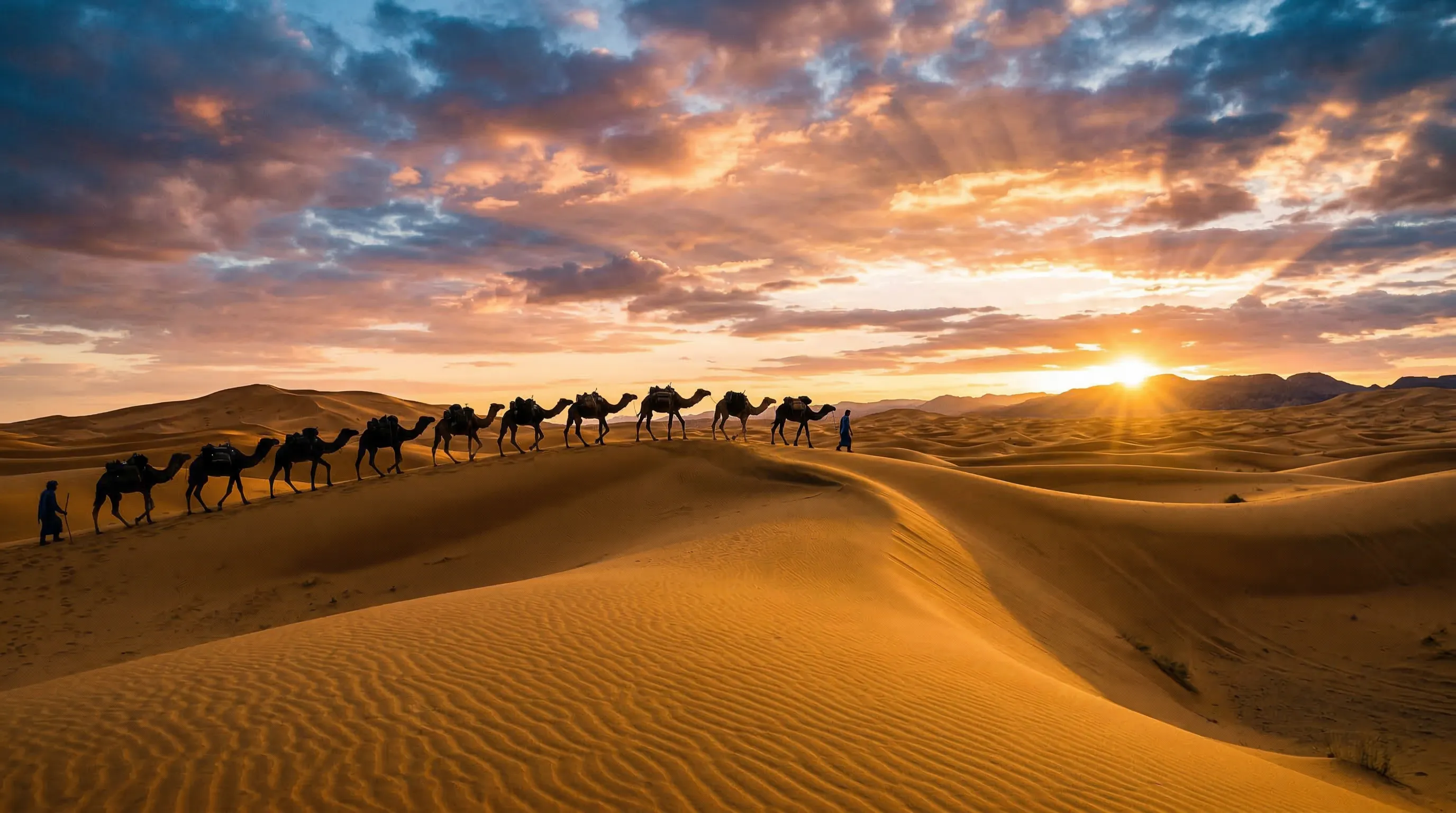
Layers for hot days and cold nights
Daytime can be very warm even in winter, but desert nights are cold — near freezing from December to February. Pack light, breathable layers plus a warm fleece or jacket and long trousers for the evening.

Things to do · Sahara
A night in the Moroccan Sahara is unforgettable, but the desert swings from hot days to genuinely cold nights, and dust and sun are constant. Packing right makes the difference. Here is a practical desert packing list for a one- or two-night camp trip.
7 experiences
Daytime can be very warm even in winter, but desert nights are cold — near freezing from December to February. Pack light, breathable layers plus a warm fleece or jacket and long trousers for the evening.
A long cotton scarf (chèche) is the desert's most useful item: it shields your head and neck from sun, keeps blowing sand out of your face and doubles as a warm wrap at night. You can buy one locally.
High-SPF sunscreen, lip balm, sunglasses and a hat are essential — there is no shade on the dunes. Reapply through the day, especially on camel treks.
Trainers or light boots keep sand and sun off on walks, while sandals are handy around camp where you will often go barefoot on the dunes.
Carry more water than you think you need. A head-torch helps around camp and on a pre-dawn dune climb, and a power bank matters as many camps have limited or solar-only electricity and little or no signal.
You usually ride a camel to camp, so pack an overnight day-bag with just what you need (warm layer, water, toiletries, camera) and leave your main luggage in the vehicle or at your last hotel.
Fine sand gets everywhere. Keep phones and cameras in zip bags or a padded case, and bring a cloth — sunrise and sunset over the dunes are worth photographing well.
Pack light breathable layers for the day, a warm fleece or jacket and long trousers for the cold night, a scarf (chèche), sun protection, closed shoes and sandals, plenty of water, a head-torch and a power bank, and a small overnight bag for the camel ride.
Yes. Despite hot days, desert nights are cold, dropping to near freezing in winter (December–February) and cool even in warmer months, so a warm layer is essential for an overnight camp.
It varies. Many camps run on limited or solar electricity with charging points in communal areas, and phone signal is often weak or absent. Bring a power bank and treat a night in the desert as a chance to disconnect.
See it with a local
We'll build a private, guided plan around the experiences you care about — with a driver, hand-picked riads and a written quote in 24 hours.
Contact us for pricingMore cities