The dunes around Erg Chebbi and Erg Chigaga can look empty, but the Moroccan Sahara is quietly alive. Hardy plants cling to the sand and gravel, birds pass through the oases, and small, mostly nocturnal animals leave their tracks across the dunes overnight. This guide covers what you might realistically encounter, how desert life survives the heat, and how to look for it without disturbing it. Sightings are never guaranteed and vary with the season, the weather and your luck.
Sahara plants and animals are adapted to extreme heat and very little water. Many animals are nocturnal, sheltering in burrows or shade by day and emerging in the cool of night, while plants often have deep roots, small or waxy leaves and long-dormant seeds that sprout after rare rain.
02What you might see
Tracks in the morning sand
The easiest 'wildlife' to find is the trails left overnight. At first light the dunes are stitched with the tracks of beetles, lizards, rodents and sometimes a fox or snake. A guide can often read these prints and tell you what passed by while you slept.
03Reptiles
Lizards and small reptiles
Lizards and geckos are among the most visible desert animals, darting across the sand or basking near rocks in the morning. The Sahara is also home to snakes and to spiny-tailed lizards in some areas, though most reptiles are shy and quick to disappear.
04Iconic animals
The dromedary camel
The one-humped dromedary is the animal you are guaranteed to meet. These are domesticated working camels, superbly adapted to go long periods with little water and to cross hot sand. Treat them calmly and let the camel men handle and lead them.
05Mammals
Desert foxes and small mammals
Small mammals such as foxes, gerbils and jerboas live in the dunes but are mostly nocturnal and rarely seen by day. The fennec fox, with its very large ears, is a famous desert resident, though genuine sightings are uncommon and a matter of luck.
06Birds
Birds around the oases and lakes
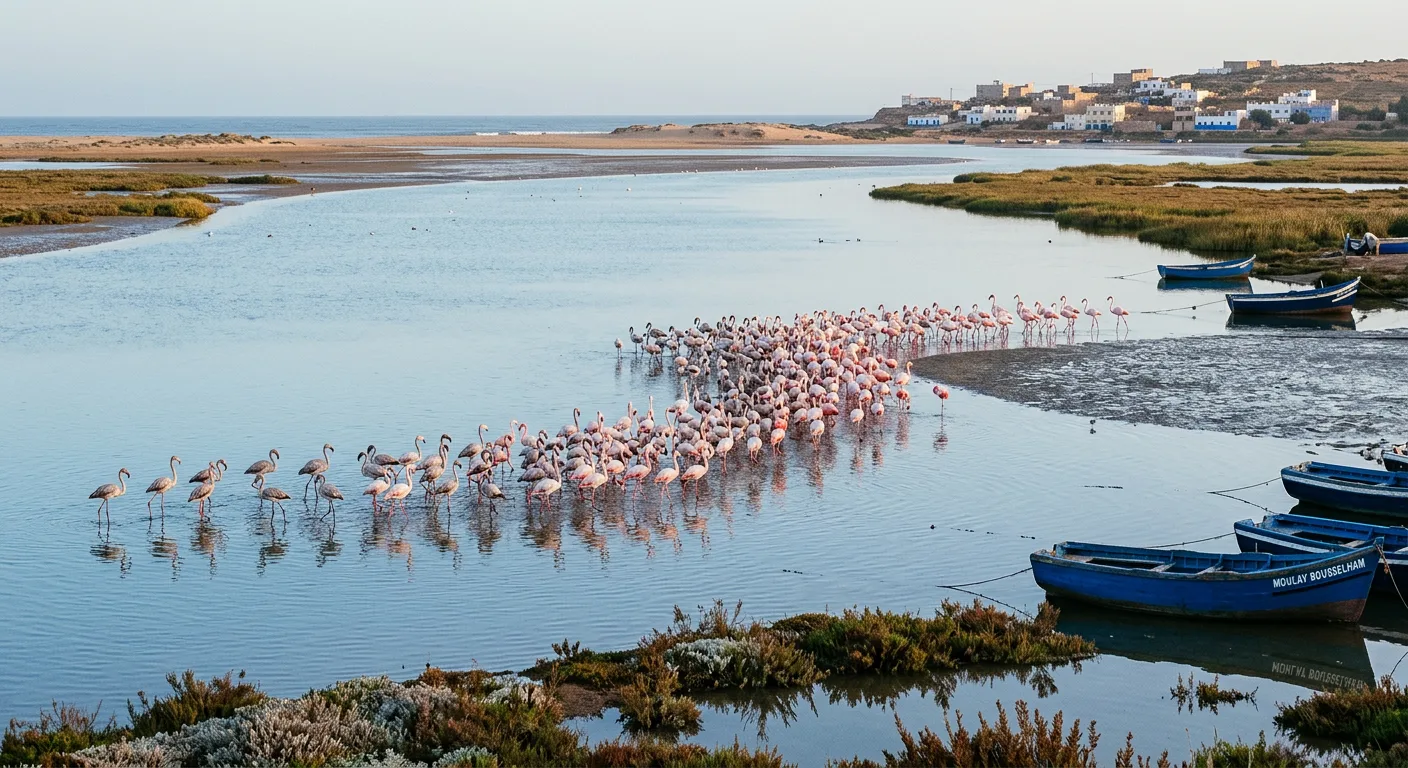
Water draws birdlife, so the palm groves, wells and seasonal lakes near the desert are the best places to look. After wetter spells the seasonal lake near Merzouga can attract waterbirds, and the area is known among birdwatchers for desert and migrant species. Levels and sightings vary year to year.
07Small creatures
Beetles, scorpions and night insects
Insects and other small creatures are the desert's busiest residents. Darkling beetles trundle over the dunes by day, while scorpions and other night creatures emerge after dark. Scorpions can sting, so shake out shoes and bedding and avoid putting hands into holes or under rocks.
08Plants
The date palm and the oasis
The date palm is the keystone plant of desert life, giving shade, fruit and building material, and it defines the green oases and palm groves that fringe the Sahara. Beneath the palms, gardens of vegetables and fodder are grown in the shade and shelter they create.
09Plants
Hardy desert shrubs and grasses
Out on the open sand and gravel you will see scattered tough shrubs, tussocks of grass and the occasional acacia or tamarisk. These plants survive on deep roots and rare rain, and they anchor the dunes and feed grazing animals where they grow.
10Plants
After the rain: a brief bloom
Rain is rare and unpredictable, but when it does fall the desert can respond quickly. Dormant seeds sprout and patches of green and small flowers appear for a short time, a reminder that much desert life is simply waiting for water rather than absent.
11Tips
Watching wildlife responsibly
Keep your distance, never feed or chase animals, and leave nests, burrows and plants undisturbed. Dawn and dusk are the best times to look, a quiet walk away from camp gives you the best chance, and a local guide will spot far more than you will alone.
Frequently asked
What animals live in the Moroccan Sahara?
The desert is home to lizards and other reptiles, small mammals such as foxes, gerbils and jerboas, insects like beetles and scorpions, and a range of birds around the oases and seasonal water. The dromedary camel is the animal you are certain to meet. Many wild animals are nocturnal, so sightings vary and are never guaranteed.
Can you see a fennec fox in the desert?
The fennec fox does live in the Sahara, but it is small, nocturnal and shy, so genuine wild sightings are uncommon and a matter of luck. You are far more likely to see its tracks in the morning sand than the animal itself.
What plants grow in the Sahara?
The date palm is the keystone plant, defining the oases and palm groves around the desert. Out on the open sand and gravel you will find scattered hardy shrubs, tough grasses and the occasional acacia or tamarisk. After rare rain, dormant seeds can sprout into a brief flush of green and flowers.
Are there dangerous animals in the desert?
Scorpions and snakes are present and some can be harmful, but they generally avoid people and bites or stings are uncommon if you are sensible. Shake out shoes and bedding, watch where you put your hands and feet, avoid reaching under rocks, and follow your guide's advice.
See it with a local
Turn this into a private Sahara trip.
We'll build a private, guided plan around the experiences you care about — with a driver, hand-picked riads and a written quote. We confirm by email within 24 hours.