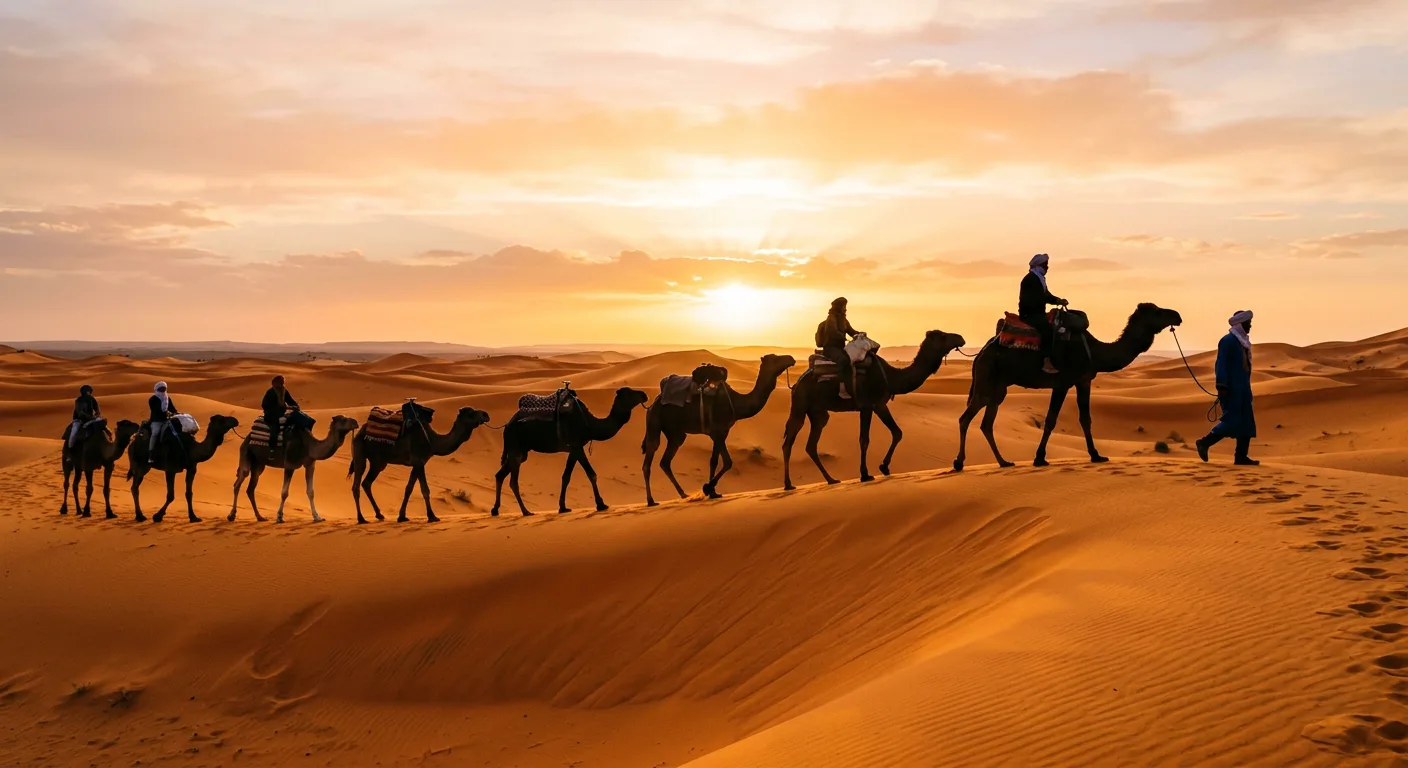
Riding a camel caravan over the dunes is the signature Sahara experience, and the animals are dromedaries — the single-humped Arabian camel long used by Saharan caravans. This honest guide covers what a trek is really like, how long to ride for, how to stay comfortable, when to go and what to do if camels are not for you.
Treks set out in single-file caravans led on foot by a local cameleer. Camels rise back legs first, so lean back as you mount, then settle into a slow, swaying walk. The pace is gentle and unhurried, ideal for taking in the dunes.
02Durations
The short sunset (or sunrise) ride
The most popular option is a short ride of roughly an hour out to a viewpoint or camp for sunset, then a return the next morning. This catches the dunes at their warmest light and suits travellers short on time or unsure about a long ride.
03Durations
Overnight trek to a desert camp
The classic itinerary rides out across the sand in the late afternoon to a tented camp among the dunes, with dinner, music and a night under the stars, then a sunrise ride back. It is the most common way to experience an overnight in the Sahara.
04Durations
Multi-day caravans for the committed
Longer expeditions of two or more days push deeper into the erg, moving camp each night. They reward you with quiet, untouched dunes far from the trailheads, but expect several hours in the saddle daily, so build up to one if you can.
05Where
Erg Chebbi treks from Merzouga
Erg Chebbi, the tall dune sea beside Merzouga, is Morocco's most accessible trekking base, with camps pitched directly among the dunes. Short rides into the sand begin almost from the edge of the village.
06Where
Erg Chigaga treks from M'Hamid
Erg Chigaga, reached via M'Hamid in the Draa Valley, is wilder and harder to get to, usually after a 4x4 transfer across the desert. Treks here feel more remote, with fewer camps and a stronger sense of true wilderness.
07Comfort tips
How to stay comfortable in the saddle
Wear long, loose trousers to avoid chafing, closed shoes or sandals you can shake sand from, and a scarf you can wrap over your head and face. Pack light in a small daypack, as your camel carries you while a guide leads on foot.
08Comfort tips
Sun, water and the desert heat
Bring sunglasses, high-factor sunscreen and a brimmed hat or wrapped scarf, and carry water even on a short ride. Treks are timed for the cooler ends of the day, but the open desert offers no shade once you leave camp.
09When to go
When to go
Spring (March to May) and autumn (September to November) bring the most comfortable trekking conditions. Winter days are pleasant but nights are cold, while summer heat pushes rides to the very early morning and late evening.
10Alternatives
Alternatives if camels are not for you
You do not have to ride to reach the dunes. 4x4 transfers carry you to the same camps in minutes, sandboarding lets you play on the slopes, and walking short stretches of dune on foot is a fine way to experience the erg at your own pace.
11Animal welfare
Animal-welfare notes
Choose operators whose camels look well-fed and uninjured, carry reasonable loads and rest between groups. Keep rides to sensible lengths, especially in heat, do not overload an animal, and walk a stretch yourself if you feel a camel is tiring.
Frequently asked
Are the camels in the Sahara actually camels or dromedaries?
They are dromedaries — the single-humped Arabian camel that has carried Saharan caravans for centuries. People commonly call them camels, but the two-humped Bactrian camel is a different species from Central Asia and is not used here.
How long is a typical camel trek?
The most popular trek is a short ride of about an hour out to a desert camp for sunset, with a sunrise ride back the next morning. Longer multi-day caravans push deeper into the dunes with several hours in the saddle each day.
Is camel trekking uncomfortable or difficult?
The pace is slow and gentle, and a guide leads the caravan on foot, so no riding experience is needed. Lean back when the camel stands and sits, wear loose trousers to avoid chafing, and a short ride suits almost anyone.
What if I do not want to ride a camel?
You can still reach the dunes by 4x4 transfer, which gets you to the same camps quickly, or explore on foot and try sandboarding. A camel ride is optional, not the only way to experience the Sahara.
See it with a local
Turn this into a private Sahara trip.
We'll build a private, guided plan around the experiences you care about — with a driver, hand-picked riads and a written quote in 24 hours.